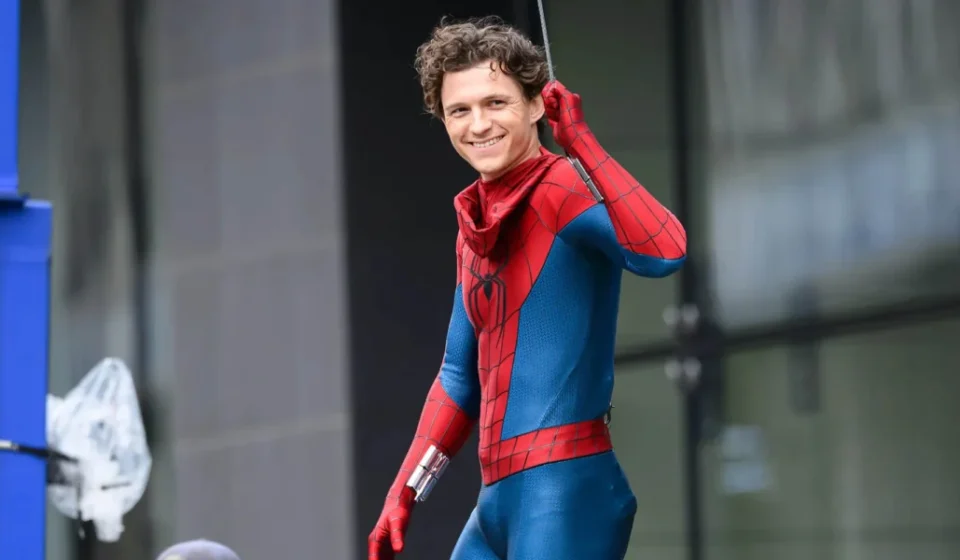

Four years have passed since the world-altering events of Doctor Strange’s memory-wiping spell. For the rest of the world, Peter Parker is a ghost—a person who never existed. But in the Marvel Cinematic Universe’s 38th feature, Spider-Man: Brand New Day, we see the toll this existential erasure takes on the man behind the mask. As Peter Parker vanishes into the identity of Spider-Man, the film explores the strain of a hero who has traded his humanity for the eternal vigil of protecting New York City.
In our latest installment of The VFXShow (Episode 308), we dive deep into the production, the narrative weight of isolation, and the sophisticated hybrid visual effects methodology that makes this blockbuster one of the most ambitious entries in the franchise.
Warning: This article and the accompanying podcast contain major spoilers for Spider-Man: Brand New Day.
The Narrative Landscape: A Hero Without a History
Directed by Destin Daniel Cretton and penned by the veteran duo Chris McKenna and Erik Sommers, Brand New Day marks a tonal shift for the MCU’s webslinger. The premise is stark: while the city of New York continues to embrace Spider-Man as a symbol of hope, the people Peter Parker once held dearest—MJ, Ned, and his former mentors—have moved on.
Peter exists in a state of self-imposed exile. His daily life is a cycle of intense street-level crime-fighting and quiet, melancholy visits to Aunt May’s grave. This emotional vacuum provides the foundation for the film’s conflict. It is a story not just of external threats, but of the internal erosion caused by the absence of a personal life. The star-studded cast, featuring Tom Holland, Zendaya, Sadie Sink, Jacob Batalon, Jon Bernthal, Florence Pugh, Tramell Tillman, Michael Mando, and Mark Ruffalo, delivers performances that emphasize this disconnect, grounding the high-stakes action in genuine human tragedy.
Chronology of Conflict: From Street-Level Grime to Cinematic Scale
The film’s progression is deliberate, beginning in the gritty, grounded reality of the New York underworld. For the first act, Spider-Man finds himself embroiled in the politics of the streets, tracking criminals like Mac Gargan and navigating the dangerous, mystical influence of the Hand. His developing partnership with police detective Jean DeWolff provides a procedural lens through which we view his growth.
However, the equilibrium is shattered when Frank Castle (The Punisher) initiates a high-octane pursuit of an armored vehicle. The resulting chaos—a tank crashing into a Department of Damage Control prison—serves as the film’s "inciting incident" for its spectacle-heavy second and third acts. This sequence perfectly encapsulates the film’s production philosophy: a collision of practical, heavy-metal destruction and cutting-edge digital augmentation.
The Hybrid Methodology: VFX and Physicality
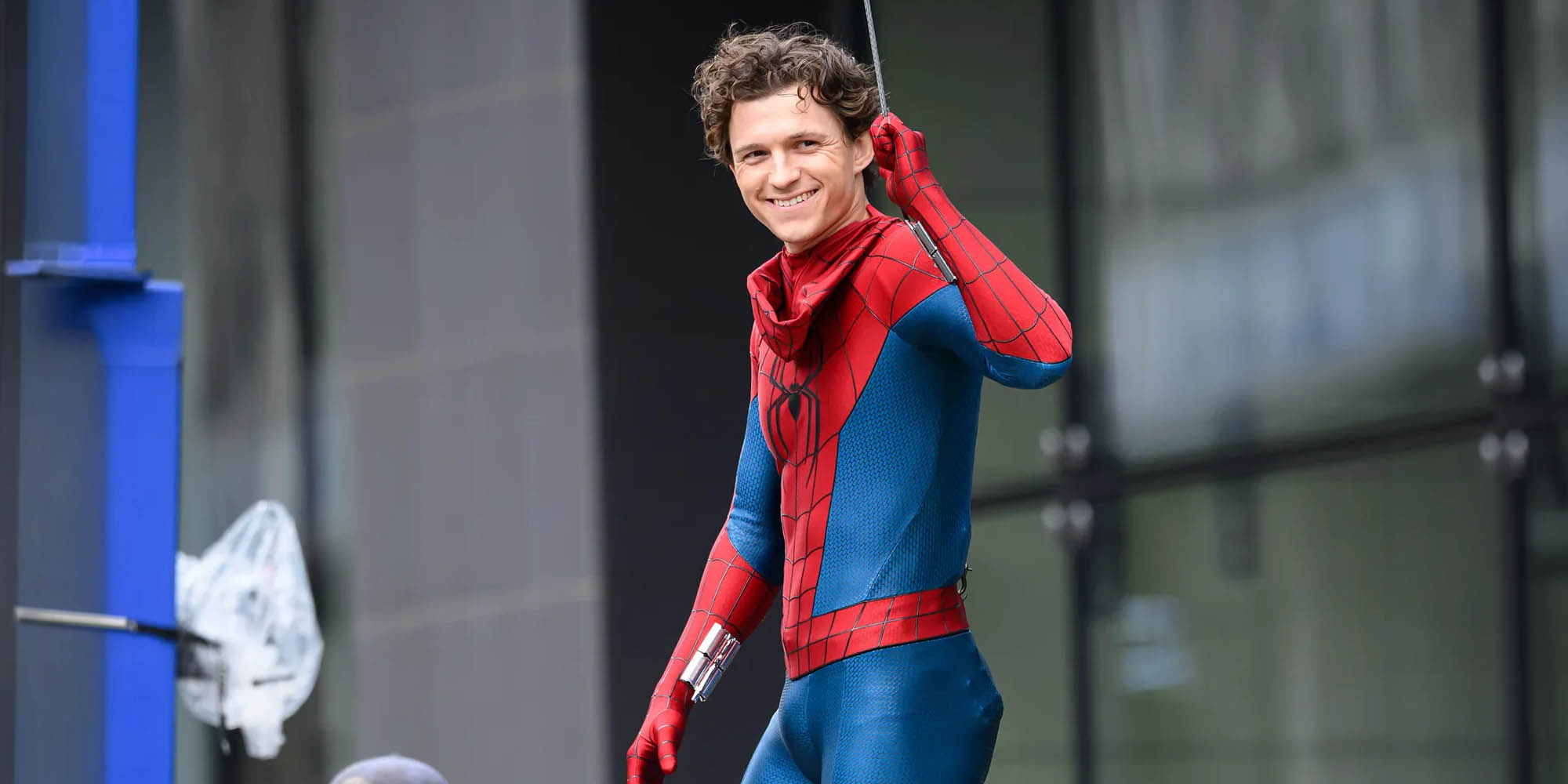
One of the most discussed aspects of Brand New Day among the visual effects community is the return to a "practical-first" approach. Tom Holland has been vocal about the production’s insistence on a tangible suit and real-world stunt work, a move designed to restore the tactile "weight" of the character that can sometimes be lost in purely digital environments.
The Illusion of Continuity
However, as our panel discusses in VFXShow 308, "practical" in the modern blockbuster era is a relative term. The film utilizes a complex hybrid methodology. A single shot of Spider-Man swinging through the urban canyon of Manhattan might begin with a practical stunt performed by Holland, transition into a professional stunt performer for a high-impact maneuver, and culminate in a fully digital double for physics-defying acrobatics—all within a single continuous take.
The Physics of the Web-Slinger
The success of Brand New Day hinges on the invisibility of these transitions. Our panel, featuring Matt "4th Wall" Wallin, Jason the "Rough-Cut Diamond," and the "Evil Doctor" Mike Seymour, explores whether this approach succeeds. A significant portion of the critique centers on the physics of movement. Mike Seymour, in particular, probes the perennial issue of gravity and mass—a constant frustration for VFX supervisors trying to maintain the "weight" of a hero who moves with such heightened, impossible athleticism.
The VFX team, led by industry veterans, had to ensure that the CGI Spider-Man mimicked the imperfections of the physical suit: the fabric stretching, the slight wind resistance, and the contact points against concrete and glass. By utilizing real photography as the anchor, the digital artists were able to layer in the "superhero" movements that audiences expect without losing the sense that the character is physically occupying the space.
Supporting Data: The Craft of the Blockbuster
The production of Spider-Man: Brand New Day represents a masterclass in modern compositing. The goal was to provide the "heightened athleticism" required for the character’s acrobatic combat while grounding it in real-world location photography.
- Practical Assets: Use of real armored vehicles, actual prison set pieces, and on-location shooting in New York City.
- Digital Augmentation: Rig removal, environment extension for the city skyline, and the integration of digital doubles that match the specific weave and lighting conditions of the practical suit.
- Stunt Integration: The use of motion capture data from the physical stunt performers to inform the digital double’s performance, ensuring a "performance-driven" animation style rather than a purely procedural one.
Official Perspectives: The Panel Discussion
In the latest episode of The VFXShow, our panel dissects these choices with characteristic rigor.
Matt Wallin argues that the film’s reliance on practical environments forces the digital artists to work harder to maintain consistency, which ultimately benefits the audience. "When you have real concrete, real light, and real dust, the digital work has to live up to that standard," Wallin notes. "It traps the audience in the reality of the scene rather than letting them drift into a ‘cartoon’ aesthetic."
Jason Diamond provides the counterpoint, focusing on the editorial rhythm. "You can have the most perfect CGI in the world," Diamond argues, "but if the edit cuts the impact short, the illusion of weight is lost. Brand New Day is ruthlessly edited, but it knows when to hold on a wide shot to let the physics play out."
Mike Seymour, ever the analyst, steers the conversation toward the underlying mathematics of the film’s action. "We are still battling the ‘constant gravity’ problem," Seymour says. "If you make Spider-Man move too fast, he looks like a video game. If you make him too slow, he loses the power of his abilities. The hybrid method is the only way to thread that needle, but it’s a constant tug-of-war between the cinematographer’s camera and the animator’s timeline."
Implications: The Future of the MCU
Spider-Man: Brand New Day sets a new precedent for how the MCU handles its flagship characters. By stripping away the supporting cast and forcing the hero to exist in a "brand new" state of isolation, the film allows for a more focused exploration of the character’s psychology.
The success of the visual effects in this film suggests that the "hybrid" approach—the blend of practical stunt work and digital polish—is the new gold standard. It acknowledges that while audiences love the spectacle of a CGI-enhanced superhero, they crave the visceral, tactile connection that only physical stunt work can provide.
As the Marvel Cinematic Universe continues to expand, Brand New Day stands as a reminder that the technology behind the screen is only as effective as the narrative it serves. Whether or not the audience agrees with the film’s physics or its darker, more isolated tone, the craft behind the curtain is undeniable.
Join the conversation:
For a full breakdown of the VFX pipeline, including the technical challenges of the prison break sequence and a debate on the evolution of digital doubles, subscribe to The VFXShow on Apple Podcasts, Spotify, or your preferred podcast platform. Don’t forget to visit our fxguide YouTube channel for visual breakdowns and deep-dives into the latest blockbusters.
Special thanks to Jim Shen for his tireless work on the editing and production of this episode.