
The Primetime Emmy Awards have long served as a mirror for the shifting landscape of American television. However, as the industry prepares for the ceremony on September 14, the stakes feel fundamentally different. Beyond the 23 primary categories and the 100-plus Creative Arts honors, the Television Academy is navigating a period of unprecedented administrative flux and intense political pressure. This year, the conversation is dominated by the consolidation of the "Variety Series" category, a move that has pitted the titans of late-night television against one another in an arena that feels as much like a political battlefield as it does an awards race.
The Rulebook in Flux: Navigating New Hurdles
The Television Academy’s regulatory environment is rarely static, but this year’s adjustments have sent ripples through the industry. Most notably, a new rule now prohibits performers from securing a "Guest Actor" nomination for a role in which they have previously competed in the Lead or Supporting categories.
This change is more than mere bureaucracy; it is designed to prevent "category fraud," where high-profile stars are submitted in easier categories to pad their trophy cases. The impact was immediate: Jon Hamm found himself disqualified for his guest appearance on Apple’s The Morning Show. Because Hamm had already received a supporting actor nomination for the same role in 2024, the streamer’s attempt to pivot him to the guest category backfired. While Hamm remains eligible for other awards, the incident serves as a stern reminder to networks that the Academy is tightening its grip on submission integrity.
A Historical Retrospective: The Evolution of Variety
To understand the significance of this year’s Variety Series category, one must look at its volatile history. Since its inception in 1951, the category has struggled to define itself. For brief periods in the 1970s, the Academy recognized that talk shows like The Tonight Show with Johnny Carson and musical-sketch hybrids like The Carol Burnett Show were apples and oranges. Yet, for nearly four decades, the category was forced into a single, unwieldy entity.
The 1990s and early 2000s were defined by this dissonance. It was an era where Jay Leno might best a niche musical program like MTV Unplugged, or where Politically Incorrect stood alongside Muppets Tonight. By the mid-aughts, the category had become a monologue-heavy fiefdom, dominated by the likes of Jon Stewart, Conan O’Brien, and David Letterman. Stewart’s The Daily Show set the gold standard, claiming 10 consecutive wins and cementing the "political talk show" as the dominant force in the variety space.
In 2015, the Academy attempted to bring order to the chaos by splitting the category into "Variety Talk" and "Variety Sketch." This provided a sanctuary for SNL and the experimental Key & Peele to thrive apart from the nightly political monologue. However, the walls began to crumble in 2023 when the Academy forced HBO’s Last Week Tonight with John Oliver—a show that had essentially mastered the talk category—into the scripted variety pool. Now, in 2026, the walls have been torn down entirely. The categories are merged, forcing John Oliver to face off against the titans of network late-night and the perennial sketch powerhouse, Saturday Night Live.
The Political Pressure Cooker: Colbert, Kimmel, and the Administration
The tension of this year’s Emmy race cannot be separated from the real-world political climate. The last twelve months have been the most tumultuous in the history of late-night television, defined by the aggressive targeting of hosts by the Trump administration and its allies.
The End of an Era for Stephen Colbert
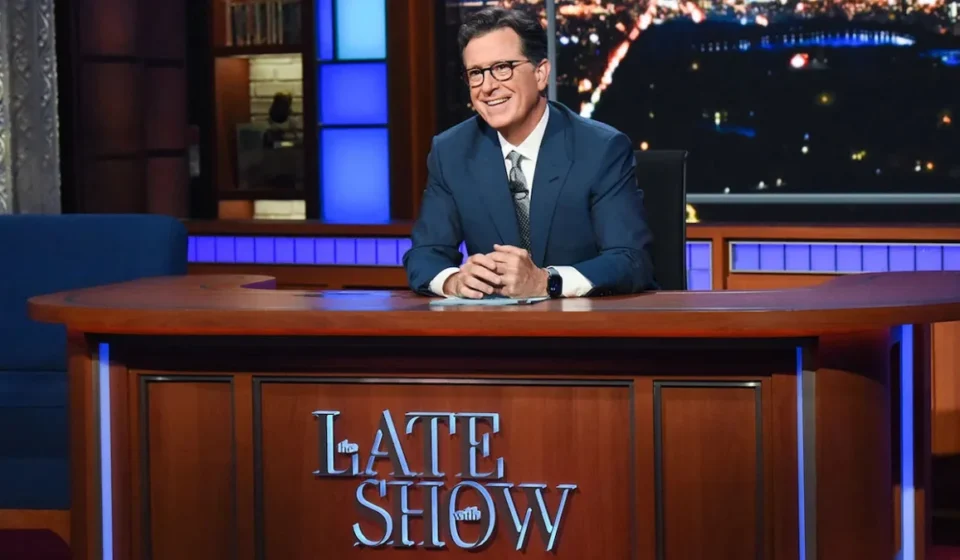
The most shocking development remains the cancellation of The Late Show. On May 21, the franchise—a cornerstone of CBS programming for 33 years—concluded its 11-season run under Stephen Colbert. The official explanation, provided by the new regime following Paramount’s sale to Skydance Media, was a fiscal one: the show was allegedly losing $40 million annually.
Critics, however, remain deeply skeptical. Given the timing, many point to Colbert’s unwavering, sharp-edged criticism of the Trump administration as the true catalyst for the cancellation. Regardless of the reason, the finale of The Late Show has become a cultural touchstone. Throughout its final season, the show served as a sanctuary for guests to ruminate on the loss of a major institutional voice. Having won its first talk series Emmy just last September, The Late Show is positioned as a sentimental favorite—a "swan song" vote that carries heavy political symbolism.
The Kimmel Fiasco
If Colbert’s exit was a slow, institutional fading, Jimmy Kimmel’s experience was a violent storm. On September 17, Jimmy Kimmel Live! was pulled from the air following intense pressure from the Trump administration and FCC chairman Brendan Carr. The catalyst was a monologue in which Kimmel made an off-color comment regarding Charlie Kirk.
The threat was existential: major affiliate groups like Nexstar and Sinclair threatened to drop the show. Yet, the strategy backfired. The public backlash was immediate and fierce, forcing the networks to backtrack. When Kimmel returned on September 23, he did so with a series-record 6.26 million viewers, while his monologue generated 26 million social media impressions. It was a defiant display of the power of late-night, but it left the host and his staff in a state of professional uncertainty that has made this year’s Emmy campaign feel remarkably raw.
Supporting Data: Who Holds the Edge?
As voters cast their ballots, they are weighing three distinct factors: historical loyalty, political solidarity, and institutional excellence.
- The Case for Colbert: As noted, The Late Show benefits from the "final season" narrative. Voters often use their ballots to make statements, and rewarding a show that was arguably "canceled for its politics" is a classic Academy maneuver.
- The Case for Kimmel: Jimmy Kimmel Live! has been a perennial nominee for over a decade without a win. If voters view his recent brush with censorship as a heroic act of free speech, this could be the year the Academy finally recognizes his show.
- The Case for Oliver: Last Week Tonight remains the most technically consistent program in the group. Despite moving between categories, its win streak suggests that its appeal to Emmy voters—who value the show’s investigative rigor—is bulletproof.
- The Case for SNL: Having celebrated its 50th anniversary, the show continues to defy the odds. While it has leaned into the "absurd" in its 51st season rather than just the topical, its global expansion, including the surprise hit SNL UK, keeps it relevant in the eyes of international voters.
Implications: The Verdict of the Academy
The implications of the September 14 ceremony extend far beyond the gold statues. If the Academy chooses to honor a host like Colbert or Kimmel, they are effectively sending a message about the role of satire in a democracy under pressure. Conversely, a win for Last Week Tonight would underscore a preference for the "prestige" investigative format that has dominated the industry for a decade.
What is certain is that the outcome will be scrutinized by more than just television critics. In an era where the executive branch has shown a willingness to intervene in the business of entertainment media, the Emmy stage is likely to host more than a few protest speeches. Regardless of who takes the stage, the evening promises to be an incendiary conclusion to a season that saw the very survival of late-night television put to the test.
As the industry gathers, one thing is certain: the President’s Truth Social feed will be the most anticipated "after-show" analysis of the night. Whether the Academy votes for the institutional legacy of SNL, the investigative precision of John Oliver, or the defiant political voices of Colbert and Kimmel, the 2026 Emmys will be remembered as the night the industry finally stood up to be counted.