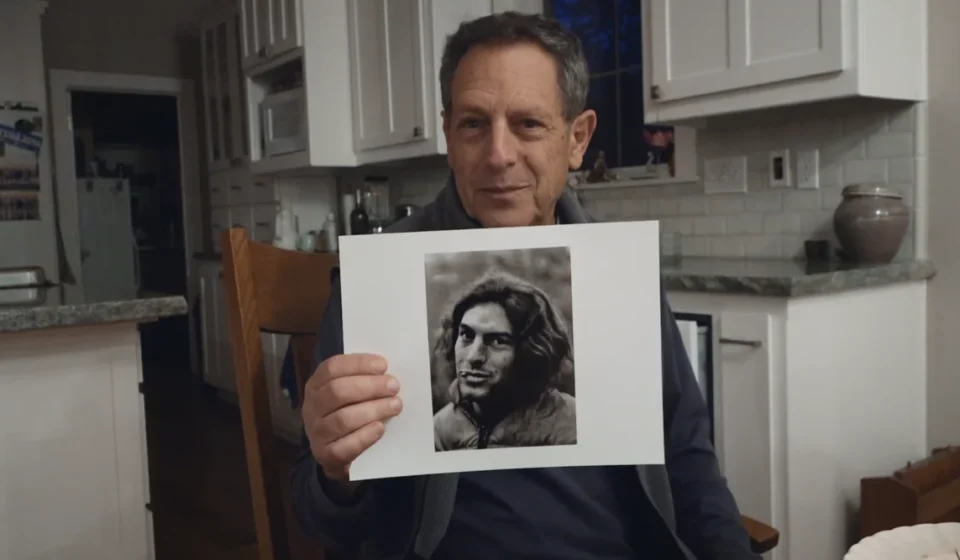
The Arc of a Lifetime: Robb Moss’s "The Bend in the River" Completes a Half-Century Cinematic Odyssey

In the realm of documentary filmmaking, few projects possess the audacity of patience. While most directors chase the ephemeral—the breaking news cycle or the sudden cultural shift—Robb Moss has spent the better part of fifty years fixated on the slow, rhythmic crawl of time. With the release of The Bend in the River, the final installment in his sprawling, intimate trilogy, Moss brings to a close a cinematic experiment that began long before the era of digital saturation. What started as a document of free-spirited youth has evolved into a profound meditation on mortality, the persistence of identity, and the quiet dignity of growing old.
The Genesis: A Half-Century of Observation
The premise of The Bend in the River is deceptively simple. A title card at the film’s opening sets the stage for those uninitiated into the lives of Moss’s subjects: "We used to be river guides. For many years, my friends and I lived an unscheduled, communal, outdoor life."
This brief introduction serves as an anchor for a narrative that spans five decades. The project’s origins trace back to the 1978 film Riverdogs, a documentary that captured the raw, uninhibited vitality of a group of five friends embarking on a nude voyage down the Colorado River. At the time, the film felt like a quintessential artifact of its era—a testament to a generation defined by the pursuit of freedom, the rejection of suburban constraints, and a deep-seated connection to the natural world. Those early scenes are marked by the golden-hued arrogance of youth, where the only demands placed upon the subjects were those of the rapids and the horizon.
In 2003, Moss returned to these same subjects for The Same River Twice. The intervening twenty-five years had stripped away the initial veneer of carefree wandering. The film shifted its gaze toward the complications of middle age: the sudden weight of career ambitions, the dissolution of marriages, the political anxieties of the early aughts, and the sobering reality of terminal health diagnoses. It was a transition from the "infinite possibility" of the seventies to the "difficult choices" of the new millennium.
Now, with The Bend in the River, the trilogy finds its conclusion. The subjects, now in their early seventies, stand at a vantage point where the road behind is significantly longer than the road ahead.

A Chronology of Existence
The structure of the "River" trilogy is not merely a record of events, but a study in how we narrate our own lives. By revisiting the same five individuals at three distinct intervals, Moss has created a rare, longitudinal look at human development.
- The 1970s (The Era of Potential): Riverdogs established the group’s archetype. They were the embodiment of the counterculture, defined by their physical prowess as river guides and their commitment to an "unscheduled" existence. The film captured a specific sociological moment, yet it was grounded in the personal bond of a chosen family.
- The 2000s (The Era of Consequence): The Same River Twice documented the friction between the ideal and the reality. It was a period defined by compromise. The characters faced the inevitability of social structures—politics, professional life, and biological frailty—that they once believed they could circumvent.
- The 2020s (The Era of Reflection): The Bend in the River serves as the synthesis. The characters are no longer striving for independence or grappling with the mid-life crisis of identity. Instead, they are inhabiting the aftermath of their choices.
The Aesthetic of Aging: Dignity in Decline
One of the most striking aspects of Moss’s direction is his refusal to engage in the "age is just a number" rhetoric that often sanitizes the elderly experience in modern media. He does not seek to hide the physical tolls of time; the gray hair, the slower movements, and the diminished stamina are all present. However, he treats these markers with a profound, almost botanical level of respect.
As a lifelong environmentalist, Moss films his friends with the same nonjudgmental, observant eye he might bring to a nature documentary. There is a quiet beauty in the way the film observes the mundanity of aging. When a subject discusses the existential weight of a box of 10,000 business cards—a symbol of the corporate life they once eschewed—Moss does not mock them. He does not frame their transition into conventional roles as a "sell-out" moment, nor does he label their youthful rebellion as "childishness."
Instead, the film occupies the space between these binaries. It argues that the person who runs the river and the person who sits behind a desk are the same entity, merely responding to the different seasons of a single life.
Supporting Data: The Persistence of Character
The "River" trilogy provides a unique, if anecdotal, data set on the endurance of personality. Despite the massive shifts in their external environments—some subjects remain in cabins living off the land, while others have fully assimilated into the digital, office-bound world—the core "hippie" spirit persists in all of them.

The film highlights a critical sociological insight: our environments change, and our bodies betray us, but the internal architecture of the self is remarkably stable. The spontaneity that defined their twenties is still visible in their seventies, even if it is now manifested in the way they handle a doctor’s appointment or a retirement party. By juxtaposing the nudity and wild energy of 1978 with the thoughtful, measured conversations of today, Moss illustrates that the human story is not a linear progression from "wild" to "tame," but a complex accumulation of experiences.
Official Responses and Cultural Implications
The film has already garnered critical acclaim for its anthropological rigor and emotional resonance. Critics have noted that while the films are deeply personal to Moss and his friends, they serve as a broader commentary on the American baby boomer experience.
The implication of the trilogy is a challenge to our culture’s obsession with "the next big thing." In a media landscape that prioritizes the immediate and the disruptive, Moss’s commitment to a fifty-year arc feels radical. He posits that the most interesting stories are not those with the highest stakes or the most explosive climaxes, but those that follow the slow, natural arc of a human life.
Furthermore, the film forces the viewer to confront their own mortality. There is a recurring, poignant joke throughout the film about the possibility of a fourth installment in twenty years. The subjects are acutely aware of their own fragility, knowing that the "Bend in the River" may well be the final stop. This self-awareness elevates the film from a simple documentary to a meditation on the very nature of existence.
Conclusion: A Worthwhile Journey
Ultimately, The Bend in the River is an exercise in empathy. It does not require a deep knowledge of the previous two films to be understood, as Moss provides enough context to bring the viewer into the fold. However, for those who witness the full scope of the trilogy, the payoff is immense.

We are invited to watch five people grapple with the reality that they are living out the final chapters of their own stories. There is no tragedy in this; rather, there is a profound sense of completeness. Robb Moss has achieved what few filmmakers ever attempt: he has captured the entirety of a friendship, from the untamed currents of youth to the calm, inevitable waters of the end.
For audiences looking for a film that avoids the artifice of modern cinema in favor of raw, lived-in reality, The Bend in the River is essential viewing. It is a reminder that while the river keeps flowing, the stories we carve into its banks remain.
Grade: B+
“The Bend in the River” is now playing at Film Forum in New York City.