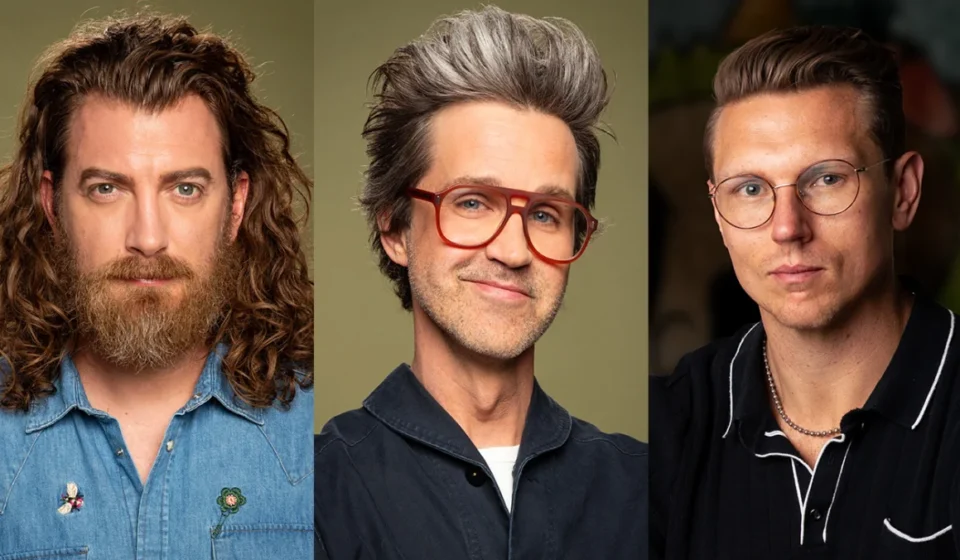
Mythical Entertainment Expands Its Empire: Netflix Inks Landmark Deal with ‘Good Mythical Morning’

In a transformative shift for the digital media landscape, Netflix has announced a major partnership with Mythical Entertainment, the production powerhouse behind the internet’s most enduring variety show, Good Mythical Morning (GMM). Beginning September 7, the streaming giant will begin airing episodes of GMM, Mythical Kitchen, and the acclaimed interview series Last Meals simultaneously with their YouTube premieres. This deal represents a significant departure from Netflix’s previous strategy of acquiring archived content, signaling a new era of “day-and-date” distribution for top-tier digital creators.
The Evolution of a Digital Institution: A Chronology
To understand the magnitude of this partnership, one must look at the trajectory of Rhett McLaughlin and Link Neal. The duo, childhood friends from North Carolina, first gained traction during the early days of YouTube’s creator economy.
- 2012: The Genesis of GMM: McLaughlin and Neal launched Good Mythical Morning on January 9, 2012. Originally envisioned as a morning talk show featuring conversational banter, it quickly evolved into a high-production variety format defined by "will it?" food experiments, eccentric games, and elaborate comedic segments.
- 2017: Scaling the Brand: Mythical Entertainment expanded significantly, moving into a massive studio complex and launching Mythical Kitchen, helmed by executive chef Josh Scherer. This allowed the brand to diversify its content ecosystem beyond the flagship show.
- 2020: The Birth of ‘Last Meals’: Amidst the global pandemic, the team launched Last Meals, an interview format where Scherer hosts high-profile celebrities, asking them to curate the meal they would choose for their final day on Earth. The show’s emotional depth and high production value helped bridge the gap between "YouTuber" content and traditional prestige talk-show aesthetics.
- 2024: The Netflix Pivot: After 14 years of operating as a YouTube-exclusive entity, the brand marks its transition into mainstream streaming. The deal to host daily episodes on Netflix represents the culmination of over a decade of consistent, high-frequency production.
Behind the Numbers: The Mythical Engine
The decision by Netflix to integrate Mythical Entertainment into its library is backed by staggering metrics. Across their various channels, Rhett and Link have amassed more than 10 billion total views. Unlike many creators who experience "viral spikes" followed by decline, the duo has maintained a rigorous, daily release schedule for over a decade.
For Netflix, the appeal is clear: consistency. In an era where streaming platforms struggle to maintain daily engagement, GMM provides a "habit-forming" anchor. The show releases new episodes every Monday through Friday, ensuring that viewers have a reason to return to the platform daily.
Furthermore, the integration of Mythical Kitchen and Last Meals adds a layer of culinary and celebrity-driven prestige. Last Meals, in particular, has become a cultural touchstone, drawing guests from the highest echelons of film, music, and comedy—often securing interviews that rival those of traditional late-night television. By folding these shows into its interface, Netflix effectively acquires a daily talk show infrastructure that it has struggled to build from scratch for years.
Official Responses and Strategic Vision
The announcement was met with enthusiasm from both parties, emphasizing a shared philosophy regarding the future of entertainment. In a joint statement, Rhett McLaughlin and Link Neal articulated their long-term vision:
"One of the things we’ve always believed is that great entertainment should meet people wherever they are. We’re excited to begin working with Netflix to bring Good Mythical Morning, Mythical Kitchen, and Last Meals to even more viewers, and we think this is just the beginning of a really fun collaboration."
This sentiment underscores a shift in how creators perceive their "home base." While YouTube remains the primary engine for audience interaction, platforms like Netflix provide a "prestige seal of approval" and access to a subscriber base that may not frequent the Google-owned video site.
Netflix’s strategy, meanwhile, is becoming increasingly clear: the platform is no longer content to simply produce original films and scripted series. It is aggressively courting the creator economy to bolster its unscripted library. By partnering with established giants like the Stokes Twins, the Hot Ones team, and now Mythical Entertainment, Netflix is essentially "curating the best of the internet" to ensure that when a user logs on, there is a constant stream of fresh, proven content.
The Structural Divergence: Why This Deal is Unique
Industry analysts have noted that the Mythical deal stands apart from Netflix’s previous creator acquisitions. In the past, Netflix has typically utilized one of two models:
- The Archive Model: Creators bring their back-catalog of content to Netflix, as seen with the Stokes Twins. This provides a library of "bingeable" material but does not drive daily recurring traffic.
- The Repackaging Model: Creators take existing YouTube content and re-edit or "package" it specifically for the streaming interface, as seen with Ms. Rachel or Jordan and Salish Matter.
The Mythical Entertainment deal breaks this mold by utilizing a Day-and-Date distribution model. The fact that GMM will debut on Netflix at the same time as its YouTube premiere is unprecedented for a daily variety show. It challenges the traditional "windowing" approach—where content is exclusive to one platform for a set duration—and instead treats Netflix as a secondary, simultaneous broadcast partner. This requires significant technical coordination and a belief from Netflix that the presence of the content on YouTube does not cannibalize, but rather complements, the viewing experience on Netflix.
Implications for the Industry
1. The Emmy Recognition Quest
One of the most intriguing aspects of this move is the potential for institutional validation. Rhett and Link have been public about their desire for Television Academy recognition. Despite their massive footprint, YouTube programming has historically struggled to gain traction with Emmy voters. By positioning GMM within the Netflix interface—the home of prestige television—the show may finally be viewed through the same lens as traditional talk shows. This could be the catalyst that finally brings the Mythical brand into the awards conversation.
2. The Death of the "Late Night" Traditionalist Model
For years, Netflix has attempted to replicate the success of the traditional late-night talk show with varying degrees of success. Shows hosted by Chelsea Handler, Michelle Wolf, and others often struggled to find an audience or sustain a long-term format. By pivoting to established digital creators who have already mastered the "daily conversation" format, Netflix is acknowledging that the future of talk shows lies in niche, personality-driven digital media rather than the rigid, celebrity-PR-heavy models of the past.
3. The Future of Content Distribution
This partnership may signal the end of the "silo" era for content creators. As the internet and television continue to blur, top-tier creators are no longer choosing between being "YouTubers" or "TV stars." They are opting for a hybrid model where they own their intellectual property and distribute it across multiple platforms simultaneously. This gives creators more leverage, more revenue streams, and a larger cultural footprint.
Conclusion: A New Mythical Era
As September 7 approaches, the media world will be watching closely to see how the Netflix audience interacts with the specific, highly-caffeinated brand of humor that Rhett and Link have cultivated. If this experiment proves successful, it will likely trigger a wave of similar deals, further cementing the role of the "creator-producer" as the primary architect of modern entertainment.
For Mythical Entertainment, the move is a testament to their longevity. After 14 years, they have moved beyond being a viral sensation to become a sustainable media institution. For Netflix, it is a low-risk, high-reward bet on content that has already proven it can hold the attention of millions. Whether this move leads to Emmy glory or simply a broader, more loyal audience, one thing is certain: the line between the internet and the living room has never been thinner.