Radicalism, Restoration, and the Warhol Orbit: Revisiting Mary Harron’s I Shot Andy Warhol

In the landscape of 1990s independent cinema, few films managed to capture the jagged, neon-lit tension of the downtown New York art scene as effectively as Mary Harron’s debut feature, I Shot Andy Warhol (1996). Before she achieved international acclaim for her biting satire of corporate malaise in American Psycho (2000), Harron turned her lens toward a different kind of pathology: the volatile, singular trajectory of Valerie Solanas.
As the film returns to theaters in a pristine 4K restoration, it serves as more than a nostalgic relic of the indie boom. It remains a provocative, uncompromising study of an outsider—a woman whose life and violent act of rebellion against the pop-art kingpin Andy Warhol have been subject to decades of myth-making, academic dissection, and cultural reclamation.
The Genesis of an Iconoclast
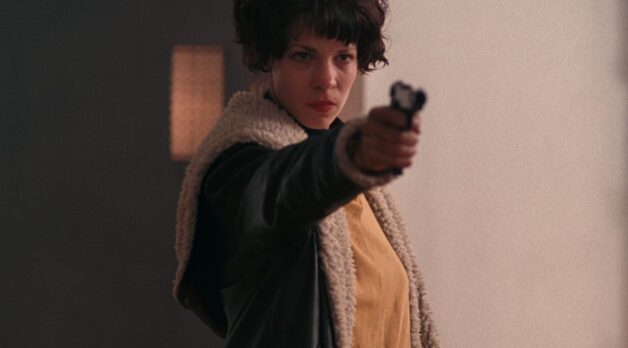
The film centers on the life of Valerie Solanas (played with raw, deadpan intensity by Lili Taylor), a radical feminist who famously shot Andy Warhol in 1968. To understand the film, one must understand the figure at its heart. Solanas, the author of the SCUM Manifesto—a document that remains one of the most intellectually jarring and stylistically brilliant texts of the 20th century—was a woman navigating the margins of a world that viewed her as little more than a nuisance.
In the film, we follow Solanas through the grimy, aspirational underbelly of 1960s New York. She is shown hawking mimeographed copies of her manifesto, struggling to secure a production for her play Up Your Ass, and drifting dangerously close to the center of Warhol’s Factory. It is a portrait of a woman who is, in Harron’s estimation, "neither contained nor ignored."
A Chronology of Artistic Defiance
The journey of I Shot Andy Warhol from a germ of an idea to a seminal work of independent cinema is a testament to Harron’s persistence.
- 1980s: Harron, while working as a researcher for a BBC documentary on Andy Warhol, first encounters the SCUM Manifesto. She is struck by the elegance of Solanas’s prose—comparing the biting irony to the wit of Evelyn Waugh—and the profound sense of alienation expressed in the text.
- 1991–1995: Harron navigates the notoriously difficult waters of independent film financing. A pivotal moment occurs when a BBC producer, intrigued by the project’s feminist underpinnings, provides initial seed money. Harron later partners with production powerhouses Christine Vachon and Tom Kalin, key figures in the New American Cinema movement.
- 1996: The film premieres. It is met with mixed but passionate responses, particularly regarding its refusal to offer a clear moral verdict on the shooting or the validity of Solanas’s ideology.
- 2026: Thirty years after its debut, the film receives a 4K restoration, overseen by cinematographer Ellen Kuras, prompting a re-evaluation of its themes in the context of contemporary digital culture and evolving feminist discourse.
Supporting Data: The Aesthetic of Grunge and Glamour
One of the most remarkable aspects of the restoration is how it highlights the visual sophistication of the film. Cinematographer Ellen Kuras employed a naturalistic, available-light approach that mirrors the "poetic realism" seen in other 90s landmarks like Larry Clark’s Kids.
The film’s aesthetic was deeply informed by historical research. Harron insisted on looking at primary sources—Diane Arbus photography, Magnum agency archives, and period-accurate magazines—rather than relying on existing cinematic tropes. The result is a film that feels like a "living document." The Factory, as rendered in the film, is a dreamlike space of colored light and grunginess—a place where the vulnerability of figures like Candy Darling (played by Stephen Dorff) and the cold, transactional nature of Warhol’s social circle collide.
The soundtrack, necessitated by Lou Reed’s refusal to allow the use of Velvet Underground songs, features an evocative score by John Cale. This pivot ultimately strengthened the film’s identity, allowing it to function as an original interpretation of the era rather than a mere period reconstruction.
Official Responses and Creative Intent
In recent interviews, Mary Harron has been candid about her original motivations. When asked if she intended to resolve the ambiguity surrounding Solanas—whether she was "crazy" or "brilliant," a satirist or a fanatic—Harron remains firm in her refusal to categorize.
"Categorizing it as satire keeps it in a safe place it doesn’t belong," Harron notes. "It is both brilliant and well-written, but also disturbing and awful at moments."
Harron’s approach to Warhol (portrayed by Jared Harris) was equally intentional. She sought to capture his "fragility and elusiveness" rather than painting him as a one-dimensional villain. Harris’s performance is credited with humanizing a figure who has been mythologized to the point of caricature. By avoiding the trap of heroes and villains, Harron allows the audience’s sympathies to "ping-pong" between the characters, fostering a more active and uncomfortable engagement with the film’s central conflict.
The Cultural Implications: Then and Now
The re-release of I Shot Andy Warhol arrives at a moment of intense cultural re-evaluation. In the mid-90s, the film was released into a climate defined by Susan Faludi’s Backlash, where the very label of "feminist" was fraught with public anxiety. Today, the conversation has shifted toward the intersection of digital fame, radicalization, and the ownership of personal narrative.
The "Influencer" Paradigm
Harron suggests that Solanas, who was famously unable to find a sustainable platform for her voice in the 1960s, might have found a different fate in the age of social media. "You can make your own fame now in a way you couldn’t in the ’60s," Harron observes. While this offers new opportunities for those marginalized by traditional gatekeepers, it also brings with it the darker, performative aspects of modern internet culture—a domain where irony and reality are often indistinguishable.
Essentialism vs. Modern Identity
A significant point of discussion in the film’s legacy is its portrayal of gender. Solanas’s ideology was rooted in biological essentialism—the idea that men were genetically inferior. When asked about how modern audiences interpret the SCUM Manifesto—with some contemporary critics arguing it is a trans-affirming text—Harron maintains a pragmatic stance.
"I think people get what they need from a text like that," Harron says. "I don’t think you can simply impose our current thinking onto her, but if people find it meaningful, I’m happy with that."
The Legacy of Discarded Talent
Ultimately, the film serves as a poignant critique of the "gendered economy" of the art world. Harron identifies a recurring pattern in the Factory: the elevation of "hungry-for-attention" individuals—particularly drag queens and trans women—who were celebrated for their novelty and subsequently discarded when they became "too difficult." By highlighting this, Harron elevates the film beyond a simple biopic. It is a commentary on the inherent ruthlessness of fame and the machinery of culture that consumes human lives to fuel its aesthetic output.
Conclusion: A Provocation for a New Generation
I Shot Andy Warhol remains a vital piece of cinema because it refuses to settle. It does not apologize for Valerie Solanas, nor does it lionize her. Instead, it invites the viewer to look at the wreckage of the 1960s art scene and recognize the familiar echoes of modern power dynamics.
As Mary Harron’s debut returns to the screen, it invites a new generation to grapple with the same questions that haunted the director in the 1990s: What do we owe to the outsiders? How do we distinguish between genuine artistic rebellion and the performance of rage? And, perhaps most importantly, how do we treat the people we discover, elevate, and eventually leave behind? In the 4K clarity of its restoration, the film remains as sharp, uncomfortable, and necessary as the day it was made.