
For over half a century, Mike Leigh has stood as the uncompromising poet laureate of the British experience. To enter a room with Leigh is to encounter an artist who has never traded his creative soul for the currency of the industry. At 83, he remains the same man who once refused to play the game—a filmmaker whose process involves no script, no plot, and no cast list when he approaches financiers, only his reputation and his word. Now, with the release of Tender Loving Care, Leigh suggests he may have arrived at the final chapter of his storied career.
The Integrity of the Outsider
No one tells Mike Leigh what his movie is about. Not the financiers who bankroll his visions, not the distributors who bring them to market, and certainly not the streaming giants like Netflix, who Leigh notes could fund his work "without batting an eyelid" but have never secured his cooperation.
His career is defined by a refusal to conform. He recalls a meeting at London’s Savoy Hotel in the late 1990s, shortly after the Academy Awards had snubbed his masterpiece Secrets & Lies. He was there to discuss financing for Topsy-Turvy, his historical drama about the creation of The Mikado. Sitting in the room was the late Harvey Weinstein, then the titan of independent film. In a display of characteristic arrogance, Weinstein offered a line that has stayed with Leigh for decades: "I could have gotten you those Oscars."

Leigh did not come to the Savoy to relitigate the awards season; he came to secure a future for his work. He walked away from Weinstein’s orbit, choosing to make Topsy-Turvy on his own terms. That act of defiance is the through line of his entire filmography—a body of work spanning over 50 years and 20 features that remains as authentic today as it was in 1971.
A Chronology of Truth
Leigh’s process is legendary in the industry: he walks into a room with nothing but a concept, asking for funding based purely on trust. From the BBC to the modern independent scene, he has consistently defied the traditional Hollywood model of development.
- 1971: Bleak Moments marks his feature debut, supported by Albert Finney. It establishes the "Leigh Method"—long rehearsals, improvisation, and an intimate exploration of human connection.
- 1996: Secrets & Lies brings him international acclaim, cementing his status as a chronicler of the working and middle class.
- 1999: Topsy-Turvy proves he can handle historical scale while maintaining his trademark focus on character depth.
- 2004/2008: Vera Drake and Happy-Go-Lucky showcase his ability to find the profound in the everyday, from the tragedy of backstreet abortionists to the resilience of a cheerful teacher.
- 2026: Tender Loving Care arrives as his lowest-budgeted feature, a quiet, melancholic study of social workers that feels, by all accounts, like a farewell.
The Anatomy of Tender Loving Care
The film follows Amy (Kate O’Flynn), a woman reeling from a breakup, as she moves in with her childhood best friend, Rosie (Alice Bailey Johnson). As they navigate their roles as social workers and their own estranged family dynamics, the film becomes a delicate, funny, and poignant meditation on who holds us up when we cannot hold ourselves.

The casting itself is a testament to the intimate nature of Leigh’s work. Marion Bailey, Leigh’s partner for over two decades, plays the mother of the protagonist. Her real-life daughter, Alice Bailey Johnson, plays the best friend. While they share no blood relation on screen, the casting creates a palpable, authentic connection that anchors the film’s central theme: the "web of long relationships" that define our lives.
Kate O’Flynn, who began her career with Leigh in Happy-Go-Lucky two decades ago, describes the experience of working on what may be his final film as "terrifying-slash-liberating." She notes, "There’s no scaffolding. You’re treated as an artist; you’re creating from the ground up."
The Physicality of an Artist
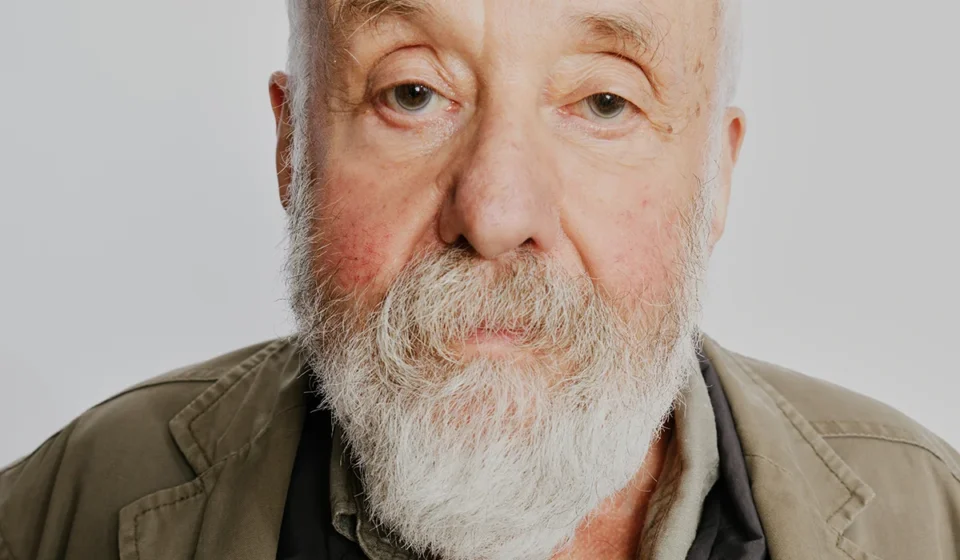
In a Zoom call from his home in London, Leigh appears much as his fans would expect: a shock of white beard, tortoiseshell glasses, and a sharp, spicy wit. However, he is candid about the toll that time has taken. Contending with myosotis—a muscle-wasting condition—Leigh admits that while his mind is as sharp as ever, his body is signaling that this journey may be reaching its natural end.

"I’m 83," he says. "I don’t know what state I’ll be in at 85. Making this film was great, but it’s a physical endeavor. Even if we decided to make another, it wouldn’t get made for two years."
Despite this, he refuses to label the film a "final bow." He speaks with a duality common to great artists: the relief of potentially stepping away from the grind of production, tempered by the visceral love for the "joyous" act of filmmaking.
Implications for Independent Cinema
The question remains: Could a first-time filmmaker replicate the Mike Leigh path today? His answer is a sobering "probably not."

"The problem now isn’t that the money isn’t there; it’s that the people with it want to control things," Leigh says. "Somebody who won’t tell you what it’s about or who’s in it, and doesn’t want to be interfered with, is anathema to them."
This shift in the industry has deep implications for the future of auteur-driven cinema. When financiers prioritize marketability and pre-determined plot points over the organic discovery of a story, the "Leigh Method" becomes increasingly difficult to sustain. Yet, Leigh remains optimistic about the next generation, noting that interesting independent films will always find a way to be made "by hook or by crook."
Looking Back, Moving On
Leigh’s career is a masterclass in staying true to oneself. When asked if he has regrets, his answer is surprisingly specific. He laments never having been able to make a "big-budget, contemporary film with multifaceted characters" on a grander scale, despite his success with historical epics like Mr. Turner and Peterloo. "I tried and failed endlessly, and I’m gutted I probably never will now," he admits.

Yet, as he reflects on a career that has spanned from the grit of Bleak Moments to the warmth of Tender Loving Care, there is a sense of completion. He does not watch his films for vanity; he watches them because they are exactly what he wanted them to be. "I have a privilege many filmmakers don’t," he says. "I quite like my films."
As the industry prepares for the potential final act of a titan, the legacy of Mike Leigh stands as a beacon for any artist who believes that integrity is the most important tool in the kit. He has spent 50 years proving that the most profound, universal stories aren’t found in scripts or spreadsheets, but in the messy, beautiful, and authentic interactions of human beings.
If Tender Loving Care is indeed the last, it serves as a fitting end: a film about the people who look after others, directed by a man who has spent a lifetime looking after the truth of the human condition.