Domestic Dystopia: Analyzing Louis Leterrier’s ‘The Last House’ and the New Wave of Post-Pandemic Sci-Fi

The cinematic landscape has long been obsessed with the end of the world, ranging from the explosive planetary collisions of Michael Bay to the quiet, desolate roads of The Road. However, a new entry into the genre, Louis Leterrier’s The Last House, currently streaming on Netflix, suggests that the most terrifying apocalypse isn’t the one happening on the horizon, but the one occurring within the four walls of a middle-class home.
By taking a high-concept "chamber piece" approach, Leterrier—a director usually associated with the high-octane maximalism of Fast X and The Incredible Hulk—pivots toward a claustrophobic, character-driven thriller that resonates deeply with a global audience still processing the collective trauma of the COVID-19 lockdowns.
Main Facts: The Premise and Creative Pedigree
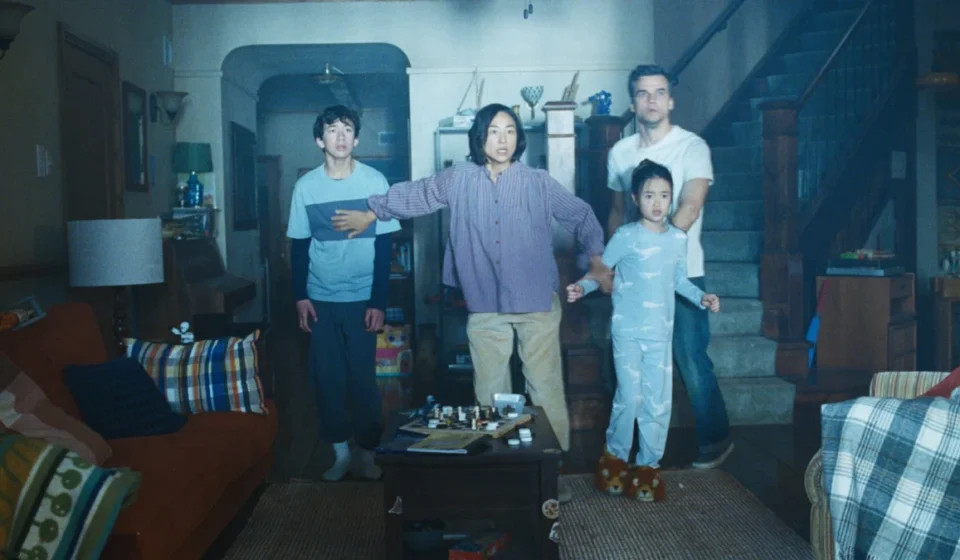
The Last House centers on the Delgado family, a typical middle-class unit living in a spacious, midcentury modern home in Seattle. The narrative hook is deceptively simple: one morning, the family wakes up to find that every exit to their home has been hermetically sealed by an invisible, impenetrable force. There are no demands, no explanations, and no visible captors. As the days turn into months, the film transitions from a survivalist thriller into a surrealist sci-fi meditation on environmental collapse and the fragility of the nuclear family.
Key Personnel and Production Details
- Director: Louis Leterrier, known for his work on The Transporter, Now You See Me, and most recently, the Fast & Furious franchise.
- Screenwriter: Matthew Robinson, whose credits include The Invention of Lying and the upcoming Good Luck, Have Fun, Don’t Die.
- Leading Cast: Wagner Moura (Narcos, Civil War) as Jason Delgado and Greta Lee (Past Lives, The Morning Show) as Ann Delgado.
- Production Design: Kevin Jenkins, a veteran of the Star Wars and Jurassic World franchises, tasked with making a single house feel like an evolving world.
- Platform: Netflix, continuing the streaming giant’s investment in "elevated genre" content that blends blockbuster thrills with prestige acting.
Chronology: From Domestic Comfort to Existential Enclosure
The narrative structure of The Last House is meticulously paced to mirror the psychological stages of confinement. The film’s timeline can be broken down into three distinct phases: the Shock, the Adaptation, and the Revelation.
Phase 1: The Shock (The Great Shut-In)
The film opens with a deceptive sense of normalcy. The Delgados are introduced amidst the mundane chaos of Seattle life—planning for Christmas, dealing with minor home repairs, and managing the squabbles of their children, Graham (Noah Alexander Sosnowski) and Ruth (Riley Chung). The inciting incident occurs during a heavy November rainstorm. When the family attempts to leave for school and work, they discover the doors and windows are unopenable. Unlike a standard home invasion, the threat is external and invisible. The glass is unbreakable, and the internet and phone lines are dead.
Phase 2: The Adaptation (The New Normal)
As the realization sets in that help is not coming, the film explores the "spirit of plucky resilience" that often emerges in the early stages of a crisis. The Delgados discover their neighbors are in the same predicament. Communication is established through crude signboards held up to windows. This segment of the film provides much of the "MacGyver-style" ingenuity mentioned by critics, as Jason (Moura) uses his engineering background to ration resources and maintain the home’s failing infrastructure. The passage of time is marked by the meager celebration of a spartan Christmas and a somber New Year, highlighting the shift from a temporary inconvenience to a permanent reality.
Phase 3: The Revelation (The Environmental Shift)
The final act of the film leans heavily into science fiction. As the house begins to literally "crack under pressure," the mystery of the outside world begins to bleed into the living room. The film introduces allusive, effects-heavy world-building that suggests the lockdown is part of a larger, perhaps planetary, ecosystemic adaptation. The "hows and whys" move from the inscrutable to the concrete, though the script purposefully leaves certain logistical questions unanswered to maintain the focus on the family’s internal evolution.
Supporting Data: Production Design and Performance Nuance
The success of a chamber piece—a film set almost entirely in one location—depends heavily on the interplay between the actors and their environment.
The House as a Character
Kevin Jenkins’ production design is arguably the film’s most vital technical asset. The midcentury Seattle home is not a static set; it is a living organism that decays alongside the characters’ mental states. As the months pass, the "detailed wear and tear" becomes evident—moldering walls, makeshift repairs, and the accumulation of "everyday mess and clutter." This grounding in physical reality provides a "stabilizing sense" that allows the more fantastical sci-fi elements to feel earned rather than absurd.
Grounded Performances
The casting of Wagner Moura and Greta Lee brings a level of dramatic gravitas usually reserved for indie dramas.
- Wagner Moura (Jason): Moura portrays a father whose identity is tied to his ability to provide and protect. As his "adult authority" is stripped away by an enemy he cannot fight, his performance shifts from frantic ingenuity to a more somber, pragmatic survivalism.
- Greta Lee (Ann): Lee, coming off the critical success of Past Lives, plays Ann with a "grounded, empathetic" energy. She serves as the emotional anchor, navigating the structural damage of both the house and her family’s psyche.
- The Children: Noah Alexander Sosnowski and Riley Chung are noted for playing Graham and Ruth with "unusual nuance," avoiding the tropes of the "annoying movie child" to show the harrowing reality of children forced to grow up in a vacuum.
Official Responses and Critical Reception
While Netflix does not typically release granular viewership data immediately, the critical response to The Last House has highlighted a fascinating tension between its execution as a thriller and its ambitions as a social commentary.
Critical Consensus
Critics have praised Leterrier’s ability to maintain "itchy cabin-fever atmospherics" while delivering the "expansive action setpieces" expected of his brand. The film is described as a "tensely enjoyable ride" that excels when it plays on what the audience cannot see. However, some reviewers have pointed out that the script by Matthew Robinson occasionally settles for "loose platitudes" regarding its deeper themes.
Thematic Critiques
The film’s use of an unidentified female narrator to deliver messages about community and isolation—"We lived closer to each other then… but it was easy to feel alone"—has been met with mixed reviews. While these "glum existential questions" resonate with the post-COVID zeitgeist, some argue they lack the provocative depth found in the film’s domestic drama.
Implications: The Evolution of the "Lockdown Thriller"
The Last House represents a significant pivot in how Hollywood addresses global catastrophe. In the pre-2020 era, a film about a family trapped in a house would likely have been a "home invasion" horror or a supernatural haunting. In the post-2020 era, the "enforced house arrest" is a recognized social reality.
The Mirror of Environmental Anxiety
The film’s focus on "ecosystemic adaptation" reflects a growing subgenre of sci-fi that deals with climate change not as a sudden disaster (like The Day After Tomorrow), but as a slow, claustrophobic encroachment. The "protective panic" the characters feel is a direct analogue to the modern experience of raising children in a world where the climate and social structures are "physically changing before our eyes."
Industry Impact
For Netflix, The Last House serves as a blueprint for high-concept, mid-budget filmmaking. By utilizing a limited location and a small, high-caliber cast, the production can allocate its budget toward high-end VFX for the "world-unbuilding" sequences while maintaining the character-driven depth that attracts award-season attention.
Conclusion
Ultimately, The Last House is a testament to the idea that the most effective science fiction is that which remains tethered to the "everyday mess" of human life. While it may be "silly in some respects" regarding its sci-fi logic, its portrayal of a family attempting to maintain their humanity while their world literally shrinks around them makes it one of the more resonant thrillers of the decade. As Leterrier proves, you don’t need a galaxy-spanning war to create stakes; sometimes, the inability to open your own front door is more than enough.