
In the landscape of modern blockbusters, few director-editor pairings have exerted as profound an influence on the grammar of cinema as Christopher Nolan and Jennifer Lame. Their latest collaboration, The Odyssey (2026), represents the culmination of a decade-long evolution in narrative compression, transforming Homer’s ancient, sprawling epic into a claustrophobic, visceral, and deeply impressionistic experience.
When Nolan first brought Lame aboard for the 2020 sci-fi thriller Tenet, the pairing was viewed by industry observers as an unexpected gambit. Lame, whose pedigree was firmly rooted in the intimate, dialogue-driven landscapes of Noah Baumbach (Frances Ha, Marriage Story) and the atmospheric dread of Ari Aster (Hereditary), was suddenly tasked with stitching together the high-concept physics and backward-moving action sequences of a $200 million spectacle.
The result was a masterclass in cinematic propulsion. Lame’s ability to treat the mechanical chaos of Tenet with the same character-driven rigor she applied to Baumbach’s scripts created a new aesthetic blueprint for Nolan. With The Odyssey, this partnership has reached an apex, redefining how epics are paced, structured, and felt.
The Evolution of a Partnership: From Tenet to The Odyssey
Lame’s entry into the Nolan fold required a fundamental shift in her approach to the edit bay. Recalling the daunting task of Tenet, Lame noted in a 2020 interview, "I started having to just imagine the cars in these big action sequences as people, giving each car a personality, and having them talk to each other. I was treating them like dialogue scenes because I think dialogue scenes are that exciting."
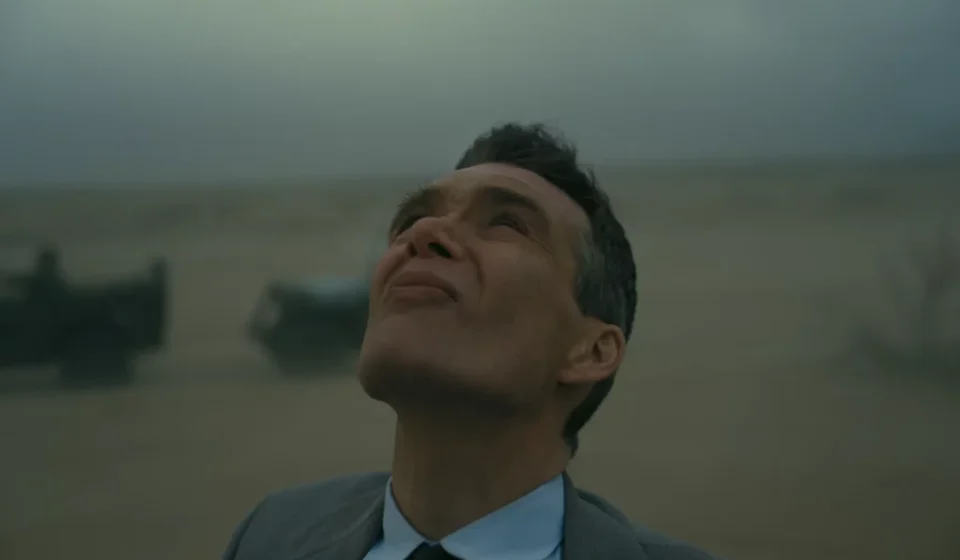
This methodology—viewing kinetic action as an extension of character psychology—carried over into their second collaboration, the Academy Award-winning Oppenheimer (2023). That film, which navigated the life of the "father of the atomic bomb" through a complex, non-linear timeline, solidified the "Nolan-Lame style." They moved away from the traditional, exposition-heavy pacing of earlier Nolan works and toward a rhythmic, almost musical intensity.
Lame credits her early work on Kenneth Lonergan’s Manchester by the Sea (2016) as the proving ground for this structural complexity. "I learned with Manchester very quickly: every time we switch timelines, it has to be incredibly emotional," she explained. "You don’t want the audience to feel like you’re using a technique frivolously. They’ll stop caring."

Chronology as a Synaptic Experience
In The Odyssey, the duo pushes the limits of chronological dislocation. The film does not merely jump between time periods; it exists in a state of simultaneous memory, where the past and present are constantly colliding.
The film opens with a framing device featuring Travis Scott as a bard reciting the legend of the Trojan Horse—an event viewed through three distinct temporal lenses simultaneously. We see Odysseus (Matt Damon) in the thick of the conflict, Sinon (Elliot Page) navigating the aftermath, and Penelope (Anne Hathaway) behind a metal screen, desperate to stop the bard from recounting a trauma that has become her daily reality.
By discarding the conventional "establishment" of scenes, Nolan and Lame ensure the audience is never anchored to a single point in time. The pacing is breathless; shots rarely last longer than a few seconds. This mimics the chaotic, unreliable nature of the human mind, particularly that of Odysseus, who recounts his journey to Calypso while emerging from a years-long, drug-induced haze. The film functions less like a history lesson and more like a series of synaptic firings—a technique reminiscent of Sergei Eisenstein’s theory of montage, where the cut is the primary vehicle for meaning.
Supporting Data: The Craft of Impressionistic Editing
The technical rigor behind The Odyssey is staggering. To manage the vast ensemble cast and the shifting perspectives of the Greek epic, Lame utilized a "character-pass" system, a method she refined on Oppenheimer.
"We would do passes of the film tailored to each character," Lame explained. "For instance, one day we would do a Serber pass, or a pass where we make sure everyone knows who Kistiakowsky is. No one needs to know their names, we just need to make sure that they remember their faces."
This approach allows the film to maintain its "impressionistic" edge. By focusing on the emotional resonance of a character’s presence rather than their narrative role, Lame ensures that fleeting appearances—often lasting only seconds—carry weight. This technique is particularly effective in the film’s depiction of the sack of Troy, where quick, decontextualized flashes of violence recur throughout the narrative, slowly building a cumulative sense of horror that eventually coalesces into a singular, devastating realization by the film’s conclusion.

Official Perspectives and Creative Intent
Christopher Nolan has long argued that the emotional impact of a film should supersede the complexity of its writing. While his early works like Memento (2000) were celebrated for their intellectual puzzle-box structures, his collaboration with Lame has shifted the focus toward a more intuitive, gut-level experience.
In The Odyssey, this is most visible in the rare, extended takes. While the film is characterized by its rapid-fire editing, it occasionally pauses for moments of profound stillness. A standout scene features Penelope, framed through the warp and weft of a loom, as she is courted by Antinous (Robert Pattinson). The scene echoes a previous, intimate exchange between Penelope and Odysseus before the war. By slowing the edit to a crawl, Nolan and Lame highlight the "frisson" of human interaction, emphasizing the fraying, fragile bonds that form the core of the ancient story.
The directors’ aim is to strip away the "opulent theatricality" common in historical epics like Kingdom of Heaven or The Robe. Instead of lingering on wide, majestic vistas of the Mediterranean, the camera remains tight, focused on the subjective experience of the characters. The scale is not found in the geography, but in the trauma.
Implications: A New Standard for the Epic Genre
The success of The Odyssey suggests a fundamental shift in how prestige blockbusters are being crafted. By favoring impressionism over exposition, Nolan and Lame have demonstrated that audiences are capable of absorbing highly complex, non-linear narratives if the "emotional logic" is sound.
The implications for the industry are significant:
- The Death of the Traditional Biopic/Epic: The "Nolan-Lame model" makes standard, linear historical dramas feel antiquated. The demand for films that function as sensory, synaptic experiences is growing.
- The Re-valuation of the Editor: Lame’s elevation to a co-architect of the film’s narrative structure marks a departure from the "director-as-sole-auteur" myth. Her influence is not just technical; it is generative.
- The "Collective Unconscious" Narrative: The Odyssey proves that high-budget, intellectual cinema can still achieve visceral, gut-wrenching emotional catharsis. It moves the epic genre away from the "great man" theory of history and toward an exploration of the collective human experience of memory and loss.
As the film continues to garner critical acclaim, it stands as a testament to the power of the edit. In an era where digital tools allow for infinite manipulation, Nolan and Lame have chosen to use the cut not as a way to hide seams, but as a way to reveal the fractured, beautiful, and terrifying nature of memory itself. The Odyssey is not just a film about a man returning home; it is a film about the struggle to remember what home feels like.