The Gilded Lens: How ‘Making Marie Antoinette’ Reclaims a Legacy Through a Mother’s Eye

In the annals of modern cinema, few films have suffered as peculiar a trajectory as Sofia Coppola’s 2006 period piece, Marie Antoinette. Initially dismissed by a contingent of critics as an exercise in style over substance—a candy-colored, pop-infused confection that allegedly ignored the gravity of the French Revolution—it has, two decades later, undergone a profound critical reappraisal. Today, it is widely regarded as a misunderstood masterpiece, a seminal work that anticipated the modern obsession with celebrity, isolation, and the "nepo baby" discourse long before such terms entered the popular lexicon.
Now, a new documentary, Making Marie Antoinette, arrives to provide the definitive context for that polarizing production. Directed by the late Eleanor Coppola, Sofia’s mother, the film is far more than a "making-of" featurette. It is a haunting, meta-textual meditation on motherhood, the creative impulse, and the generational evolution of women navigating the patriarchal landscape of Hollywood.
The Genesis of an Iconoclast
The term "nepo baby" has become a modern shorthand for dismissing the achievements of those born into industry dynasties. By the time that label gained cultural currency, Sofia Coppola had already spent a lifetime contending with it. Her early career was marked by the infamous critical savaging of her performance in her father’s The Godfather Part III—a moment that might have ended a lesser talent. Instead, it served as the crucible for her transformation into one of the most singular voices in independent cinema.

Coppola’s early features, The Virgin Suicides (1999) and Lost in Translation (2003), were exercises in hyper-real sensitivity, capturing the interior lives of women who were often ignored or objectified by their environments. When she pivoted to Marie Antoinette in 2006, she wasn’t merely adapting Antonia Fraser’s biography; she was engaging in a dialogue with her own public image. She sought to humanize the ultimate symbol of unearned entitlement, finding in the Queen of France a mirror for her own experience as a young woman in the arts, perpetually observed yet rarely understood.
A Chronology of Artistic Reclamation
The path to the documentary’s release has been a long and winding one. During the COVID-19 lockdowns, Sofia and Eleanor Coppola spent countless hours reviewing 80 hours of raw footage that Eleanor had captured on the set of Marie Antoinette in 2005. Following Eleanor’s passing in 2024, Sofia undertook the task of finishing the project, framing it as a tribute to her mother’s vision.
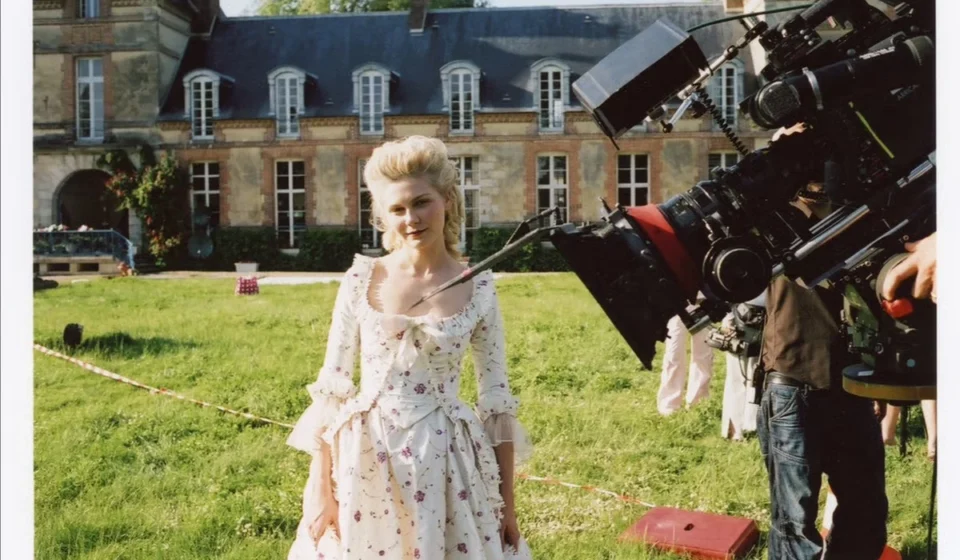
- 2005: Eleanor Coppola begins filming behind-the-scenes footage during the production of Marie Antoinette at the Palace of Versailles.
- 2006: The film premieres at the Cannes Film Festival to a mixed reception, sparking debates about its anachronistic soundtrack and "lightweight" tone.
- 2020-2022: A critical reappraisal gains momentum. Sofia and Eleanor begin the process of digitizing and editing the archival footage.
- 2024: Eleanor Coppola passes away, leaving the final cut of the documentary to be completed by Sofia.
- 2026 (November): Marie Antoinette is formally inducted into The Criterion Collection, cementing its status as a canonical work.
- 2026 (October/November): Making Marie Antoinette is slated for a theatrical and streaming release via MUBI.
The Mother’s Perspective: A Documentary in Crisis
Eleanor Coppola was no stranger to the high-stakes pressure of film production. Her legendary documentary, Hearts of Darkness: A Filmmaker’s Apocalypse, which chronicled the chaotic filming of Francis Ford Coppola’s Apocalypse Now, remains the gold standard for films about "movies in crisis."

In Making Marie Antoinette, the tone is decidedly different. While Hearts of Darkness dealt with the madness of the jungle, Making Marie Antoinette is an intimate, observational portrait of a daughter finding her footing. Through snippets of Eleanor’s journals—read with profound gravitas by Diane Lane—the audience gains access to the specific anxiety of a mother watching her child command a $40 million production.
"Shooting a documentary is like fishing," Eleanor remarks in the film. "You’re always waiting for something interesting to happen." This patience allows the film to eschew the polished, narrative-driven structure of modern EPKs (Electronic Press Kits). Instead, it focuses on the mundane: the edible prop aspics, the persistent bronchitis that plagued Sofia during the shoot, and the quiet, nervous energy of an auteur attempting to prove that a "young girl" could manage the vast, gilded machinery of a major studio production.
Supporting Data: The Cost of Brilliance
The film offers a granular look at the technical mastery of the 2006 production. We see cinematographer Lance Acord obsessing over the natural light of Versailles, and costume designer Milena Canonero constructing the visual vocabulary that would define the film’s aesthetic.

Crucially, the documentary highlights the pressure Sofia felt to avoid falling behind schedule. The production was not just a film; it was a test. The documentary captures the moments where the weight of expectations—from the studio, from her family name, and from the history books—seemed to press upon the director. When Eleanor writes, "Sofia looks too small and unprepossessing to be the director of a $40 million movie," it isn’t a critique; it is an articulation of the systemic doubt that has followed women in Hollywood for decades.
Official Perspectives and Behind-the-Scenes Realities
The film is populated by a cast that was clearly at ease with Eleanor’s camera. Kirsten Dunst, who anchored the original film with a performance of fragile complexity, is captured in moments of raw vulnerability. Whether she is laughing with co-star Jason Schwartzman or flinching slightly at the intrusion of the lens, the footage feels startlingly present.
For fans of the original film, these glimpses are equivalent to witnessing a master at work. However, the true power of the documentary lies in its subtext. It captures the arrival of Thomas Mars—Sofia’s then-boyfriend and now-husband—to the set, and the supportive presence of Francis Ford Coppola. Yet, it also reveals the silent, yearning shadow of Eleanor herself. There is a palpable sense of wistfulness as Eleanor reflects on her own life, questioning why she was relegated to documenting the accomplishments of her spouse rather than pursuing her own narrative voice earlier in her life.

Implications: The Legacy of Two Generations
The most profound implication of Making Marie Antoinette is the realization that the documentary itself is a triumph of intergenerational creative support. It is a meta-textual mirror: just as Sofia sought to reclaim the story of the Queen of France, she has now reclaimed the story of her mother’s perspective.
Eleanor Coppola did not wait until the end of her life to find her voice; she spent decades cultivating the gaze that makes this documentary so piercingly beautiful. By the time she directed her first narrative feature in 2016 at the age of 80, she had already established herself as a formidable chronicler of the human condition.
As we look back at the cinematic landscape of the early 2000s, Marie Antoinette no longer feels like an outlier. It feels like a prophecy. It was a film about the suffocating nature of fame and the desperate need for a private self—themes that have only grown more relevant in the age of social media. Making Marie Antoinette provides the final piece of that puzzle, showing us that the "unbearable lightness" of the original film was, in fact, a deeply heavy, hard-won labor of love.

The documentary serves as a reminder that the desire to be "seen"—to be perceived correctly—is universal, undiminished by status, wealth, or proximity to greatness. Sofia and Eleanor Coppola, two women separated by generation but united by craft, have created a document that ensures neither of them will ever be flattened into the wallpaper of history.
Making Marie Antoinette will be released in theaters on Friday, October 23, and will be available to stream on MUBI starting Friday, November 6.