The Digital Revolution: How ‘Backrooms’ and the Rise of YouTube Auteurs Redefined the Box Office

The global cinematic landscape has undergone a tectonic shift, and at the epicenter of this seismic change sits a yellow-walled, labyrinthine nightmare known as Backrooms. The film, an adaptation of the viral internet phenomenon, has officially crossed the $400 million mark at the global box office. For A24, the prestige indie distributor known for arthouse sensibilities, this milestone represents more than just a financial windfall; it is a declaration that the rules of Hollywood have been permanently rewritten by the creators of the digital age.
The Financial Phenomenon: A Statistical Triumph
Produced on a lean budget of just $10 million—a pittance compared to the $200 million-plus price tags of traditional summer blockbusters—Backrooms has emerged as the most profitable horror release of the year. After an unprecedented four-month theatrical run, the film has amassed $197.5 million domestically and $202.57 million internationally, bringing its total haul to $400.07 million.
This performance has catapulted Backrooms to the top of the record books. It is officially A24’s highest-grossing release of all time, obliterating the previous studio record held by Marty Supreme ($192 million). More impressively, the film delivered the studio’s biggest-ever opening weekend, raking in $81 million domestically and $118 million globally. This debut figure alone tripled the domestic record previously held by Alex Garland’s 2024 thriller Civil War, which debuted at $25.5 million.
The film’s international reach has been equally staggering. Major territories played a pivotal role in the film’s success, led by China ($27.8 million), Mexico ($17.8 million), the United Kingdom ($17.6 million), Australia/New Zealand ($12.3 million), and France ($12.2 million).
The Chronology of a Viral Masterpiece
The success of Backrooms did not happen overnight; it was the result of years of community-building and digital iteration.
- The Origins: The concept of the "Backrooms"—a series of eerie, liminal spaces characterized by moist carpets and monochromatic yellow walls—originated on 4chan before migrating to Reddit and TikTok.
- The YouTube Launchpad: Director Kane Parsons, known to his millions of online subscribers as "Kane Pixels," spent years crafting high-quality short films based on the lore. His ability to build suspense through atmosphere rather than traditional jump scares cultivated a massive, hyper-engaged audience.
- The Greenlight: Recognizing the potential of this built-in fanbase, A24 partnered with Parsons to bring his vision to the big screen.
- The Theatrical Run: Released in the heart of the summer season, the film defied industry skepticism. Despite being dubbed a "niche internet project," word-of-mouth spread with electric speed.
- The Milestone: By the end of its fourth month, the film surpassed the $400 million barrier, cementing its place in cinema history.
The "YouTube Generation" and the New Guard of Filmmakers
The success of Backrooms is not an isolated event; it is part of a larger trend of digital-native creators transitioning to the silver screen with unprecedented impact. The film shares this historical moment with Obsession, a horror hit directed by 26-year-old YouTube sensation Curry Barker. Produced for a mere $750,000, Obsession has generated a staggering $516 million globally.
These two films have effectively dismantled the long-held industry belief that younger audiences—specifically Gen Z—had lost interest in the theatrical experience. By proving that a filmmaker with a laptop and a vision can capture the global imagination, Parsons and Barker have become the most sought-after architects in Hollywood.
Kane Parsons, in particular, has rewritten the record books. At age 20, he became the youngest filmmaker in history to have a No. 1 film at the box office. He surpassed the benchmark set by Josh Trank, who was 27 when his 2012 found-footage hit Chronicle opened at the top spot with $22 million.
A24’s Summer of Dominance
The success of Backrooms allowed A24 to achieve the impossible: outperforming major legacy studios during the most competitive window of the year. Throughout the summer, A24 managed to surpass both Warner Bros. and Paramount in market share.
At the conclusion of the summer period, A24 sat comfortably with $237 million in domestic box office revenue. They ranked fourth among all distributors, ahead of Paramount ($192 million) and Warner Bros. ($165 million). While industry giants Universal ($1.12 billion), Sony ($978.8 million), and Disney ($664 million) maintained their spots at the top of the food chain, A24’s positioning as a "boutique" studio punching above its weight class was the defining story of the season. It is a rare, perhaps singular instance of an indie distributor disrupting the market share dominance of the "Big Five."
Artistic Merit: From Web Series to Feature Film
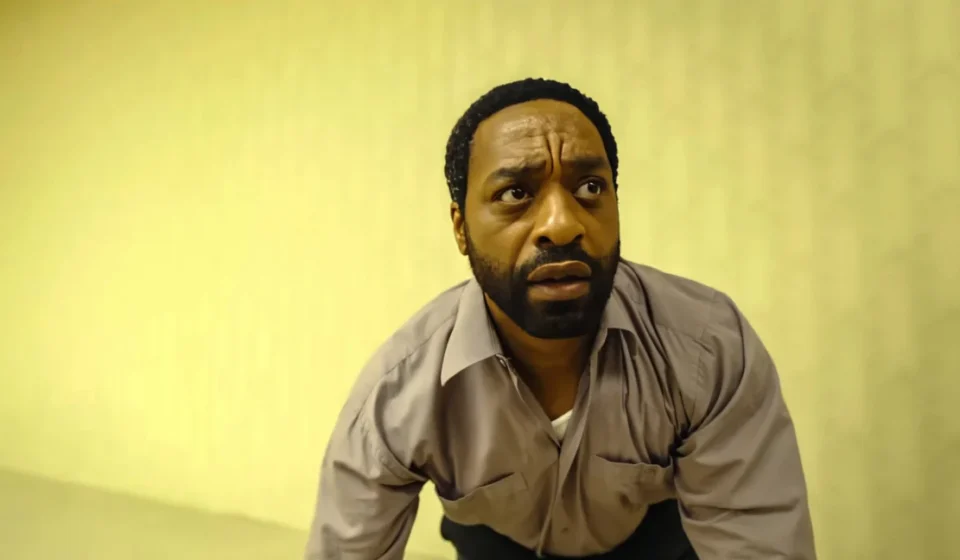
Beyond the spreadsheets, Backrooms has been lauded for its atmospheric tension. The film, which stars Chiwetel Ejiofor, Renate Reinsve, and Mark Duplass, follows a furniture store operator who stumbles into an endless array of liminal spaces hidden within the store’s basement.
Critics have noted that the film succeeds because it respects the source material’s "liminal space" aesthetic—the uncanny feeling of being in a familiar place that feels fundamentally wrong. By maintaining the unsettling, low-fi digital aesthetic that made Parsons’ YouTube channel famous, the film managed to feel authentic to the digital natives who had been following the project for years, while still feeling "cinematic" enough to justify the price of a theater ticket.
Implications for the Future of Hollywood
The industry is currently in a state of scramble. Every major studio is actively hunting for "the next Kane Parsons." The traditional "pitch-to-development-to-production" cycle is being bypassed in favor of a new model: identifying existing, high-engagement digital properties and empowering the original creators to adapt them.
The success of these YouTube-to-film projects suggests that the audience of the future values community and lore over traditional star power. The "Backrooms" phenomenon proves that if a project has an established voice, a recognizable aesthetic, and a massive, organic following, the theatrical experience is not dead—it is merely evolving.
A Franchise in the Making?
While no official sequel has been confirmed by the studio, Kane Parsons has publicly hinted at his desire to turn Backrooms into a full-fledged cinematic franchise. Given the $400 million return on a $10 million investment, it is a foregone conclusion that conversations regarding a follow-up are already underway.
The rise of the digital auteur is no longer a fringe movement; it is the new engine of the film industry. As Hollywood continues to grapple with the decline of traditional franchises, the yellow, endless hallways of the Backrooms have provided a clear, if unsettling, roadmap for the future of entertainment. The message to the industry is clear: the next great blockbuster is not being conceived in a boardroom in Burbank—it is being rendered, edited, and uploaded by a creator who knows exactly what their audience wants to see.