The Evolution of Alden Ehrenreich: From Blockbuster Expectations to the Craft of Character

The scene is a hotel suite in Toronto, where the air is thick with the ambient, swelling orchestral score of a high-stakes thriller. It is 10:00 AM—hardly the hour for Wagnerian crescendos—but for Alden Ehrenreich, it provides an ironic backdrop to a conversation about the truth of his craft. As he sits down to discuss his latest film, A Talent for Murder, the dramatic music serves as a meta-commentary on the actor’s journey: a career defined by massive expectations, unexpected detours, and a hard-won maturity that has recently culminated in a Tony Award win.
The Premise: A Dangerous Game of Authorship
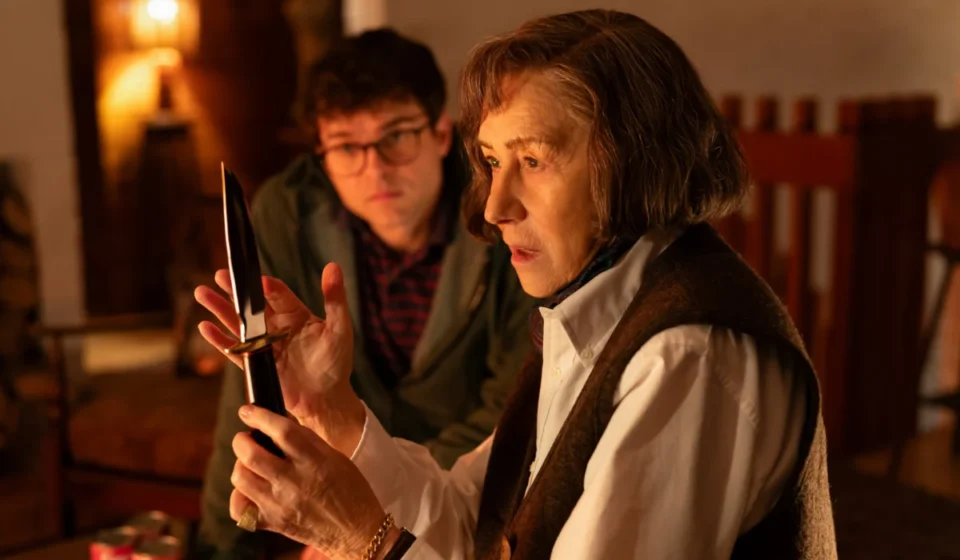
Ehrenreich is in Toronto for the world premiere of Anton Corbijn’s A Talent for Murder, a psychological drama that debuted to significant buzz at this year’s Toronto International Film Festival. In the film, Ehrenreich portrays Edward, an ambitious representative from a New York publishing house tasked with a daunting assignment: traveling to Switzerland to coax a reclusive, prickly Patricia Highsmith (played by the legendary Helen Mirren) into penning a sixth Tom Ripley novel.
The narrative shifts when the pair, initially locked in a battle of wills, begin to collaborate on a story that forces Edward into the persona of the infamous Tom Ripley. For Ehrenreich, the role represents a refreshing departure from the "franchise-first" roles of his past. By playing a man imagining himself as Ripley, rather than playing the literary icon directly, he bypasses the baggage of audience preconceptions. "It’s a much more interesting way into that character," Ehrenreich observes. "You aren’t just being a ‘Tom Ripley’ figure where everyone already has a mental image of how you should walk, talk, and kill."
A Chronology of Artistic Growth
To understand where Ehrenreich is today, one must look back at the trajectory of his twenties. From the early, high-pressure expectations of Beautiful Creatures—touted as the next Twilight—to the gargantuan weight of stepping into the boots of Han Solo, Ehrenreich’s early career was a masterclass in trial by fire.

"I was 22, 23," he reflects on the Beautiful Creatures era. "That movie was supposed to be the next big thing. When it came out and was a non-event, it taught me a lesson that has been gradual: the industry side of things is simply not my purview."
This realization led him away from the relentless cycle of blockbuster speculation and toward the theater. His recent Tony Award win for his performance in Becky Shaw stands as the definitive marker of this transition. For an actor who had long managed a theater company in Los Angeles, the transition to a professional Broadway stage was not just a career choice; it was a homecoming. He speaks of the "physical cost" and the "love" required to sustain a performance in a play, contrasting it with the fragmented, high-speed nature of film production.
Behind the Scenes: The Mirren Factor
The partnership with Helen Mirren in A Talent for Murder was, by all accounts, a masterclass in collaboration. Despite the film’s production being interrupted by financing hurdles—a common reality in independent cinema—the chemistry remained intact.
"She is just so gentle, warm, and soft-spoken," Ehrenreich says of Mirren, though he quickly notes her famous intensity. "But she is also incredibly opinionated. When you’re in a room with her, she lets the environment be whatever it’s going to be, and you just fall into step with that."

The rehearsal process, which took place a full year before principal photography began, mirrored the rigors of a stage production. Ehrenreich notes that this preparation was vital, especially as they transitioned from shooting scenes in Italy to the claustrophobic, dialogue-heavy sequences in the Swiss retreat.
Navigating the Industry: From Oppenheimer to the MCU
Ehrenreich’s recent work in Christopher Nolan’s Oppenheimer showcased his ability to command screen time even in an ensemble of giants. His character, serving as a foil to Robert Downey Jr.’s Lewis Strauss, provided moments of levity and sharp, historical poignancy.
"I watched Mr. Smith Goes to Washington to prepare," he reveals. "There is an old-school, classical patriotism in that writing. I think Chris Nolan was moved by it, and it was something I felt as a kid. Playing a character that feels like a Jimmy Stewart figure was very exciting."
Regarding his foray into the Marvel Cinematic Universe, Ehrenreich remains pragmatic. "I’m pretty illiterate when it comes to the MCU," he admits with a laugh, noting that he consulted with Downey Jr. before signing on. "He was very encouraging. It was an easy-breezy, fun, lighthearted experience. I approach it the same way I approach everything: I throw myself into it."

The "Stefan Urquelle" Analogy: An Actor’s Perspective
In a moment of levity that highlights his self-deprecating nature, Ehrenreich compares the dual-role challenge of A Talent for Murder to the transformation of Steve Urkel into the "cool" Stefan Urquelle from Family Matters.
"It’s a very exciting draw to get to do both of those things at the same time," he explains. By playing both the nebbish Edward and the imagined, sociopathic version of Ripley, he explores the spectrum of identity—a theme he finds deeply compelling. He notes that while the "Ripley" in their film is not canon—and is never explicitly named as such due to complex legal rights—it allowed him to tap into the later, more repressed versions of the literary character.
Implications: Integrity Over Headlines
The core of Ehrenreich’s current philosophy is a deliberate detachment from the "thumbs-up, thumbs-down" culture of festival premieres and box office reports. He draws inspiration from the careers of Marlon Brando and John Cassavetes—artists whose work was often misunderstood or criticized in their own time but whose integrity remained the guiding light of their legacies.
"The flame at the center of that stayed lit," Ehrenreich says. "The short-term gain of a certain success can cost you the integrity of a lifetime if you chase it. It’s about the thing itself."

This focus has allowed him to find a balance that was elusive in his youth. Whether it is his upcoming projects, his writing, or his continued involvement in the Los Angeles theater scene, Ehrenreich is no longer interested in being the "next" of anyone. Instead, he is focused on the "continued success" model—a term he admires from the career of Courteney Cox.
Conclusion: A Future Built on Choice
As the interview concludes, the dramatic music fades, leaving the room feeling grounded once more. Ehrenreich is clearly in a different place than he was ten years ago. He is no longer defined by the outcome of a film or the noise of a press cycle. He is an actor who has survived the gauntlet of studio expectations and emerged with a clearer sense of his own voice.
"I feel really grateful that I get to work," he says, a sentiment that feels entirely genuine. "I know a lot of actors who can’t get jobs. I get to go to this festival, stay in a nice place, and do this work. The only thing I have control over is what I show up for and how I show up for it."
A Talent for Murder premieres in theaters on Friday, October 23. Whether or not it becomes the definitive film of the season is, in the eyes of its lead actor, ultimately irrelevant. For Alden Ehrenreich, the success is already in the performance.