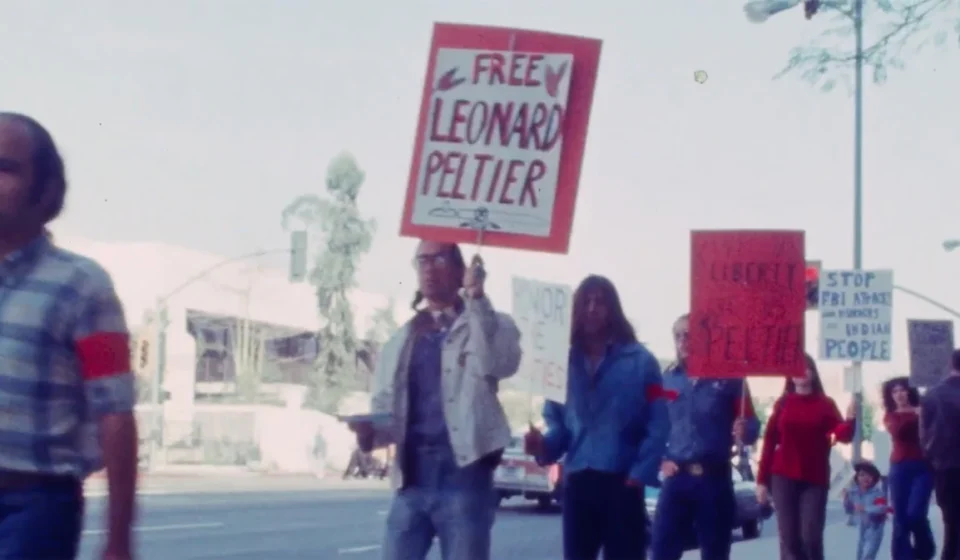
The Fight for Justice: Netflix to Release Acclaimed Documentary ‘Free Leonard Peltier’

By Editorial Staff
September 18, 2026
The haunting refrain, "It’s always because of the land," serves as the thematic backbone for one of the most anticipated documentary releases of the year. Following a celebrated festival run that began at the 2025 Sundance Film Festival, the harrowing true-crime and social justice documentary Free Leonard Peltier is finally set to reach a global audience. Netflix has announced that the film will premiere on its platform on October 12, 2026, offering viewers a deep, unflinching look at one of the most contentious legal cases in modern American history.
Directed by the powerhouse duo of David France—known for his masterful work on How to Survive a Plague and Welcome to Chechnya—and Jesse Short Bull, the director behind the acclaimed Lakota Nation vs. United States, the film serves as both a historical record and a call for re-examination. By weaving together archival footage, poignant contemporary interviews, and innovative AI-assisted recreations, the filmmakers attempt to untangle five decades of mystery, activism, and systemic conflict.
The Core Facts: A Half-Century of Controversy
At the heart of the documentary is the case of Leonard Peltier, an American Indian Movement (AIM) activist who was convicted of the 1975 murders of two FBI agents, Jack Coler and Ronald Williams, on the Pine Ridge Indian Reservation in South Dakota. The incident, a chaotic shootout that occurred during a period of extreme civil unrest, resulted in the deaths of the two agents and a young Indigenous man.
Peltier was subsequently arrested, extradited from Canada, and sentenced to two consecutive life terms in federal prison. For nearly fifty years, his case has been a flashpoint for human rights organizations, legal scholars, and Indigenous activists worldwide. While supporters have long maintained that Peltier was a political prisoner framed by the federal government to stifle the growing influence of the American Indian Movement, the FBI and the Department of Justice have consistently defended the conviction.
The documentary does not merely recount the trial; it examines the atmosphere of the 1970s—a time of occupations, targeted arrests, and clandestine government campaigns. It highlights Peltier’s transition from a mechanic to an AIM activist, painting a portrait of a man caught in a war for sovereignty that ultimately led to his long-term incarceration.

Chronology of the Peltier Case
To understand the weight of the new documentary, one must understand the timeline of events that led to Peltier’s 2025 commutation:
- June 26, 1975: A shootout on the Pine Ridge Reservation leads to the deaths of FBI agents Jack Coler and Ronald Williams.
- 1976: Leonard Peltier is extradited from Canada to the United States after a lengthy legal battle.
- 1977: Peltier is convicted on two counts of first-degree murder and sentenced to two life terms in federal prison.
- 1977–2024: A decades-long campaign for clemency is launched by supporters, including Amnesty International, citing prosecutorial misconduct and the suppression of exculpatory evidence. Multiple appeals are denied by federal courts.
- January 2025: In a landmark decision, Peltier’s sentence is commuted to home confinement. While this marks a significant shift in his status, his legal conviction remains intact.
- October 12, 2026: Netflix premieres Free Leonard Peltier, bringing the history and the ongoing struggle for exoneration to a worldwide audience.
The Filmmaking Perspective: France and Short Bull’s Vision
The decision to pair David France and Jesse Short Bull was deliberate. France brings a veteran’s eye for investigative storytelling and institutional critique, while Short Bull provides the essential cultural context and firsthand understanding of the Indigenous experience.
In their collaborative effort, the directors employ a sophisticated visual language. The use of AI-assisted recreations is particularly noteworthy, allowing the filmmakers to visualize events that were never captured on camera, thereby bridging the gap between historical documents and the modern viewer’s need for narrative clarity.
"We wanted to look at the man, not just the myth," Short Bull stated in recent press materials. By grounding the narrative in the human element—Peltier’s life before, during, and after his time in the AIM—the film avoids becoming a dry legal procedural. Instead, it becomes a study of how an individual can be consumed by the machinery of the state.
Supporting Data and The Campaign Against AIM
One of the most compelling aspects of the film is its exploration of the federal government’s campaign against the American Indian Movement. Drawing on declassified documents and survivor accounts, the film argues that the FBI’s activities on the Pine Ridge Reservation went far beyond standard law enforcement.
The documentary highlights the "COINTELPRO" style tactics used during the era, where the goal was often to "neutralize" activists rather than simply solve crimes. By contextualizing the 1975 shootout within the broader history of the "Reign of Terror" on the reservation—a period characterized by high homicide rates and political infighting—the film provides a necessary counter-narrative to the standard government accounts of the era.

Financial and logistical support for the production was provided by a coalition of producers, including Jhane Myers and N. Bird Runningwater, ensuring that the project maintained authentic ties to the communities most impacted by the events of the 1970s.
Official Responses and The Legal Limbo
The legal status of Leonard Peltier remains a source of intense debate. When his sentence was commuted in early 2025, the Department of Justice and the FBI’s agents’ associations remained largely silent, though past records show they have consistently opposed any form of leniency.
The commutation effectively ended his physical imprisonment but left the legal stain of the conviction. For Peltier’s supporters, this is a "half-victory." They argue that the failure to overturn the conviction prevents true closure and keeps the threat of re-incarceration alive. The documentary highlights this tension, interviewing legal experts who argue that the original trial was marred by evidence withheld by the prosecution—a claim the government has never formally admitted.
The film does not shy away from the complexity of the case. It presents the perspective of the law enforcement agencies who lost their colleagues, ensuring that the tragedy of the 1975 shootout is not erased. By presenting these conflicting truths, the film forces the viewer to grapple with the possibility that justice and legal finality are not always the same thing.
Implications: Why This Story Matters Now
The release of Free Leonard Peltier in 2026 is timely. As society continues to re-evaluate the role of federal institutions and the treatment of Indigenous populations, the Peltier case serves as a mirror. It forces a conversation about the nature of dissent, the limits of state power, and the endurance of historical trauma.
Furthermore, the film’s arrival on Netflix—a platform with hundreds of millions of subscribers—ensures that the story of Leonard Peltier will move beyond the insular circles of human rights activists and into the mainstream consciousness. This shift could have real-world implications, potentially reinvigorating efforts for a full pardon or a formal judicial review of his conviction.

As the film suggests, the story of Leonard Peltier is the story of America itself: a nation constantly negotiating its identity between the ideals of liberty and the realities of its history. Whether one views Peltier as a symbol of resistance or a participant in a violent tragedy, the film demands that we look closer.
Final Thoughts
As the October 12th premiere approaches, the conversation surrounding Free Leonard Peltier is already gaining momentum. With its blend of investigative rigor and emotional depth, the documentary is poised to be one of the most significant releases of the year. For those interested in the intersections of law, history, and human rights, it is an essential watch.
Free Leonard Peltier is produced by David France, Paul McGuire, Jhane Myers, and N. Bird Runningwater. It will be available for streaming on Netflix globally starting October 12, 2026.