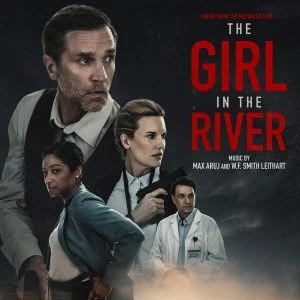
The Sound of Suspense: Max Aruj and W.F. Smith Leithart Score the Chilling Thriller The Girl in the River

The cinematic landscape of the thriller genre has long relied on the symbiotic relationship between tension-filled narratives and evocative, atmospheric scores. Today, that tradition continues with the release of the official soundtrack for the highly anticipated crime thriller The Girl in the River. Published by Scott Point Productions, the album arrives in tandem with the film’s wide release, offering audiences a deep, immersive dive into the unsettling soundscape crafted by composers Max Aruj and W.F. Smith Leithart.
As the film hits select theaters and Video-on-Demand (VOD) platforms today via Samuel Goldwyn Films, the release of the score marks a significant milestone for a production that has generated considerable buzz among genre enthusiasts. With a star-studded cast and a narrative steeped in forensic mystery, the musical accompaniment serves as the heartbeat of the film’s high-stakes investigation.
The Genesis of the Score: A Collaborative Vision
The sonic architecture of The Girl in the River is the product of a collaborative effort between two distinct voices in film music. Max Aruj, a composer whose resume includes heavy-hitting projects such as Mission: Impossible – The Final Reckoning, Man on Fire, and The Ice Road, brings a seasoned expertise in building orchestral tension and propulsive, rhythmic suspense. Pairing Aruj with W.F. Smith Leithart—known for his work on Dinner to Die For—has resulted in a score that balances clinical, forensic precision with the raw, emotional urgency required by the film’s dark subject matter.
In the world of modern thriller scoring, the challenge lies in creating a sound that feels both alien and grounded. The soundtrack for The Girl in the River succeeds by utilizing minimalist motifs that slowly build into crescendo-heavy sequences, mirroring the protagonists’ descent into a labyrinthine investigation.
Chronology of the Investigation: A Story Unfolds
Directed and written by Brando Benetton, The Girl in the River follows a narrative trajectory that demands a precise musical pace. The plot centers on a seasoned criminologist and a forensic psychologist who are summoned to a remote, claustrophobic town. Their task is to solve the gruesome murder of a young child and locate her twin sister, who has vanished without a trace.
Act I: The Arrival
The score introduces the listener to the town of Canton, the setting of the mystery. Tracks like "First Time in Canton" establish a sense of unease, utilizing ambient sound design mixed with sparse, dissonant strings. The audience is introduced to the protagonists as they navigate a community defined by secrets and silence.
Act II: The Forensic Descent
As the investigation deepens, the music shifts from atmospheric dread to analytical intensity. Tracks such as "Autopsy," "Like a Fingerprint," and "No Teeth, No Print" emphasize the clinical nature of the protagonists’ work. Here, Aruj and Leithart employ staccato percussion and synthesized pulses to mimic the rapid-fire thinking required to piece together a fragmented crime scene.
Act III: The Race Against Time
The final act of the film—and the corresponding tracks on the album, such as "Sometimes the Dragon Wins" and "Even If I Wanted To"—reflect the shift from professional inquiry to personal obsession. The music becomes increasingly frantic, mirroring the characters’ realization that the killer is not merely an adversary, but a manifestation of the town’s deep-seated trauma.
Supporting Data: The Soundtrack Anatomy
The official tracklist for The Girl in the River reveals a total of 19 compositions, ranging from brief, haunting interludes to more expansive, cinematic suites. The structure of the album suggests a deliberate narrative arc, allowing listeners to experience the emotional journey of the film even without the visual medium.
Tracklist Highlights:
- The Girl in the River (2:56): The central theme, establishing the tragic core of the film.
- Autopsy (3:13): A masterclass in clinical, investigative tension.
- Same Game, Different Outcome (5:48): The longest track on the album, serving as the dramatic pivot point for the climax.
- Sometimes the Dragon Wins (4:09): A somber, reflective piece that highlights the toll of the investigation.
The digital release, now available on Amazon and other major streaming services, provides high-fidelity access to these soundscapes, allowing fans of film music to analyze the intricate layering of synth and live instrumentation that defines the Aruj-Leithart collaboration.
Official Responses and Creative Direction
Director Brando Benetton has spoken at length regarding the importance of the score in shaping the tone of The Girl in the River. In various promotional discussions, Benetton highlighted the need for a score that did not "tell the audience how to feel," but rather invited them into the uncomfortable headspace of the lead characters.
The cast, which includes Devon Sawa, Maggie Grace, Tiffany Haddish, and Ralph Macchio, provides the emotional anchors for the film, but it is the musical landscape that bridges the gap between the film’s forensic procedural elements and its psychological thriller roots. By focusing on silence and sudden, jarring shifts in tempo, the composers have effectively created a score that acts as a third participant in the investigation, heightening the mystery with every chord change.
Implications for the Thriller Genre
The release of The Girl in the River soundtrack arrives at a time when the "small-town mystery" sub-genre is experiencing a resurgence. However, the film differentiates itself through its reliance on authentic forensic procedural elements—a choice echoed in the music.
A New Standard for Procedural Thrillers?
By avoiding the trope of bombastic, over-orchestrated action music, Aruj and Leithart have set a new benchmark for how mystery thrillers can utilize sound. The score is less about the "spectacle" of the hunt and more about the "agony" of the search. This subtle approach aligns with current trends in prestige television and film, where audiences gravitate toward hyper-realistic, grounded storytelling.
Market Impact
With Samuel Goldwyn Films backing the distribution, the movie is positioned to reach a wide audience through the hybrid model of limited theatrical release and simultaneous VOD availability. This strategy acknowledges the changing habits of modern film viewers, who are as likely to discover a film through digital platforms as they are through traditional cinema. The soundtrack, consequently, serves as a vital marketing asset, providing fans with a way to engage with the film’s "mood" long after the credits roll.
Conclusion: A Sonic Legacy
The Girl in the River stands as a testament to the power of effective collaboration. Max Aruj and W.F. Smith Leithart have crafted a musical experience that is as much about the things left unsaid as it is about the unfolding mystery. From the chilling resonance of the title track to the propulsive, desperate energy of the finale, the soundtrack is a haunting companion to what promises to be one of the year’s most intense thrillers.
As viewers head to theaters or fire up their streaming devices to witness the hunt for the killer in Canton, they are encouraged to pay close attention to the soundscape. It is in the subtle cues, the lingering silences, and the sharp, unexpected bursts of melody that the true terror of the film resides. The Girl in the River is not just a film to be watched; it is a dark, atmospheric mystery to be felt, and its score is the key to that experience.
The soundtrack for The Girl in the River is available now on all major digital platforms. For more information on the film’s release and where to stream it, visit the official Samuel Goldwyn Films portal or your preferred digital retailer.