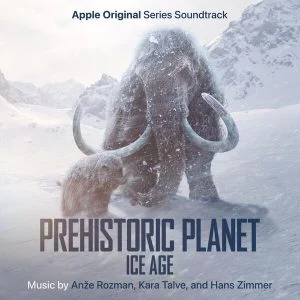
The Sound of the Pleistocene: An In-Depth Look at the ‘Prehistoric Planet: Ice Age’ Soundtrack

The prehistoric world has long captured the human imagination, but rarely has it been brought to life with such sonic ambition as in the Apple TV+ documentary series Prehistoric Planet: Ice Age. Following the global success of the first two installments of the Prehistoric Planet franchise, Milan Records has officially released the soundtrack for this third, highly anticipated chapter. Featuring an evocative score composed by the trio of Anže Rozman, Kara Talve, and the legendary Hans Zimmer, the album offers a masterclass in atmospheric storytelling, perfectly mirroring the harsh, awe-inspiring reality of the Earth’s most recent glacial epoch.
Main Facts: A Collaborative Masterpiece
The release of the Prehistoric Planet: Ice Age soundtrack marks a significant milestone for the franchise. The score serves as the heartbeat of a five-part series that shifts the focus from the Cretaceous period to the dramatic, frozen landscapes of the Pleistocene.
The musical narrative is helmed by the accomplished composing team of Anže Rozman and Kara Talve, working in collaboration with Academy Award-winning composer Hans Zimmer. This creative synergy has already garnered critical acclaim, including an Emmy Award nomination for their work on this specific project. The album is currently available for streaming and digital purchase via Amazon and all major digital music platforms, allowing listeners to experience the grandeur of the ice-covered wilderness outside the confines of the television screen.
The series itself is a triumph of production, executive produced by the visionaries Jon Favreau and Mike Gunton. Produced by the world-renowned BBC Studios Natural History Unit and narrated by the inimitable Tom Hiddleston, Prehistoric Planet: Ice Age transports viewers millions of years into the past—a time defined by shifting climates, the relentless struggle for survival, and the dominance of the iconic megafauna that once roamed our planet.
Chronology of a Sonic Franchise
The journey of Prehistoric Planet as a musical entity began in 2022 with the release of the Season 1 soundtrack, which introduced the world to the series’ distinctive, sweeping orchestral style. This was followed in 2023 by the Season 2 soundtrack, which expanded upon the sonic palette established in the first season, further cementing the franchise’s reputation for high-fidelity, emotionally resonant scoring.
The release of the Ice Age soundtrack in 2026 continues this legacy while introducing a marked shift in tone. Where previous seasons focused on the sprawling ecosystems of the dinosaurs, Ice Age required a more introspective and brutal musical language. The transition from the warm, lush soundscapes of the Cretaceous to the biting, crystalline, and often desolate textures of the Ice Age is evident in the album’s tracklist, which reflects the heightened stakes of a world locked in a deep freeze.
Supporting Data: The Anatomy of the Score
The Prehistoric Planet: Ice Age soundtrack is a comprehensive 26-track collection that functions both as a backdrop to the series and as a standalone listening experience. The tracklist is as follows:
- Prehistoric Planet III Theme – Hans Zimmer, Kara Talve & Anže Rozman
- Mammoth Herd Part 1
- Mammoth Herd Part 2
- Rock Climbing Sloth
- Homotherium
- Elasmotherium
- Dust Storm
- Grasslands Giants
- Moa Courtship
- Woolly Rhino
- Smilodon
- Megalonyx
- Megalocerus
- Carnivorous Kangaroo
- Marsupial Lion
- Tar Pits
- Elephant Bird
- Gigantopithecus
- Glyptotherium Gauntlet
- Giant Short-Faced Bear
- Doedicurus
- Dwarf Stegodon
- Forest Fruit Picker
- Apex Predator
- Welcome to the Ice Age
- Next Time
The composition credits are shared primarily between Talve and Rozman, with the "Prehistoric Planet III Theme" serving as the collaborative anchor for the entire production. Each track is meticulously titled to evoke specific prehistoric creatures or environmental challenges, such as the Smilodon (saber-toothed cat) or the Gigantopithecus, providing a clear thematic roadmap for the listener.
Official Responses and Creative Vision
The creators behind the score have noted in previous interviews that the objective of the music in the Prehistoric Planet series is to avoid the "cartoonish" tropes often associated with prehistoric depictions. Instead, the team aimed for a grounded, documentary-style approach that respects the majesty of these extinct animals.
Hans Zimmer’s involvement, though intermittent in the day-to-day composition, provides a foundational aesthetic—a sense of scale and epic proportion that has become synonymous with his brand. Kara Talve and Anže Rozman, both of whom have extensive backgrounds in high-end television (including The Tattooist of Auschwitz and The Americas, respectively), bring a nuanced, emotional depth to the project. They have successfully balanced the "nature documentary" aesthetic with the tension of a cinematic thriller, particularly during tracks like "Glyptotherium Gauntlet" or "Apex Predator," where the music must underscore the life-or-death stakes of the animal kingdom.
The production team at the BBC Natural History Unit has praised the score for its ability to bridge the gap between scientific accuracy and narrative empathy. By giving the animals a "voice" through orchestration, the composers have helped humanize (or rather, "animalize") creatures that might otherwise seem distant or alien to a modern audience.
Implications: The Evolution of the Nature Documentary
The release of this soundtrack highlights a broader trend in modern media: the "prestige" nature documentary. No longer is the genre satisfied with simple voiceovers and background ambiance; there is now an expectation for film-score-quality music that rivals major motion pictures.
The Role of Technology in Sonic World-Building
The technical achievement of the Prehistoric Planet series, combined with its score, represents the pinnacle of current digital entertainment. The music utilizes a blend of traditional orchestral elements—strings, brass, and percussion—and modern digital synthesis to mimic the vastness of the prehistoric landscape. The use of low-frequency oscillations in tracks like "Mammoth Herd" is intended to evoke the sheer mass of the animals, a technique that demonstrates how sound design and musical composition have become inseparable in the modern documentary landscape.
A Legacy of Conservation and Education
Beyond the entertainment value, the Prehistoric Planet: Ice Age soundtrack serves as an educational tool. By attaching specific themes to specific animals, the music helps viewers identify and remember the unique species featured in the series. It creates an emotional connection to the "lost world," which is a core component of the series’ mission: to demonstrate that while these creatures are gone, their story is an essential part of the tapestry of life on Earth.
Future Perspectives
As the Prehistoric Planet franchise continues to evolve, the standard set by this latest soundtrack creates a high bar for future projects. The collaboration between Zimmer, Talve, and Rozman has proven that there is a significant audience for high-quality, thematic instrumental music tied to natural history.
In conclusion, the Prehistoric Planet: Ice Age soundtrack is more than just a companion piece to a television show. It is a sophisticated, evocative collection of music that captures the chill of the Pleistocene and the grandeur of the giants that once called it home. For fans of film music, nature documentaries, and the intersection of science and art, this album represents one of the most compelling releases of the year. Whether you are listening for the thunderous percussion of the mammoth herds or the delicate, melancholic melodies of the Moa Courtship, the score offers a profound auditory experience that reminds us of the fragility and power of the natural world.
The series is currently available to stream on Apple TV, and with the soundtrack now available on all major platforms, the experience of the Ice Age is more accessible—and more immersive—than ever before.