The Digital Bridge: How Cooke Optics’ /i Technology is Transforming the VFX Pipeline

In the high-stakes environment of modern feature film and episodic production, the disconnect between the set and the digital studio has long been a source of friction. Cinematographers spend decades honing the ability to craft an image through focus, aperture, and optical character, yet for years, much of that nuance was lost in translation once the footage hit the post-production suite.
In a recent fxpodcast, Jordan Thistlewood, Chief Digital Officer at Cooke Optics, sat down to discuss the evolution of Cooke’s /i Technology. He argues that lens metadata—once viewed as an esoteric, underutilized technical byproduct—is now emerging as one of the most critical assets in the modern VFX pipeline. By enabling lenses to communicate directly with cameras and post-production software, Cooke is effectively building a "digital bridge" that preserves the artistic intent of the cinematographer through the entire filmmaking lifecycle.
The Genesis of /i: A Two-Decade Evolution
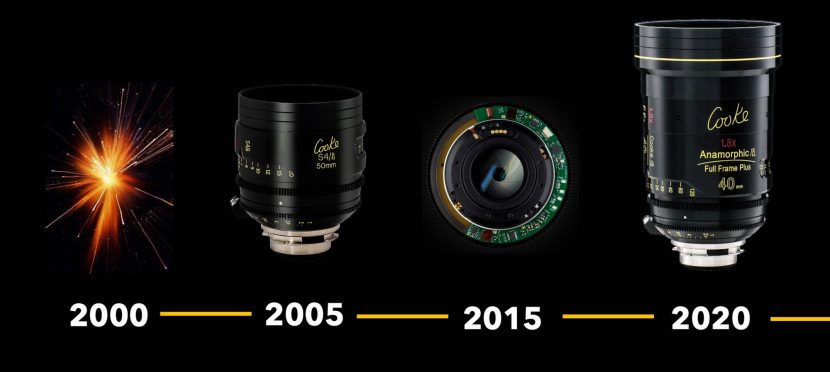
Cooke’s /i Technology was not an overnight innovation; it is the result of over twenty years of persistent development. The core premise was simple yet revolutionary: treat the lens as an intelligent component of the camera system.
Historically, once a shot was captured, the metadata associated with that image—focus distance, iris settings, T-stop, focal length, and depth of field—was frequently approximated, reverse-engineered, or entirely discarded. This created a vacuum where VFX artists were forced to "guess" the optical properties of a shot to integrate CG elements seamlessly.
The initial ambition for /i was to move away from these estimations. By recording frame-accurate data directly from the lens, Cooke aimed to provide post-production teams with a definitive record of exactly what happened on set. Over the last two decades, this system has matured from a niche feature into an industry standard, encompassing not just focus and iris, but complex characteristics like entrance pupil information, shading data, and hyperfocal distance.
Chronology of Adoption: From Sidecars to Embedded Data
The most significant hurdle in the adoption of lens metadata has been the logistics of data management. In the early years of the technology, lens metadata was often captured as a "sidecar" file—a separate data package that had to be manually aligned with the video. This method was inherently fragile. If the metadata was not meticulously managed, it could drift out of sync, be lost during file transfers, or fail to reach the VFX facility altogether.
The turning point occurred when camera manufacturers—including ARRI, RED, Sony, and Blackmagic—began integrating /i support directly into their camera mounts. This transition from "sidecar" to "embedded" data was a watershed moment.
Today, when a cinematographer shoots with a Cooke /i-equipped lens on a compatible camera, the metadata is written directly into the raw camera file. This ensures that the data is frame-accurate, tamper-proof, and inextricably linked to the image it describes. As Thistlewood notes, the shift from managing external files to having metadata baked into the raw footage has drastically increased the "survival rate" of that information as it travels from the set to the colorist and eventually to the VFX team.
The "Love Letter": Respecting the Craft of Cinematography
Perhaps the most compelling argument for the adoption of /i technology is the perspective of Jordan Thistlewood, who characterizes metadata as a "love letter" from the camera department to the VFX team.
This framing shifts the conversation away from technical fetishism and toward the preservation of craft. Cinematographers are not merely capturing light; they are choreographing the viewer’s gaze. A focus puller’s decision to transition focus from the background to a foreground character is a narrative tool. When this information is lost, a VFX artist must manually reconstruct that focus movement, a process that is not only time-consuming but rarely captures the exact optical "feel" of the lens.
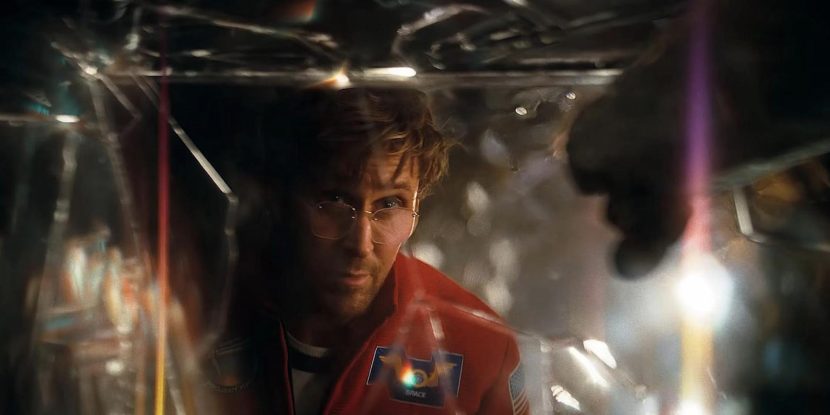
By providing accurate focus metadata, the camera department provides the VFX team with a blueprint of the shot’s aesthetic intent. For instance, on the production of Project Hail Mary, the use of precise focus distance data allowed the compositing team to automate the application of defocus, ensuring that CG elements inherited the same optical characteristics as the live-action plates. This removes the "guesswork" and allows artists to focus on creativity rather than forensic reconstruction.
Technical Implications: Understanding the "Living" Lens
A common misconception in post-production is that lens characteristics are static values. As Thistlewood explains, lenses are "living, breathing" objects. Optical behavior—including distortion and breathing—is rarely constant; it is dynamic and shifts based on the focus distance and focal length.
The Problem with "Infinity" Specs
The focal length engraved on a lens is typically a measurement taken at infinity. However, most film production occurs at much closer distances. In these real-world scenarios, the lens’s optical performance shifts. Cooke has invested heavily in "lens characterization," which maps how a lens behaves across its entire focus and zoom range.
The Challenge of Zooms
While prime lenses offer consistent, predictable behavior, zoom lenses introduce a higher degree of complexity. Because zoom lenses involve moving elements, their distortion and entrance pupil characteristics change constantly. While Thistlewood remains cautious about making "sub-pixel" promises for all zoom movements, he emphasizes that measured metadata is exponentially more accurate than the manual estimations that were the industry standard for years.
By having this data, VFX supervisors can avoid the "Frankenstein" approach to compositing, where elements are scaled and warped to match a lens that the artist doesn’t fully understand. Instead, they can apply a mathematical model of the lens that adjusts for the exact state of the optics at the moment of capture.
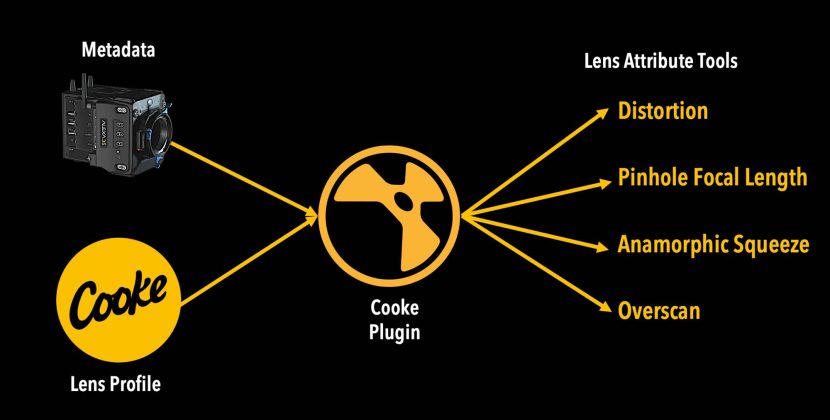
Overcoming the Workflow Bottleneck
Despite the obvious benefits, the industry still faces a "cultural and procedural" bottleneck. Even when metadata is successfully captured, it can be stripped away during transcoding, editorial turnover, or when generating EXR sequences.
The industry is responding, however. Major facilities like Company 3 and specialized VFX pipelines are increasingly recognizing the value of metadata as a required deliverable. The prevailing wisdom is now simple: Do not throw the data away.
Even if a specific VFX software tool cannot immediately utilize the metadata in its user interface, preserving it in the file headers ensures that it remains available for future stages of the pipeline. The cost of preserving this data is negligible, while the cost of losing it—measured in man-hours spent on manual tracking, lens solving, and focus reconstruction—is substantial.
The Tipping Point: A Call to Action
We are currently at a tipping point in the industry. The technology exists, the hardware is capable, and the software tools are becoming increasingly sophisticated. The final hurdle is the standardization of expectations.
Thistlewood’s message to VFX supervisors and post-production leads is clear: Demand the metadata. It should be an itemized requirement in the turnover process and a standard component of the Quality Control (QC) phase. By making metadata a non-negotiable part of the production language, studios can realize significant savings in time and labor, while simultaneously ensuring that the visual integrity of the cinematographer’s work is protected.
As the lines between live-action and digital effects continue to blur, the ability to maintain a high-fidelity connection between the physical lens and the virtual camera will become the defining factor in photorealistic production. Cooke Optics is not just selling glass; they are selling a standardized, reliable, and essential data language that serves as the foundation for the next generation of filmmaking.
In conclusion, as Jordan Thistlewood emphasizes, the /i technology is not merely a tool for the camera department—it is a vital bridge that connects the creative intent on the set to the final output on the screen. It is time for the industry to stop treating metadata as an optional extra and start treating it as the essential, foundational component of the modern digital production pipeline.