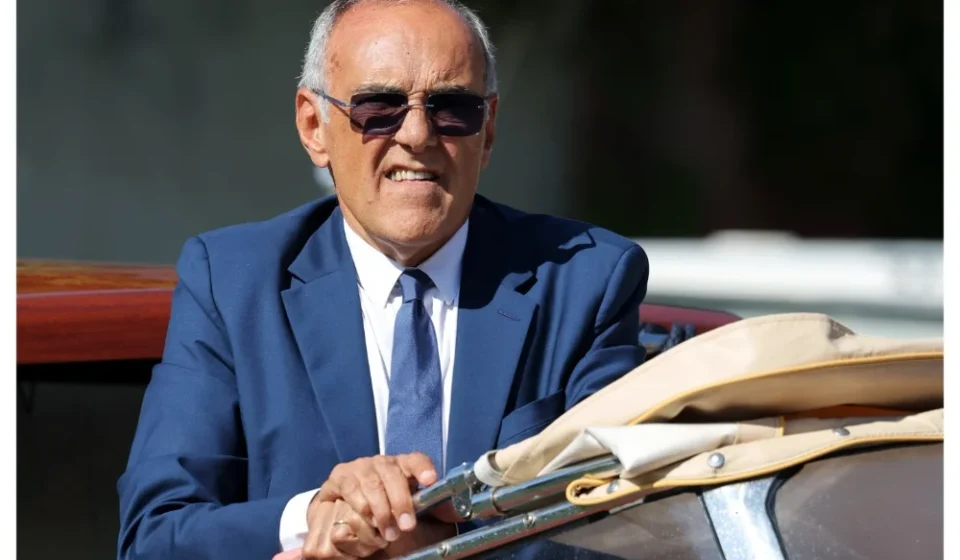
The Lido’s Resilience: Alberto Barbera Navigates a Shifting Cinematic Landscape at the 2026 Venice Film Festival

The Venice Film Festival, the world’s oldest and one of its most prestigious cinematic gatherings, is once again preparing to transform the Lido into a global epicenter of culture. Under the stewardship of artistic director Alberto Barbera, the 2026 edition of the festival has managed to curate a lineup of significant pedigree and star power, despite a perceptible retreat from major U.S. studios and streaming giants. As the industry grapples with an existential identity crisis and a lack of reliable promotional blueprints, Barbera’s latest selection serves as a testament to the festival’s enduring allure and its ability to act as a launchpad for both high-concept auteur cinema and unexpected cultural phenomena.
A Lineup Defying Industry Trends
The 2026 Venice lineup is, by all accounts, a masterful balancing act. While the absence of a "blockbuster" slate from the major Hollywood players might lead casual observers to assume a cooling relationship between the Lido and the studios, the reality is far more nuanced. Barbera has secured a roster of films that emphasize global cinematic breadth.
The festival will feature highly anticipated projects from an elite cadre of international auteurs, including Martin McDonagh, Florian Zeller, Danny Boyle, Werner Herzog, Lance Oppenheim, Nanni Moretti, Hirokazu Kore-eda, and Lee Chang-dong. Perhaps most surprisingly, the festival will host the world premiere of Don’t Look Back in Anger, a documentary chronicling the tumultuous and legendary reunion of British rock icons Liam and Noel Gallagher. The inclusion of the Oasis project—supported by Disney—underscores that while traditional studio dramas may be sparse, the festival remains a premiere destination for high-profile, non-fiction cultural events.
The Anatomy of a Studio Stalemate
To understand why the red carpet this year may feature fewer Hollywood executives, one must look at the structural instability currently plaguing the major studios. According to Barbera, the narrative that studios are "boycotting" festivals is a misreading of a much deeper, systemic fatigue.
"The studios are in such a state of stalemate, struggling and redefining themselves by merging," Barbera explains. "They are experiencing an identity crisis, and as a result, the auteur films usually destined for the festival circuit simply aren’t being produced at the same rate."
Barbera points to a specific, high-profile case to illustrate this: Alejandro González Iñárritu’s Digger, starring Tom Cruise. Despite the film’s potential, Warner Bros. opted for a direct-to-theater release, bypassing the fall festival circuit entirely. Barbera is quick to emphasize that this is not a slight against Venice, but a calculated marketing gamble. "It is a marketing choice," he notes. "They are struggling to figure out how to promote films in an era where the old tools no longer work."
Chronology of Production Delays and Industry Shifts
The 2026 festival season has been marred by a series of logistical hurdles that have kept major titles off the Lido’s program. The "disappearing act" of several highly touted projects can be attributed to the unpredictable nature of contemporary production cycles rather than a shift in institutional strategy.
- The Sorkin Stumble: Aaron Sorkin’s The Social Reckoning was still in production as of early August, making a festival-ready cut impossible to achieve in time for the Venice deadline.
- The Fincher Factor: David Fincher’s The Adventures of Cliff Booth, widely expected to be a staple of the 2026 circuit, was forced to pause production due to personal and family-related complications.
- The Villeneuve Conundrum: Despite fervent speculation regarding Dune 3, the film remains in the intensive post-production phase, with Denis Villeneuve confirming that the complex special effects workload necessitates a release window closer to the end of the year.
Barbera remains pragmatic about these delays. "It is precisely that unforeseeable, unexpected, and unwanted delay that means the film is not ready in time," he says. He cautions against viewing these absences as a long-term trend, noting that on paper, the 2027 slate appears much richer with potential studio offerings.
The "Primetime" Pivot: Maintaining A24 and Searchlight Alliances
Despite the shifting landscape, the festival has secured critical wins that demonstrate its continued relevance. The inclusion of the Robert Pattinson-led Primetime, directed by Lance Oppenheim, is a significant victory for the Venice team.
The acquisition of Primetime was a high-stakes, last-minute endeavor. The festival had been in talks with Oppenheim for months, but the film’s status remained precarious due to Pattinson’s busy filming schedule in London. It was only when the actor confirmed his availability to participate in the full promotional campaign that the film was locked in.
Furthermore, Searchlight Pictures continues its long-standing loyalty to the festival with Martin McDonagh’s Wild Horse Nine. Barbera uses these examples to reiterate his stance: when a film is finished and ready for the global stage, Venice remains the first port of call. Even in the shadow of the underperformance of last year’s Smashing Machine—which also premiered at Venice—distributors are still viewing the festival as a necessary platform for ambitious, prestige-driven storytelling.
Addressing the Gender Parity Debate
One of the more contentious points of discussion surrounding the 2026 lineup is the selection of only one female director, May El-Toukhy, in the main competition. This has reignited debates regarding the festival’s commitment to gender parity.
Barbera rejects the notion of systemic bias, citing that since 2000, Venice has awarded top prizes to more female directors than its counterparts in Cannes or Berlin. He emphasizes that the selection process is governed by a single, rigid criterion: artistic quality.
"We are absolutely opposed to selecting films based on gender because we don’t believe it’s beneficial," Barbera asserts. "It’s humiliating for women if they’re thought to have been chosen because they’re women rather than because they made a good film."
Barbera notes that the submissions themselves saw a decline in female-directed fiction, dropping from 30% in 2025 to 24% this year. Furthermore, he maintains that the quality of these specific submissions did not meet the rigorous standards required for the main competition. He points out that the festival has taken steps toward broader representation elsewhere, noting that all three presidents of this year’s main juries are women.
Implications for the Future of Festivals
The 2026 Venice Film Festival finds itself at a crossroads. The "old tools" of film promotion—a traditional, reliable cycle of festival launch, critical buzz, and theatrical release—are undergoing a painful period of obsolescence. As studios scramble to invent new paradigms, festivals are being forced to adapt.
The implication for the future is clear: festivals can no longer rely solely on the largesse of major studios to fill their slates. Instead, they must function as vital cultural hubs that curate the best of the "unpredictable." Whether it is a surprise documentary about an Oasis reunion or a late-breaking indie project like Primetime, the agility of the Venice team is becoming its greatest asset.
Alberto Barbera remains optimistic. He views the current state of the industry not as a terminal decline, but as a period of necessary recalibration. "We don’t know if next year will translate into a refusal to participate in festivals, or if we will see a return to using festivals as platforms," he says. "But I’d be very cautious about jumping to conclusions. It’s not true [that studios are leaving] because when the films are there, they come."
As the lights dim on the Lido this year, the message is one of resilience. The landscape of cinema is changing, but the hunger for a global stage—where the convergence of art, celebrity, and critique can occur—remains as potent as ever. Venice, by focusing on the strength of its individual selections rather than the whims of corporate strategy, continues to hold the line.