From Hundred Acre Wood to Geppetto’s Workshop: The Rise of Rhys Frake-Waterfield’s Twisted Childhood Universe

The landscape of contemporary independent horror has been irrevocably altered by a singular, albeit polarizing, catalyst: the expiration of long-held copyrights. When the 1926 version of A.A. Milne’s Winnie-the-Pooh entered the public domain in 2022, British director Rhys Frake-Waterfield seized the cultural zeitgeist with Winnie-the-Pooh: Blood and Honey. While the film was a critical lightning rod—earning a sweep of Razzie Awards and scathing reviews—it was a commercial juggernaut relative to its micro-budget. Now, Frake-Waterfield returns with his most technically ambitious project to date: Pinocchio: Unstrung.
This latest installment in what is being marketed as the "Twisted Childhood Universe" (TCU) represents a pivot point for the filmmaker. Moving away from the "slapdash" execution of his debut, Pinocchio: Unstrung attempts to marry the shock value of public domain subversion with a more sophisticated approach to practical effects and narrative structure. However, as the director navigates the transition from viral prankster to legitimate B-horror auteur, the film highlights both the growing pains of a burgeoning franchise and the enduring appeal of childhood icons turned into engines of carnage.
Main Facts: The Evolution of a Macabre Vision
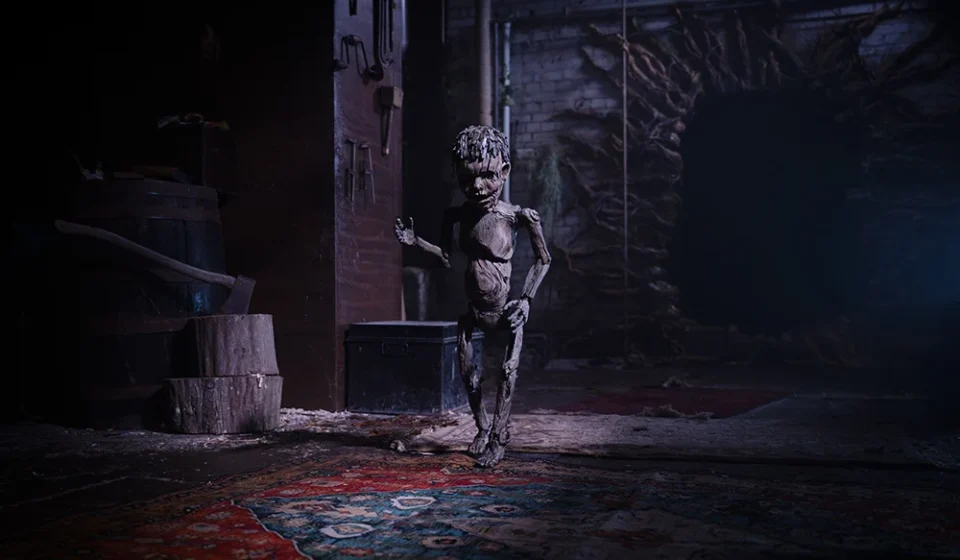
Pinocchio: Unstrung is not merely another slasher; it is a calculated expansion of a cinematic world. The film reimagines the classic story of the wooden puppet who wishes to be a real boy through a lens of body horror and psychological trauma. Unlike the whimsical Disney adaptation or even the gothic beauty of Guillermo del Toro’s 2022 stop-motion film, Frake-Waterfield’s version leans heavily into the "mad scientist" trope.
Key Production Elements
- Director: Rhys Frake-Waterfield.
- Lead Cast: Richard Brake (Game of Thrones, Barbarian) as Geppetto; Cameron Bell as James; and the iconic Robert Englund (A Nightmare on Elm Street) as the voice of a cursed Jiminy Cricket.
- Technical Focus: A shift toward animatronics and practical puppetry, moving away from the rubber-mask simplicity of the first Winnie-the-Pooh film.
- Plot Premise: Geppetto is reimagined as a wealthy, reclusive British inventor who creates a wooden boy in a desperate attempt to engineer artificial life. When his grandson, James, is orphaned and comes to live with him, the puppet and the boy form a lethal bond.
The film’s central "Unique Selling Point" (USP) is its gore. Rather than the metaphorical "growing nose" representing lies, this Pinocchio harvests human organs and skin, believing that by literally stitching human components to his wooden frame, he can achieve humanity. This visceral approach to the source material marks a significant departure from the director’s earlier, more skeletal narrative frameworks.
Chronology: Building the Twisted Childhood Universe
The trajectory of Rhys Frake-Waterfield’s career serves as a blueprint for the "Viral-to-Franchise" model in the digital age. Understanding the release of Pinocchio: Unstrung requires a look back at the rapid-fire timeline of the TCU.
2022: The Public Domain Explosion
Following the expiration of the Winnie-the-Pooh copyright, Frake-Waterfield and Jagged Edge Productions filmed Blood and Honey in just ten days. The announcement went viral instantly, generating millions of views on trailers and social media discussions.
2023: Commercial Success and Critical Backlash
Released in early 2023, Blood and Honey grossed over $5 million globally on a budget rumored to be less than $100,000. Despite its financial success, it was savaged by critics, eventually winning five Golden Raspberry Awards, including Worst Picture and Worst Director. Frake-Waterfield remained undeterred, citing the film’s profitability as a mandate for a sequel and a shared universe.
2024: Refining the Craft
The release of Winnie-the-Pooh: Blood and Honey 2 showed a marked improvement in production value, featuring a larger budget and more complex creature designs. During this period, Frake-Waterfield announced "The Pooh-niverse: Monsters Assemble," a crossover event planned for 2025, which would include horror versions of Bambi, Peter Pan, and Pinocchio.
2025: The Arrival of Unstrung
Pinocchio: Unstrung stands as the final solo lead-in before the crossover event. The film’s development focused on securing genre veterans like Richard Brake and Robert Englund to lend the project "horror royalty" credibility, signaling a move toward higher industry standards.
Supporting Data: Technical Resourcefulness and Practical Effects
One of the most notable aspects of Pinocchio: Unstrung is the director’s reliance on practical effects. In an era dominated by low-budget CGI, Frake-Waterfield has pivoted toward the "tactile" and "organic."
The Design of the Puppet
The Pinocchio featured in Unstrung is a masterclass in indie animatronics. The design is craggy and splintered, intentionally avoiding the "smooth" aesthetic of animation. This choice serves two purposes: it creates a more frightening silhouette and pays homage to the 19th-century origins of Carlo Collodi’s novel. Behind-the-scenes footage included in the credits highlights the complexity of the puppetry, showcasing the film’s commitment to "old-school" horror.
Budgetary Allocation
While the exact budget for Unstrung has not been disclosed, industry analysts suggest it is significantly higher than the first Pooh film, likely in the $500,000 to $1 million range. This increase is evident in the casting and the elaborate "kill" sequences, such as a standout scene in a school gymnasium involving a treadmill and falling weights.
The Gore Factor
The film’s reliance on "organic" gore—skin-peeling, organ harvesting, and dental trauma—targets the "slasher" demographic that fueled the success of the Terrifier franchise. By focusing on "gross and grisly" practical effects, the film compensates for its narrative shortcomings, providing the visceral experience that its core audience demands.
Official Responses and Critical Reception
The reception of Pinocchio: Unstrung has been more nuanced than that of its predecessors. While critics still point to "slipshod writing" and "muddy sound mixing," there is a growing acknowledgment of Frake-Waterfield’s growth as a filmmaker.
The "Real Boy" Sentiment
Critics have noted that the director is "settling into a style." Unlike Blood and Honey, which felt like a cynical cash-in on a viral idea, Unstrung is described as being "more spirited" and "less calculated for viral impact." The inclusion of Richard Brake and Robert Englund has been praised as a "high-camp" win, providing a level of performance that was absent in earlier TCU entries.
The Industry Perspective
Industry analysts see the TCU as a bellwether for the future of independent film. By utilizing "pre-sold" intellectual property (IP) that is free to use, Frake-Waterfield has bypassed the most difficult hurdle in indie filmmaking: marketing. Major studios have taken notice; the success of these low-budget "ruined childhood" films is part of the reason why studios are becoming more protective of their remaining copyrights and why "elevated horror" is increasingly being challenged by "grindhouse" aesthetics.
Implications: The Future of Public Domain Horror
The success of Pinocchio: Unstrung and the broader Twisted Childhood Universe carries significant implications for the film industry, copyright law, and the horror genre.
1. The Weaponization of the Public Domain
As more iconic characters from the 1920s and 30s enter the public domain—including early versions of Mickey Mouse (Steamboat Willie)—we are likely to see an explosion of "subversive" horror. Frake-Waterfield has established a template: take a beloved icon, apply a slasher or body-horror skin, and market it through viral social media hooks. This "weaponization" of nostalgia is a powerful tool for independent creators to compete with the marketing budgets of major studios.
2. The Birth of the "Indie Cinematic Universe"
The TCU is one of the first successful attempts to build a shared cinematic universe on a micro-budget level. By interconnecting stories (Geppetto’s experiments, the Hundred Acre Wood massacre, etc.), Frake-Waterfield is creating "appointment viewing" for horror fans. If Pooh-niverse: Monsters Assemble succeeds, it could lead to other indie filmmakers attempting to "franchise" their own public domain properties.
3. The Shift in Horror Aesthetics
The move toward practical animatronics in Pinocchio: Unstrung suggests a return to the 1980s "creature feature" era. As audiences grow weary of over-polished CGI, the "scrappy, tactile" rewards of films like Unstrung offer a refreshing, albeit messy, alternative. This trend may encourage more indie directors to invest in practical effects workshops rather than digital post-production.
4. Legal and Ethical Debates
While legally sound, the TCU continues to spark debates regarding the "sanctity" of children’s literature. Critics argue that these films are "lazy" and "crass," while supporters see them as a legitimate form of postmodern satire. Regardless of the ethical debate, the financial viability of these projects ensures that "evil" versions of Peter Pan, Bambi, and the Mad Hatter are inevitable.
Conclusion
Rhys Frake-Waterfield may have started as a "prankster on a shoestring budget," but Pinocchio: Unstrung proves he is evolving. The film is a testament to technical resourcefulness, even if the storytelling remains "semi-coherent." By blending the macabre roots of Carlo Collodi’s original tale with the sensibilities of modern slasher cinema, Frake-Waterfield has carved out a unique, albeit blood-soaked, niche in the industry. As the Twisted Childhood Universe continues to expand, it serves as a reminder that in the world of public domain horror, no childhood memory is safe—and for a certain segment of the audience, that is exactly the point. In the words of one critic, as B-horror auteurs go, Frake-Waterfield "may yet be a real boy."