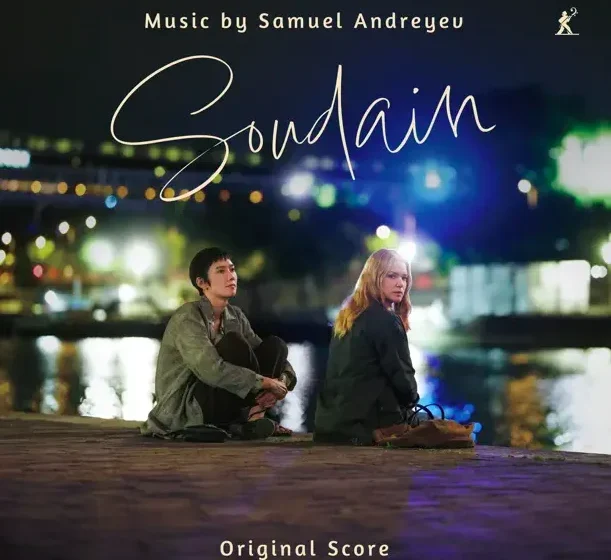
The Sound of Mortality: Samuel Andreyev’s Score for Ryusuke Hamaguchi’s ‘All of a Sudden’

Main Facts: A Transnational Cinematic Event
The intersection of French sentimentality and Japanese structural precision has long been a fertile ground for high-concept drama. This year, that synthesis reaches a new zenith with All of a Sudden (Soudain), a poignant cross-cultural collaboration co-written and directed by the acclaimed Ryusuke Hamaguchi. As the film prepares for its wide North American release via Neon this November, Divine Art has announced the upcoming digital soundtrack release featuring the original score by composer Samuel Andreyev.
Set to arrive on all major digital platforms on Friday, August 7, the album serves as an atmospheric companion to a film that has already captivated critics following its premiere at the Cannes Film Festival. The score, a masterclass in minimalist tension and emotional resonance, is currently available for pre-order via Amazon. To whet the appetite of cinephiles and music collectors alike, two tracks—Night Train and Soudain (Reprise)—have been made available for immediate streaming.
Chronology: From Cannes to Global Screens
The trajectory of All of a Sudden is one of deliberate, steady expansion, mirroring the contemplative nature of the film itself. The project began as an ambitious international co-production, aiming to bridge the thematic gap between French existentialism and Japanese narrative restraint.
- Cannes Premiere: The film made its international debut earlier this year at the Cannes Film Festival, where it was lauded for its intellectual depth and the chemistry between leads Virginie Efira and Tao Okamoto.
- Japanese Release: Following the festival circuit, the film hit Japanese markets last month, where it was met with significant praise for its nuanced portrayal of the human condition.
- The Soundtrack Announcement: With the film’s momentum building, Divine Art confirmed the release of Samuel Andreyev’s score, positioning it as a pivotal element of the viewing experience.
- French Theatrical Bow: Audiences in France are slated to see the film hit screens next month, further solidifying its status as a major European-Asian cultural bridge.
- The U.S. Expansion: Neon, known for its curated selection of prestige cinema, has set a wide theatrical release date of November 25 for the United States.
Supporting Data: The Narrative and the Score
At the heart of All of a Sudden is a story of intellectual intimacy. The plot follows two scholars who begin an exchange of letters—initially focused on abstract concepts of "chance" and "risk." As the correspondence deepens, these academic inquiries bleed into the personal, evolving into profound discussions regarding mortality and the fragility of life. This shift is catalyzed by a medical diagnosis, which forces the protagonists to confront the reality of their connection under the shadow of a ticking clock.
The Musical Architecture
Samuel Andreyev’s score is not merely background accompaniment; it is an active participant in the film’s narrative arc. The 12-track album reflects the cyclical nature of the characters’ correspondence, utilizing recurring motifs to denote the passage of time and the deepening of their bond.
Official Track List:
- Soudain (2:49)
- Dawn 1 (1:39)
- Fontaine 1 (1:58)
- Walking Theme (2:47)
- Time to Go (2:06)
- Géro and Tomoki (4:05)
- Night Train (2:22)
- Fontaine 2 (1:51)
- Dawn 2 (2:12)
- Walking Theme (reprise) (2:40)
- Soudain (Reprise) (2:50)
- Fontaine 3 (5:05)
The prominence of the Fontaine and Walking Theme tracks suggests a score deeply rooted in the physical movement of the characters through their environments, emphasizing the "traveling" aspect of their intellectual journey.
Official Responses and Creative Vision
The collaboration between Ryusuke Hamaguchi and the film’s ensemble cast—which includes Tao Okamoto, Kyozo Nagatsuka, Jean-Charles Clichet, Kodai Kurosaki, Marie Bunel, Romain Cottard, Gabriel Dahmani, and Marie Denarnaud—has been characterized by a high degree of collaborative trust.
Hamaguchi, whose previous works have consistently challenged the boundaries of traditional melodrama, reportedly sought a soundscape for All of a Sudden that avoided the pitfalls of excessive sentimentality. In working with Samuel Andreyev, he aimed to find a sonic language that could articulate the "void" left by illness while simultaneously capturing the "fullness" of the intellectual connection between the protagonists.
Andreyev’s compositions rely on sparse instrumentation, allowing the silence between the notes to act as a reflection of the unspoken words in the characters’ correspondence. Industry insiders have noted that the decision to release the soundtrack well in advance of the U.S. theatrical release serves as a strategic move to build anticipation for the film’s distinct tone.
Implications: A New Standard for Cross-Cultural Drama
The release of All of a Sudden signals a shift in how international dramas are marketed and consumed. By treating the score as a standalone artistic work, the production team is acknowledging the growing audience for high-brow, emotionally complex cinematic music.
The Impact of "Slow Cinema"
The film’s success in Japan and its anticipation in the U.S. highlights the enduring appeal of "slow cinema." In an era dominated by high-octane blockbusters, All of a Sudden offers a meditative alternative. The score is integral to this experience; it does not dictate how the audience should feel, but rather provides a canvas upon which the viewer can project their own experiences with loss, intellectual passion, and the randomness of fate.
The Role of Neon
Neon’s involvement as the North American distributor is a strong indicator of the film’s prestige. Known for elevating foreign-language films to the level of awards-season contenders, Neon’s release strategy for November suggests that they view All of a Sudden as a film capable of resonating with both critical circles and general audiences. The timing of the soundtrack release—August—provides a three-month runway, allowing the music to penetrate cultural consciousness before the film arrives in cinemas.
The Philosophical Weight of the Correspondence
The academic correspondence between the two scholars acts as the film’s backbone. By centering the story on the exchange of letters, Hamaguchi creates a unique structural device that allows the score to bridge the physical distance between the characters. The Night Train track, for instance, evokes a sense of transit—the literal movement between cities and the metaphorical movement between life and death.
As we await the digital release of the soundtrack, it is clear that All of a Sudden is positioned to be one of the most intellectually stimulating films of the year. Through the meticulous direction of Hamaguchi and the evocative musical narrative crafted by Samuel Andreyev, the film invites viewers into a dialogue that is as ephemeral as it is permanent.
Whether one is a fan of the director’s previous work or a collector of contemporary film scores, the upcoming release is a significant milestone. It serves as a reminder that even in the face of mortality, there is a profound, resonant beauty to be found in the connections we forge through language, chance, and the simple act of listening.
As August 7 approaches, the two available tracks offer a glimpse into a world where the suddenness of change is met with the steady, reassuring pulse of music. For those looking to experience the full depth of this French-Japanese drama, the wait is nearly over, but the contemplation begins now.