A Fifty-Year Haunting: Reassessing Brian De Palma’s Obsession and the Fractured Vision of Paul Schrader

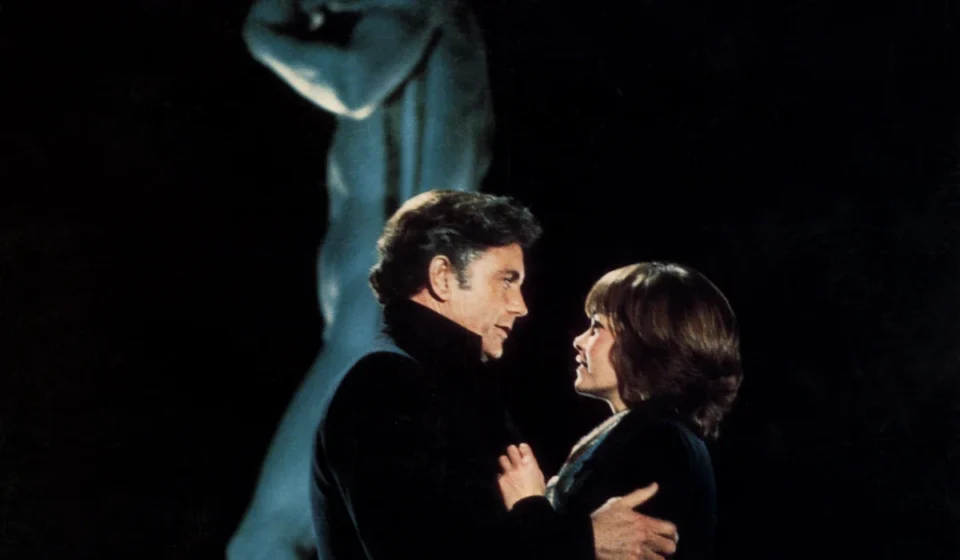
Fifty years ago this week, the cinematic landscape was irrevocably altered by the arrival of a film that was as much an act of worship as it was a narrative experiment. Brian De Palma’s Obsession (1976) hit theaters, marking the director’s first major mainstream breakthrough. A fever-dream thriller starring Cliff Robertson as a real estate developer haunted by the memory of his deceased wife—and his subsequent fixation on a woman who is her physical double—the film was explicitly modeled after Alfred Hitchcock’s Vertigo. While it served as the runway for De Palma’s massive success with Carrie later that same year, the legacy of Obsession remains a curious, fractured relic of 1970s New Hollywood, defined as much by its internal production strife as by its aesthetic brilliance.
The Genesis of an Idea: A Tribute to the Master of Suspense
In the mid-1970s, Alfred Hitchcock’s Vertigo was not the omnipresent classic it is today. Due to rights issues and a scarcity of prints, it was a "lost" masterpiece, difficult for the general public to view. Following a rare screening at LACMA, Brian De Palma and screenwriter Paul Schrader found themselves galvanized.
"It’s one of the great movies, so of course you’re obsessed with it," Schrader later noted in an interview with IndieWire. For the young, hungry filmmakers of the New Hollywood era, the urge to interact with the canon was visceral. The concept of "remaking" someone—or something—became the central thematic pillar of the project.
At the time, Schrader was a man in a hurry. Having recently co-written Sydney Pollack’s The Yakuza and the burgeoning cultural touchstone Taxi Driver, Schrader was acutely aware of his status as the "hot new kid in town." He described his writing process during this period as a "mad rush," a frantic attempt to capitalize on his newfound leverage before the industry’s fickle winds shifted. Alongside Obsession, this creative torrent produced Rolling Thunder, Old Boyfriends, and eventually his own directorial efforts, Blue Collar and Hardcore.

Chronology of a Creative Rift
The history of Obsession is a cautionary tale regarding the collision between a writer’s structural vision and a director’s pragmatic compromises. Originally titled Déjà Vu, Schrader’s script was far more ambitious than the final product. It was envisioned as a triptych—a narrative cycle where events occurred in the past, were mirrored in the present, and eventually projected into a speculative future, specifically set in 1985.
However, the production was plagued by budgetary pressures. Under the guidance of producer George Litto, the decision was made to excise the entire third act of the screenplay. To Schrader, this was a death blow to the film’s artistic integrity. "I thought that was the most inspired thing about the script, this idea that it was an obsession so great that it projected itself into the future," Schrader lamented.
This excision led to a permanent, irreparable falling out between the two men. Schrader’s loss of interest in the project was palpable; he famously spent his time on the set in Florence not engaging with the craft, but rather coordinating with Martin Scorsese and Robert De Niro, who were nearby filming Novecento (1900). It was during this period that Schrader famously read the voiceover for Taxi Driver to De Niro, his mind already far removed from the streets of Florence.
Critical Reception and the Pauline Kael Factor
When Obsession was released, it received a polarized response that highlighted the complexities of 1970s film criticism. Roger Ebert, a champion of De Palma’s stylized homages, saw the film as confirmation that De Palma was the true heir to Hitchcock’s throne, praising its visual audacity and psychological depth.

Conversely, the legendary critic Pauline Kael, usually a staunch supporter of De Palma, delivered a scathing review. While the film had its flaws, history suggests Kael’s animosity was personal rather than purely aesthetic. She had long held a grudge against her former protégé, Paul Schrader, for "abandoning" the world of film criticism to become a screenwriter. Kael’s pattern of finding fault in almost every project Schrader touched—from the monumental Raging Bull to the sleek American Gigolo—is well-documented. While she acknowledged the brilliance of Taxi Driver, she pointedly shifted the credit to director Martin Scorsese, effectively ignoring the architect of the script.
For his part, Schrader found himself in rare, albeit uncomfortable, agreement with Kael. Looking back, he expressed disdain for the film’s casting, specifically the selection of Cliff Robertson, whom he dismissed as a "one-trick pony." He also noted his lack of enthusiasm for Geneviève Bujold and John Lithgow, whose inclusion was championed by De Palma.
Supporting Data: The Anatomy of an Obsession
The film’s structure and visual language offer a fascinating study in contrast. While De Palma stripped away the futuristic third act, he retained the intense, operatic tone that defined his career. The cinematography, characterized by sweeping camera movements and a lush, melancholic score by Bernard Herrmann (Hitchcock’s frequent collaborator), solidified the film’s status as a stylistic triumph, even if the narrative felt stunted to its screenwriter.
Schrader’s "stacking airplanes" metaphor—a reference to his prolific output during those years—provides context for why Obsession felt like a discarded draft to him. By the time the film hit screens, he was already miles ahead, writing the script for Blue Collar while simultaneously balancing other projects. The industry in 1976 was a high-velocity environment where scripts were commodities and "the moment" was everything. Schrader’s ability to move from project to project with such speed meant that he rarely had the luxury—or the desire—to dwell on the failures of his past collaborations.

The Implications for New Hollywood
The story of Obsession serves as an essential case study for the "auteur" theory that dominated the 1970s. It represents a moment when the line between homage and appropriation was constantly being negotiated. By attempting to "recreate" Vertigo, De Palma and Schrader were engaging in a high-stakes game of intertextuality.
The fallout also highlights the fragility of the creative process. A film is never the result of a single mind; it is a battleground of ego, finance, and logistics. The fact that Obsession survived its own production—and remains a highly regarded, if divisive, piece of cinema—speaks to the strength of the foundational material. It also underscores the inherent tension between the screenwriter, who views the script as a sacred document of structure, and the director, who views the film as a plastic medium to be molded under pressure.
Conclusion: A Legacy of Tension
Fifty years later, Obsession stands as a testament to a singular moment in film history. It is a work that captures the ambition of a generation of filmmakers who were obsessed with their predecessors, eager to carve out their own space in the pantheon of cinema. While the rift between Brian De Palma and Paul Schrader left a permanent mark on their respective careers, it also birthed a film that continues to fascinate students of cinema.
For De Palma, Obsession was the necessary trial run for the mastery he would display in Carrie. For Schrader, it was a reminder of the compromises inherent in Hollywood success—a lesson he would carry into his later work, where he would fight with even greater ferocity to protect the integrity of his vision. In the end, the "obsession" that drives the film’s characters—a desire to return to the past and fix what was broken—mirrors the very experience of the audience watching it today. We are all, in a sense, looking for a version of the film that never was, lost to the editing room floor, yet haunting the frame of what remains.