The Art of the Uncanny: How Interview with the Vampire Season 3 Reimagined the Impossible

Editor’s Note: The following piece contains major spoilers for Season 3 of AMC’s “Interview with the Vampire,” titled “The Vampire Lestat.”
In the high-stakes world of prestige television, the line between a scripted drama and a feat of technical engineering is often blurred. However, the production of Season 3 of AMC’s Interview with the Vampire—the ambitious adaptation of Anne Rice’s seminal literary work—has pushed the boundaries of what is possible on a television budget and schedule. For showrunner Rolin Jones and his creative team, the third season was not merely a continuation of the gothic saga; it was a series of surreal, high-wire departmental summits dedicated to translating the impossible imagery of Rice’s prose into visceral, grounded visual reality.
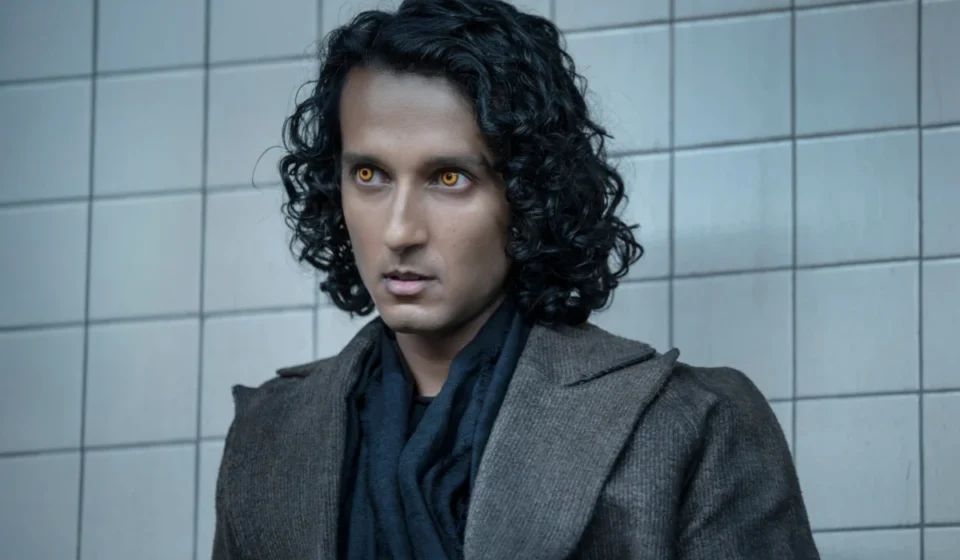
The culmination of this effort arrived in Episode 7, titled “The Failures.” In a sequence that tested the ingenuity of the show’s production design, visual effects, and performance teams, the narrative demanded a scene that was both emotionally profound and physically grotesque: Louis de Pointe du Lac (Jacob Anderson), having been beheaded, remains in a state of vampiric undeath. His head, placed on a platter in the back of a butcher shop, serves as the focal point for a tense confrontation with his former lover, Armand (Assad Zaman).
The Logistics of the Macabre: Crafting "The Failures"
Creating a scene where a lead actor is reduced to a severed head, yet tasked with delivering a complex emotional performance, is a "complicated short order" by any industry standard. The primary challenge for Rolin Jones and his team was to ensure that Jacob Anderson remained a dynamic, present performer rather than a static prop.

The scene required an “Armand-level conspiracy” of practical effects and post-production wizardry. The team developed a functional, articulated head equipped with moving features, which allowed for naturalistic movement despite the character’s gruesome situation.
“Most of the conversation was trying that off: How the table worked, how the green scene would work,” Jones explained during a recent appearance on the Filmmaker Toolkit Podcast. “It’s not the greatest puppet head in the world, but it’s not supposed to double. There was a lot of post-work that went into it—but it was a very functional head, too. We had an articulated jaw, and it was able to do a lot of great things.”
The goal, according to Jones, was to avoid the common pitfalls of fantasy television, where the spectacle overshadows the character work. The production meetings were laser-focused on the choreography of the camera: identifying exactly when the audience needed to be confronted by the artifice of the head, and when the narrative needed to pivot back to the raw chemistry between Anderson and Zaman. By optimizing the process, the team ensured that the actors could, for the majority of the scene, play off one another in a natural, albeit macabre, environment.
A Chronology of Deception: Unmasking the Puppeteer
“The Failures” functions as a series of intimate, theatrical vignettes, culminating in a reveal that recontextualizes the entire season. The sequence involves a tense three-hander between Louis, Armand, and Regina (Delainey Hayles), the latter of whom is revealed to have been a pawn in Armand’s elaborate schemes.

For the viewer, the sequence is a masterclass in shifting perspectives. The first third of the episode places the audience firmly in Louis’s limited, grounded viewpoint. As the scene unfolds, however, the camera expands, revealing the presence of Armand, who has been lurking in the shadows of the narrative all season.
“If you’re an Armand fan, for a lot of the season, you’ve been wondering where the hell he is,” Jones noted. “Now you know he’s in every frame of it. If Regina is there, it’s him. If Alex [Seamus Patterson] is there, it’s him. He’s been creeping through this whole goddamn show.”
This revelation invites a retrospective viewing of the season. Through subtle lighting shifts and clever editing, the show forces the audience to realize that the power dynamics they assumed were shifting were, in fact, being orchestrated by a single, unseen hand.
The Painterly Edit: Turning Television into Fine Art
Beyond the practical challenges of creature effects, the editorial team, led by Mike Phillips, took a uniquely aggressive approach to the visual language of the show. Jones encouraged his editors to treat the footage not as a rigid record of the shoot, but as "clay" to be remolded, manipulated, and reimagined.

“I just started really freeing the editors to start painting, start manipulating, go back and remold the clay, knock something off, fuck with it,” Jones said. “This is Lestat.”
This philosophy is most evident in the final "concert" sequence, where Sam Reid’s Lestat reflects on his life while his time runs out. The editors utilized alternate takes from Seasons 1 and 2, intercutting them to create a montage that reflects not objective history, but the subjective, fractured memory of a dying vampire. Jones hinted that there are "Easter eggs" hidden in these edits—such as a freeze-frame in Episode 1 that perfectly mirrors a later breakdown—which rewards the meticulous, repeated viewing habits of the show’s dedicated fanbase.
Implications for the Future: Adapting "The Queen of the Damned"
As the curtain closes on Season 3, the production team is already looking toward the horizon. The transition from the intimate, character-focused drama of The Vampire Lestat to the epic, sprawling narrative of The Queen of the Damned necessitates a shift in storytelling methodology.
The original novel The Queen of the Damned is famous for its strict, character-specific point-of-view chapters. Jones suggests that this structural hallmark will heavily influence the stylistic direction of the next season. By embracing the unique literary devices of Anne Rice’s source material, the show intends to continue its evolution from a standard episodic format to a more experimental, painterly medium.

“It’s built for a rewatch and a third watch,” Jones said of the show’s dense, layered edit. “Our editors are always trying to turn TV into a painting, if you can do it, so that multiple viewings reveal stuff. And I’m not ashamed of that. I think it’s the right way to do it.”
Conclusion: The Odd Beauty of Tortured Souls
Ultimately, the technical achievements in Interview with the Vampire are only as effective as the emotional resonance they support. The transition of Louis’s head—a literal shedding of his physical limitations—mirrors his internal evolution. As Jones highlights, the "real beauty" of the performance lies in the moment Louis shifts his motivation from the immediate survival of others to an existential reckoning with his own history.
By refusing to settle for simple plot reveals, the show consistently finds "the odd beauty" in the tortured relationships of its undead protagonists. As Season 3 concludes, it leaves behind a legacy of bold, genre-defying television that does not merely adapt a book, but interrogates the nature of memory, identity, and the very medium of television itself.
Interview with the Vampire Season 3 is currently streaming in its entirety on AMC+. As viewers revisit these episodes, they are likely to find that the "painting" Rolin Jones and his team have created is far more complex, and far more haunting, than it first appeared.