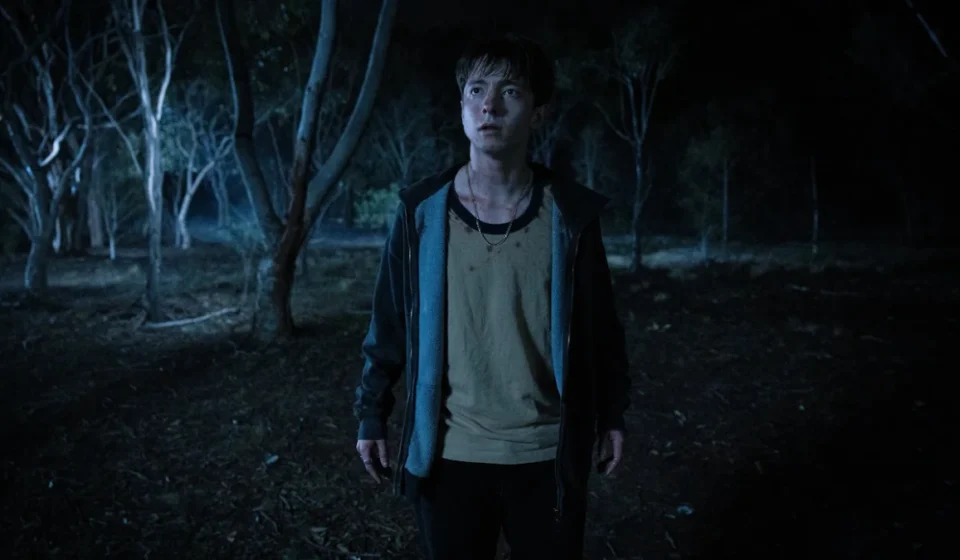

In the landscape of modern cinema, few genres possess the visceral, transformative power of horror—a medium that has long served as a safe harbor for the marginalized to project their deepest anxieties onto the screen. With his debut feature film Leviticus (2026), Australian filmmaker Adrian Chiarella has not only entered this tradition but has arguably refined it, crafting a harrowing, high-stakes parable that interrogates the intersection of religious dogma and queer identity.
Set against the stark, industrial backdrop of the Australian outback, Leviticus functions as both a tense supernatural thriller and a searing critique of the "conversion therapy" rhetoric that continues to haunt queer youth globally. As the film makes its mark on the festival circuit, it serves as a stark reminder that while the genre often uses monsters to represent the "other," the true horror frequently lies in the community that demands conformity at the cost of the soul.
The Genesis of a Modern Parable: Main Facts
Leviticus introduces a supernatural antagonist born from a specific, localized act of hate: a hex cast by a fundamentalist church upon the queer youth of a small town. The creature is a shape-shifting entity that exploits the desires of its victims, manifesting as the person they most yearn for before delivering a lethal strike.
The film opens with a sequence that sets a brutal tone: a lesbian lifeguard is seduced by an invisible entity in a public shower, only to be murdered by the very force that mimicked her deepest desires. This "little death" that begets a larger, more existential tragedy serves as the film’s thesis statement: in this world, to be queer is to be hunted by your own heart.
The narrative centers on Naim (Joe Bird), a shy newcomer who finds himself drawn to the charismatic, brash Ryan (Stacey Clausen). As their relationship develops, they become the target of the entity—and of the oppressive religious zealots who see their love as a moral failing. The film’s brilliance lies in its subversion of the "slasher" trope; here, the monster is not merely a masked killer, but a manifestation of internalized homophobia and external societal repression.
A Timeline of Despair: The Chronology of Leviticus
The film’s structure follows a tightening noose of events that forces the audience to confront the inevitability of the characters’ trauma:
- The Proclamation: The backstory establishes a town where the church wields absolute power, utilizing a hex to "correct" the behavior of teenagers deemed deviant.
- The Catalyst: The film begins in the present day with the lifeguard’s death, signaling that the curse remains active and predatory.
- The Meeting: Naim arrives in the industrial town, his isolation making him a prime target for the entity’s machinations. He meets Ryan, and their tentative bond is tested by the crushing weight of local expectations.
- The Betrayal: Following a violent tryst involving the preacher’s son, Hunter (Jeremy Blewitt), Naim acts out of jealousy and fear, reporting the encounter to the religious elders. This act of "tattling" initiates the second act, as Naim must spend the remainder of the film seeking atonement for his perceived transgression.
- The Search for Survival: Realizing the entity is inescapable, Naim and Ryan seek out the survivor of the opening sequence—a woman now institutionalized and living in a state of hyper-vigilance, surrounded by people to avoid the creature’s isolation-based traps.
- The Climax: A series of betrayals by supposed allies leads to a confrontation where the line between the "real" and the "reflection" vanishes, forcing the leads to navigate a landscape where they cannot trust their own eyes.
Supporting Data: The Genre as a Language of Survival
Adrian Chiarella’s approach to the film was deeply informed by his own upbringing. He views the horror genre as a primary text for the queer experience—a sentiment shared by many critics who analyze films like A Nightmare on Elm Street 2: Freddy’s Revenge and John Carpenter’s The Thing through a queer-coded lens.
"I started thinking about what would be personal for me," Chiarella noted in recent interviews. "Horror movies were something that I turned to as a young queer teenager. I don’t think I was alone in that. The genre has been important to the community for a very, very long time."
The production design of Leviticus reflects this internal landscape. By placing the characters in a blend of desolate, industrial settings and pastoral, "holy" landscapes, the film creates a sense of spatial entrapment. The cinematography relies heavily on the manipulation of the gaze—using reflections, mirrors, and voyeuristic camera angles to highlight the characters’ inability to distinguish between the entity and their own desires. This visual strategy acts as a powerful metaphor for the gaslighting queer youth experience when told that their identity is a fabrication or a choice.
Official Responses and Creative Intent
Chiarella has been vocal about the film’s function as a "blunt instrument" for empathy in a time of rising political bigotry. He argues that the recent legislative and social regression regarding queer rights necessitated a return to the "horror of the basics."
"We wanted to play with this theme of what’s man-made and what comes from the universe," Chiarella explained. "It’s about the tension between human nature and the rules and the edicts we live by."
When asked about the casting of veteran actor Mia Wasikowska as Naim’s mother—a character who oscillates between maternal protection and religious oppression—Chiarella noted that he wanted to ensure the "monster" wasn’t just a supernatural entity. By making the parents and church leaders complicit in the fear that rules the town, he creates a world where the domestic sphere is just as dangerous as the woods at night. "I wanted to create a world where you weren’t sure you could trust even the real people around you anymore," he added.
The Implications: A New Era of Queer Horror
The most striking aspect of Leviticus is its refusal to provide a traditional "happily ever after." In the final frame, the film leans into the classic horror convention of the monster that never truly dies.
This decision has significant implications for the genre. While much of the recent "queer cinema" boom has focused on stories of liberation and triumph, Leviticus argues that trauma is not a linear obstacle to be overcome, but a persistent shadow that accompanies the survivor. By suggesting that the entity may never fully leave the boys, Chiarella isn’t offering a message of hopelessness, but rather one of radical honesty. It is a acknowledgment that for many queer individuals, the struggle for safety and self-acceptance is an ongoing, lifelong negotiation.
Critical Reception and Cultural Impact
Industry analysts are already noting that Leviticus arrives at a pivotal moment in film history. As audiences grow weary of "prestige" horror that prioritizes metaphor over visceral impact, Chiarella’s film succeeds by doing both. It is a "back-to-basics" confrontation of the adversity that many assumed was a relic of the past, yet it feels entirely modern in its execution.
The film challenges the audience to recognize the "blinkering" of society—the way those in power refuse to see the suffering of the marginalized, dismissing it as "something they are putting on." Through its use of visual motifs, the film forces the viewer to share in Naim’s confusion, making the experience of watching Leviticus a disorienting, empathetic journey.
Ultimately, Leviticus stands as a testament to the power of the genre to unearth the "terrible, intimate, and true." It is a film that does not ask for permission to exist; it demands to be seen. In the closing moments, as the screen fades to black, the viewer is left not with the relief of a resolved plot, but with the haunting realization that the systems of hate we build are far more durable than the individuals they target—and that our only hope lies in the act of looking, recognizing, and refusing to turn away.