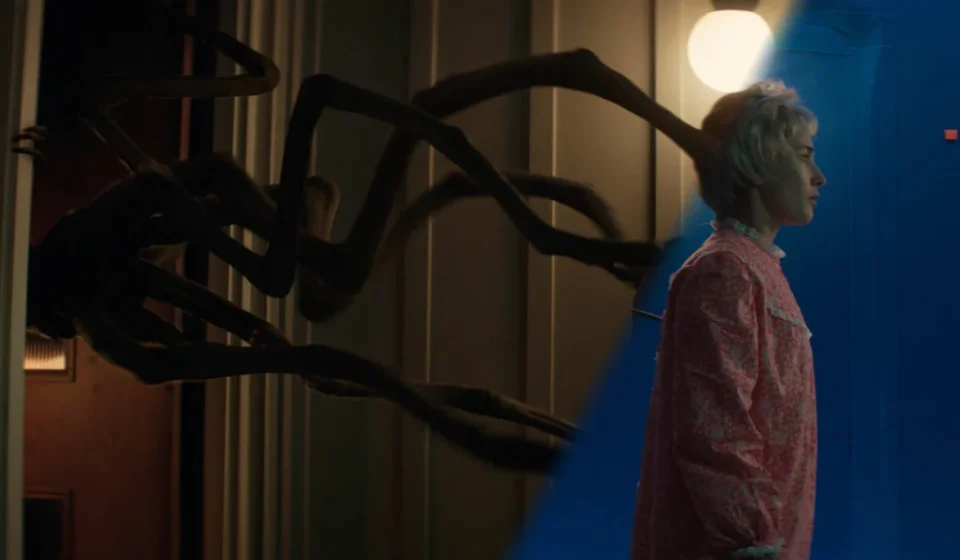

The landscape of modern horror often relies on the "jump scare" or the grotesque to elicit a reaction from audiences. However, Netflix’s hit series The Boroughs has defied these tropes, opting instead for a narrative arc that demands a far more complex emotional investment: empathy for the monstrous. Central to this achievement is a sophisticated visual effects pipeline that blurs the lines between practical puppetry and cutting-edge digital animation. In this special deep-dive exploration of the fxpodcast, we pull back the curtain on the technical wizardry that brought the show’s central antagonists—affectionately known as “the kids”—to life.
The Narrative Foundation: A Parasitic Cycle of Time
At its core, The Boroughs presents a chilling, albeit deceptively simple, premise. Set within a seemingly idyllic retirement community, the residents find themselves preyed upon by an unseen force that stalks their bedrooms under the cover of night. As the eight-episode series unfolds, the horror gives way to a darker, more complex truth.
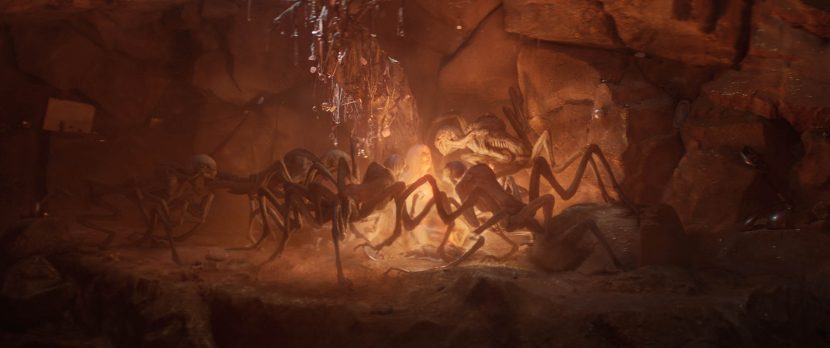
The creatures are not mindless predators; they are the captive offspring of an ancient entity referred to as "Mother." The residents of The Boroughs are, in reality, victims of a parasitic cycle orchestrated by the community’s wealthy owners. These owners leverage the vitality of the creatures to maintain their own youth, effectively siphoning the "time" of the retirees to stave off their own mortality.
This revelation serves as the catalyst for the audience’s shifting perception. What begins as a fear-driven narrative of survival transforms into a tragedy about enslavement, exhaustion, and the primal urge to return home.
The VFX Strategy: Bridging the Gap Between Practical and Digital
A recurring debate in visual effects circles is the supposed rivalry between practical effects and computer-generated imagery (CGI). The Boroughs serves as a definitive case study in why this binary is a false dichotomy. According to overall VFX Supervisor Tara DeMarco and ILM VFX Supervisor Steve Ellis, the production relied on a hybrid approach where the best tool was chosen for the specific demands of the shot.
The Role of Practical Presence
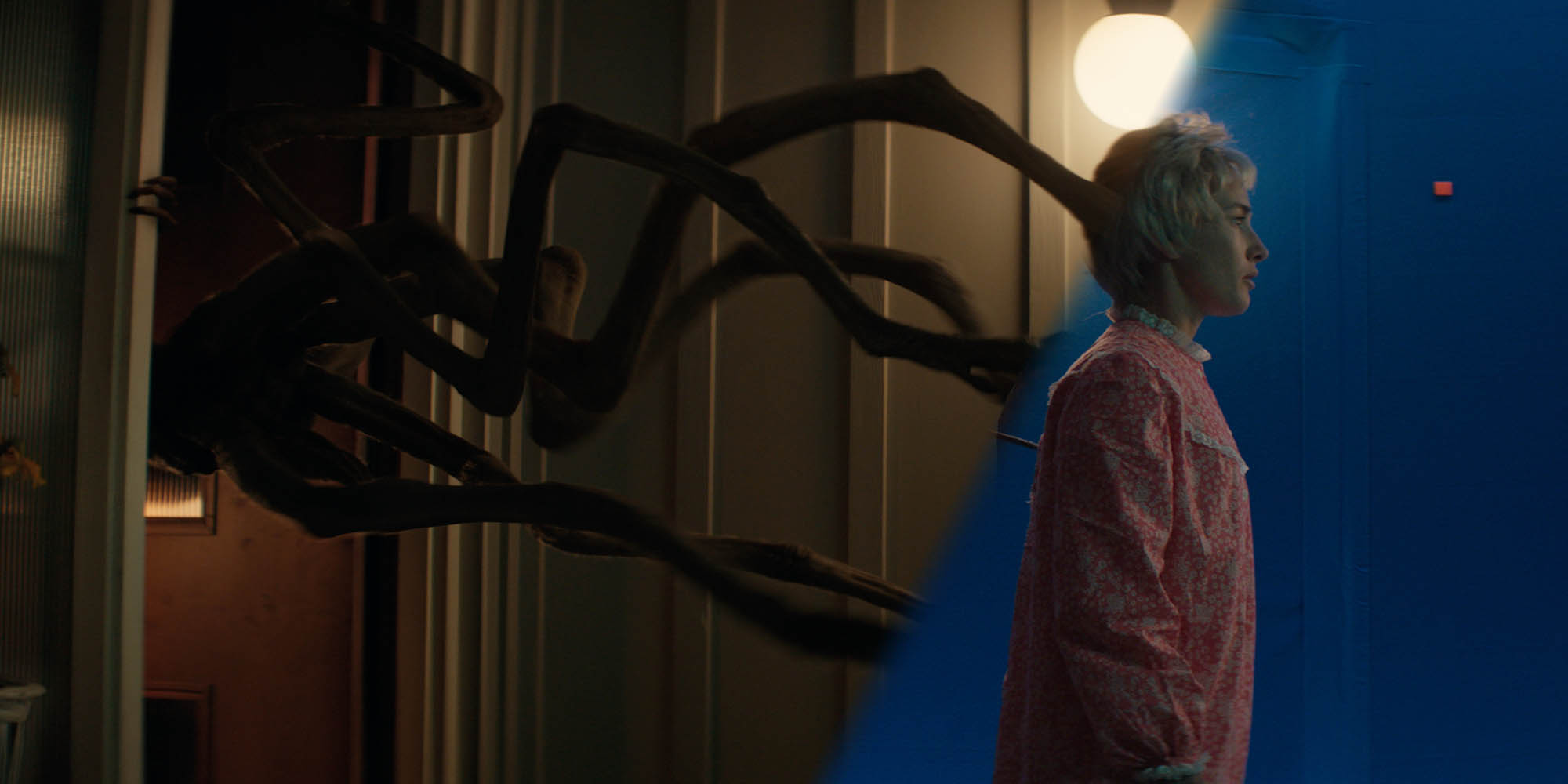
Practical effects were utilized primarily to establish physical interaction. When a creature needed to exist within a scene to provide lighting references for the cinematographer or to give actors a tangible point of focus, puppetry and practical suits were employed. This gave the "kids" a weight and presence that can be difficult to replicate entirely in a vacuum. It ensured that the light hit the skin correctly and that the actors’ eyelines remained grounded in the physical world.
The Digital Extension
Once the physical presence was established, the digital team took over to refine the creature’s anatomy and performance. Digital enhancement allowed for:
- Muscle and Tendon Simulation: To convey the "exhausted" nature of the beings, the artists utilized advanced muscle-rigging to show the creatures’ fatigue and physical degradation.
- Skin Simulation: Creating a texture that felt both ancient and alien required complex subsurface scattering and displacement maps that would have been impossible with practical materials alone.
- Eye Performance: Perhaps the most critical element in shifting audience empathy was the eyes. The digital team spent thousands of hours perfecting the micro-movements of the creatures’ eyes, allowing them to convey fear, confusion, and longing—human-like traits that immediately humanized them in the eyes of the viewer.
Chronology of Development: From Concept to Screen
The creation of "the kids" was not a linear process but an iterative one that spanned the entirety of the production timeline.
Phase 1: Conceptualization and Design
Showrunners Will Matthews and Jeffrey Addis were clear in their vision: the creatures needed to be terrifying upon first encounter, but heartbreaking upon final inspection. Concept artists spent months drafting designs that balanced spindly, insect-like anatomy with vulnerable, almost childlike proportions. This tension was essential to the show’s thematic goal.
Phase 2: On-Set Performance
During principal photography, the "kids" were performed by actors in suits or operated via sophisticated puppetry. This phase was crucial for capturing the movement styles—the twitchy, unpredictable nature of creatures that have been confined to dark, cramped spaces for years.
Phase 3: The ILM Post-Production Pipeline
Once the footage reached Industrial Light & Magic (ILM), the team began the process of "digital layering." They replaced, enhanced, and augmented the practical base. This was where the "performance" was truly refined. Animators worked frame-by-frame to ensure that every tilt of the head or blink of the eye communicated the specific emotional beat required by the script.
Technical Data and Complexity
The sheer volume of work involved in The Boroughs is staggering. By the time the final render was completed, the creature pipeline had processed thousands of individual assets.
- Skin Rendering: The team utilized custom shaders to mimic the translucent quality of the creatures’ skin, which needed to look sickly under the moonlight of the retirement home while remaining resilient enough to appear ancient.
- Locomotion: The movement was derived from a combination of animalistic gait studies and human-like gestures. By blending these two distinct types of movement, the animators created a sense of "uncanny valley" that served the horror genre while simultaneously allowing for the transition into empathy.
Official Perspectives: The Supervisors’ View
In the fxpodcast, Tara DeMarco emphasizes the collaborative nature of the project. "We didn’t see the digital work as a replacement for the practical," DeMarco notes. "We saw it as an extension. If the puppet gave us the performance in the room, the digital work gave us the soul in the edit."
Steve Ellis of ILM echoes this sentiment, focusing on the technical challenges of the creature’s eyes. "When you’re trying to make a creature with no nose and sunken features look ‘sad,’ you have to be very careful with the brow and the eyelid mechanics. If you push too far, it looks like a cartoon. If you don’t push enough, it’s just a monster. We had to find that razor-thin line of realism."
Implications for the Industry
The success of The Boroughs sends a clear message to the visual effects industry: the most effective creature work is that which serves the narrative arc rather than the spectacle. As streaming platforms continue to demand high-fidelity horror content, the ability to blend physical performance with digital emotion will become a standard requirement.
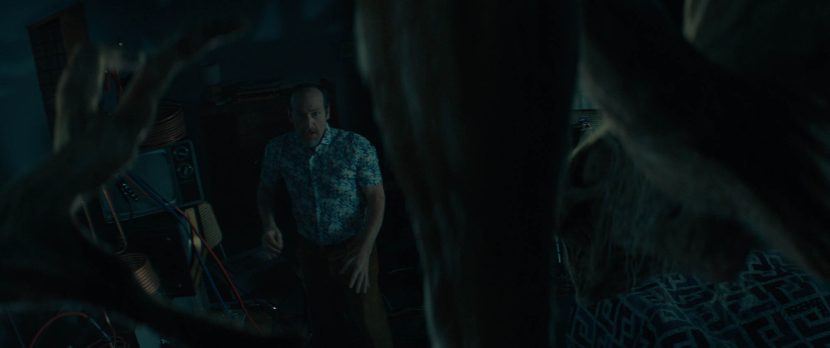
Furthermore, the show demonstrates that the audience is evolving. Modern viewers are increasingly sophisticated; they no longer require a monster to be purely evil to be entertained. They are willing to engage with the moral ambiguity of a creature that is as much a victim as it is a predator.
Conclusion
The Boroughs stands as a masterclass in modern creature design. By treating their monsters as characters with histories, needs, and physical limitations, the production team managed to craft a story that resonates long after the screen goes dark. Whether through the lens of a physical puppet or the sophisticated algorithms of a digital rig, the goal remains the same: to tell a compelling story. In the case of "the kids," the story is one of tragedy, and it is a triumph of technical artistry.
For those interested in the granular details of the software tools and render pipelines used, the full two-part interview with Tara DeMarco and Steve Ellis is available on the latest fxpodcast. It serves as an essential resource for any student or professional looking to understand how the next generation of digital performance is being built.