A Final Bloom: Director Baku Kinoshita’s ‘The Last Blossom’ Brings Poetic Redemption to U.S. Cinemas

By Alex Billington | July 31, 2026
The landscape of modern animation is often defined by spectacle, but occasionally, a work emerges that dares to focus on the quiet, bruising weight of a human life. Such is the case with The Last Blossom (Housenka), the latest feature from visionary filmmaker Baku Kinoshita. Following his acclaimed work on the Odd Taxi franchise, Kinoshita has pivoted toward a deeply personal, surrealist meditation on mortality, memory, and the ghosts of one’s past. With GKids officially acquiring the U.S. distribution rights, audiences are finally getting a glimpse of the film that turned heads at the 2025 Annecy International Animation Film Festival.
The Core Narrative: A Yakuza’s Final Reflection
The Last Blossom is a departure from the frantic, dialogue-heavy social commentary of Kinoshita’s previous projects. The narrative centers on Akutsu, a man whose life has been defined by the rigid, often violent codes of the yakuza. As the film begins, we find an aged, terminally ill Akutsu confined to a prison cell, facing the absolute finality of his existence.
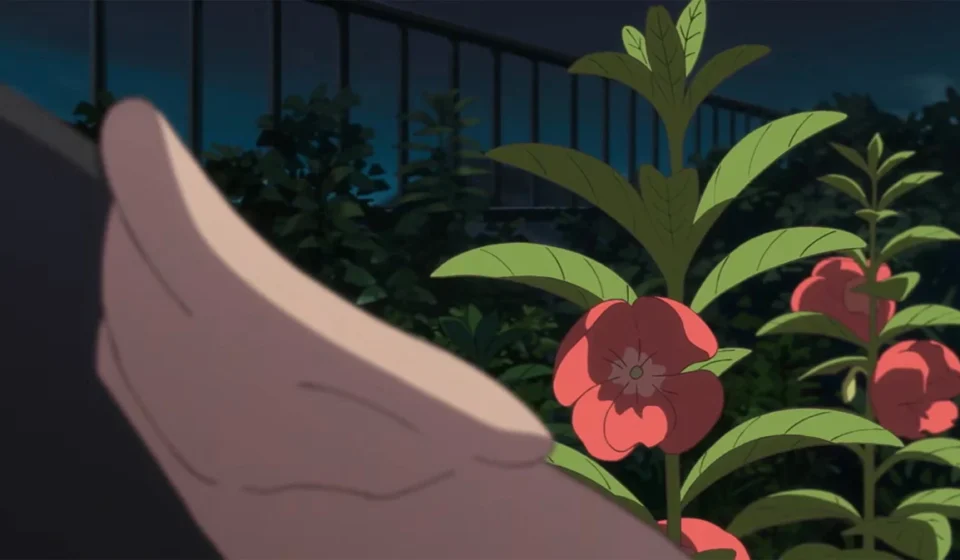
However, the film avoids the traditional tropes of a prison drama. In a surreal twist, Akutsu’s only companion is a smart-mouthed, sentient flower growing from a rusted can—a stark, blooming contrast to the sterile gray of his surroundings. Through his conversations with this unlikely confidant, Akutsu begins to dismantle the timeline of his life. The audience is transported back to the summer of 1986, a pivotal period of freedom where the former criminal found refuge with a woman and her young son. These memories are not merely flashbacks; they are a psychological landscape through which Akutsu must traverse to reconcile the man he was with the man who is dying in a cell.
Chronology of the Production
The journey of The Last Blossom from a conceptual storyboard to an international release has been a measured, deliberate process.

- Development & Pre-Production: Following the success of Odd Taxi, Baku Kinoshita teamed up with writer Kazuya Konomoto to craft a script that felt distinct from their previous genre-bending work. They sought to partner with Studio CLAP, an outfit known for their artistic rigor and willingness to experiment with visual storytelling, as seen in their previous work on Pompo the Cinephile.
- The Annecy Premiere (2025): The film’s world premiere at the 2025 Annecy Film Festival served as its international baptism. Critics were quick to note the film’s unique blend of gritty realism and botanical surrealism, drawing comparisons to Akira Kurosawa’s Ikiru—a high-water mark for films exploring the existential dread of impending death.
- Japanese Release (Fall 2025): The film saw a successful theatrical run in Japan last October. It was met with critical acclaim for its mature themes and its ability to handle the "yakuza genre" with a meditative, rather than action-oriented, lens.
- The U.S. Acquisition (2026): After months of speculation regarding its Western distribution, GKids officially announced its acquisition earlier this year. The studio has set a limited, high-impact theatrical release for late August 2026.
Supporting Data: The Creative Engine Behind the Lens
The film’s power lies not just in its script, but in the collaborative effort of its production team. Studio CLAP has cultivated a reputation for pushing the boundaries of what 2D animation can convey, focusing on emotive lighting and character-driven framing rather than reliance on digital bells and whistles.
The Voice Talent
The film’s emotional resonance is anchored by a stellar Japanese cast:
- Kaoru Kobayashi: Providing the gravelly, weary voice of the elder Akutsu.
- Junki Tozuka: Capturing the internal friction of the younger version of the protagonist.
- Hikari Mitsushima: Bringing gravitas to the woman whose presence dictates the emotional stakes of Akutsu’s final summer.
- Yoshiko Miyazaki & Pierre Taki: Rounding out a cast that provides the necessary texture to a world of regret and hidden tenderness.
Narrative Architecture
The screenplay by Kinoshita and Konomoto operates on a non-linear axis. By utilizing the "Housenka" flower as a metaphorical guide, the film moves fluidly between the stifling confines of 2026 and the lush, golden-hued memories of 1986. It is an exploration of "found family"—the idea that, in the shadow of a life wasted in criminal service, one can find redemption in the small, quiet acts of protection and love offered to those who do not share your blood.
Official Responses and Industry Reception
The industry reaction to The Last Blossom has been largely defined by admiration for Kinoshita’s artistic evolution. When the project was first announced, skeptics wondered if the director could successfully move away from the mystery-thriller elements of Odd Taxi. However, early reviews from the festival circuit have silenced those concerns.
"Baku Kinoshita has proven that his range as a filmmaker is far wider than his debut suggested," noted one prominent animation critic during the Annecy run. "While Odd Taxi was a puzzle, The Last Blossom is a prayer."

GKids, in their official promotional material, has positioned the film as a "thrillingly original work from animation’s most inventive new talent." The studio’s decision to limit the release to only two nights—August 30th and 31st—suggests they are positioning the film as a "must-see" event, a strategy intended to create a sense of urgency for cinema-goers who value high-concept, auteur-driven animation.
Implications for the Future of Anime in the West
The release of The Last Blossom in the United States serves as a bellwether for the shifting appetite of the Western animation audience. For years, the U.S. market was dominated by action-adventure shonen titles. However, the success of titles like Pompo the Cinephile and now The Last Blossom indicates a growing appetite for "adult" animation—films that do not necessarily trade in violence or fantasy tropes, but in the complexities of the human condition.
The Kurosawa Parallel
Comparing an anime film to Kurosawa’s Ikiru is a bold move, yet it is arguably appropriate here. Ikiru was about a bureaucrat realizing he had wasted his life and seeking a final, meaningful act before the clock ran out. The Last Blossom mirrors this by stripping away the veneer of the yakuza lifestyle. Akutsu is not looking for a final score or a final fight; he is looking for a final justification for his existence. By framing this through the eyes of a dying man speaking to a plant, Kinoshita effectively externalizes the internal monologue of a man who has spent decades suppressing his emotions.
A Test of Commercial Viability
The August 2026 release will be a litmus test for the viability of "slow-burn" animation in the U.S. multiplex. If The Last Blossom succeeds in capturing the hearts of audiences, it could pave the way for more experimental, mature, and character-focused Japanese cinema to find a home in North American theaters. It moves the conversation beyond "is this a good anime?" to "is this a great film?"
Conclusion: Why It Matters
As we approach the late summer of 2026, The Last Blossom stands out as a unique entry in the year’s cinematic calendar. It is a film about the pieces of a life that don’t quite fit together, and the struggle to make sense of them before the lights go out.

For those familiar with Kinoshita’s work, this is a maturation of his signature style—a transition from the cynical to the sublime. For those new to his work, it serves as an excellent entry point into a world where flowers can talk, memories are as tangible as reality, and the most dangerous thing a man can do is finally tell the truth about himself.
Mark your calendars for August 30th and 31st. In an era of blockbusters and sequels, The Last Blossom offers something rare: a quiet, devastating, and ultimately beautiful story about the things we leave behind, and the things that stay with us until the very end. As the film asks through the voice of its protagonist: "What did you pray for?" Perhaps, for a big turnaround. And in the final, blooming moments of this film, one gets the sense that such a turnaround is entirely possible.