
The Art of the Hitman: How Tom Cruise Redefined His Screen Persona in Michael Mann’s ‘Collateral’

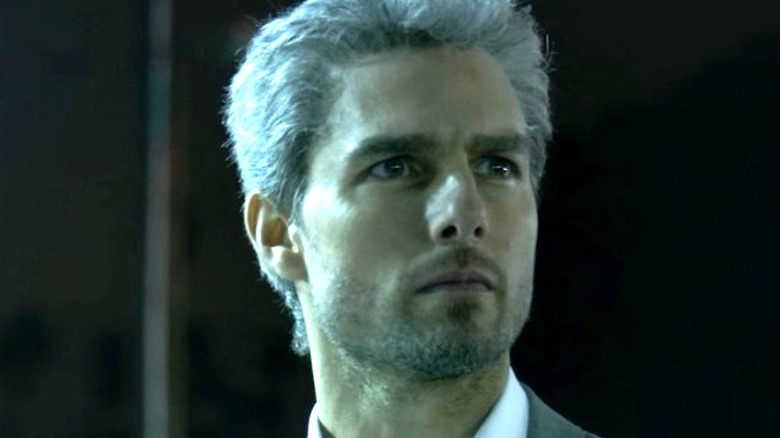
In the pantheon of Hollywood superstardom, few actors have managed their public image with the surgical precision of Tom Cruise. For decades, he was the quintessential hero—the pilot, the spy, the golden boy with the million-dollar smile. However, in 2004, director Michael Mann invited audiences to witness a rare and unsettling departure from that archetype. In Collateral, currently streaming on Prime Video, Cruise shed his heroic skin to portray Vincent, a silver-haired, cold-blooded contract killer. It remains one of the most chilling and masterful performances of his storied career, representing a pivotal moment where the actor weaponized his own magnetism to transform into a force of pure, nihilistic dread.
The Genesis of a Villain: Breaking the Cruise Archetype
Tom Cruise has never been one to shy away from complex characters, but prior to Collateral, his "dark" turns were often framed within the context of wounded souls or flawed protagonists. From the misogynistic charisma of Frank T.J. Mackey in Magnolia to the self-obsessed protagonist of Vanilla Sky, Cruise had demonstrated range, but Vincent was an entirely different beast.
Vincent is not a man with a moral compass; he is a professional who views human life as a logistical equation. When he slides into the backseat of Max’s (Jamie Foxx) cab, he isn’t just looking for a ride—he is looking for a pawn. Watching the interplay between the two—the frantic, desperate morality of the cab driver versus the icy, calculated detachment of the hitman—creates a cinematic tension that few thrillers have managed to replicate in the two decades since.
Unlike his more histrionic roles, Cruise’s performance in Collateral is defined by a terrifying stillness. He is a man who has mastered his environment, someone for whom every potential bump in the road has been pre-calculated. This restraint is what makes the performance so effective; Cruise doesn’t need to shout to exert power. He relies on a predatory calm, a professional’s professional who underestimates only one thing: the human capacity for survival.
Chronology of the Craft: Michael Mann’s Immersive Directing
Michael Mann is a director synonymous with meticulous realism, particularly when it comes to the criminal underworld. To bring the character of Vincent to life, Mann did not merely provide a script; he provided a lifestyle.
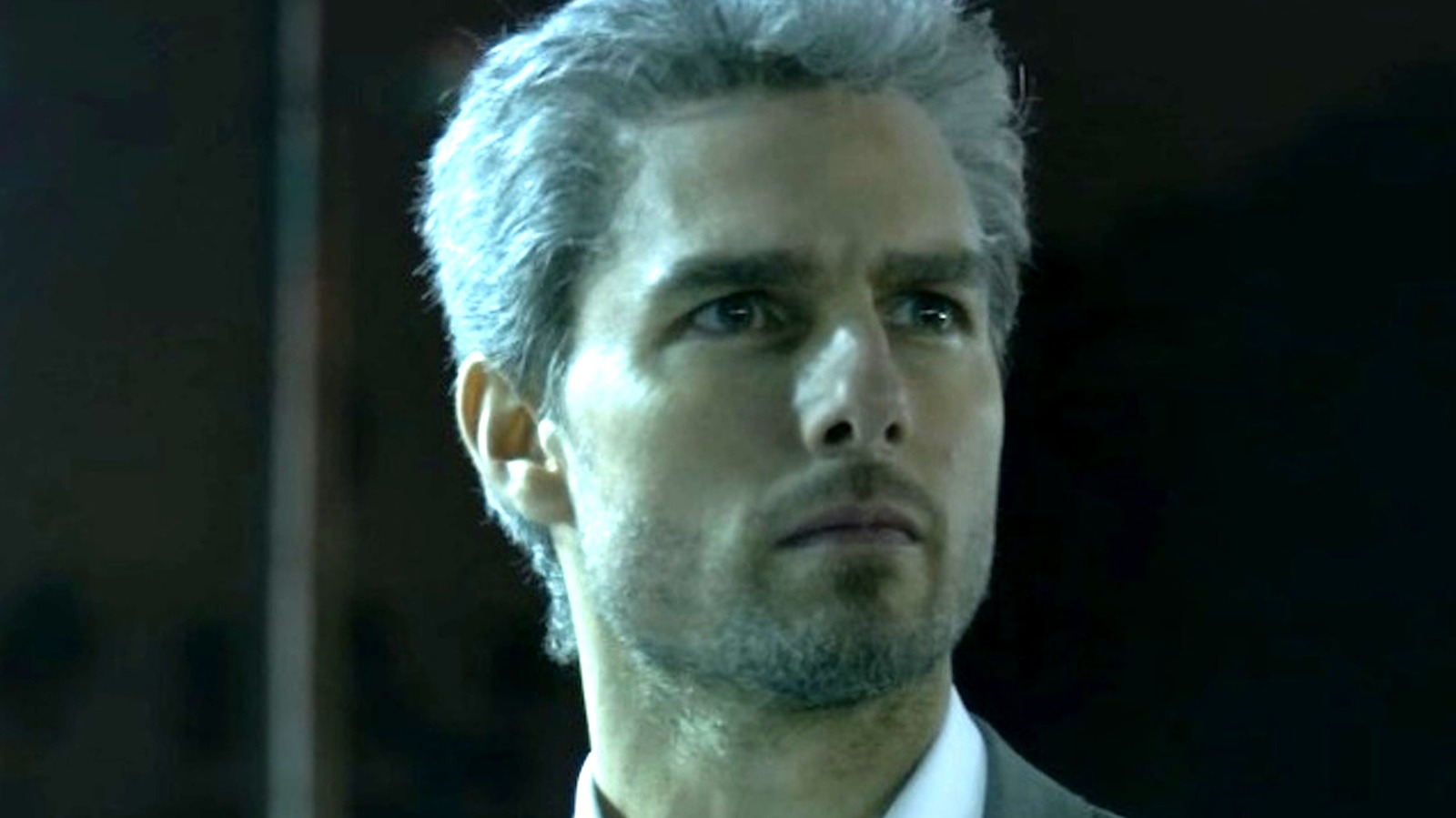
At the film’s 2004 press junket, Cruise reflected on the intense preparation required to inhabit such a vacant, lethal persona. "With Michael, he had pictures of where I came from," Cruise noted. "We discussed a lot of different aspects of where I live and how I became the way I became as Vincent. So it will emotionally inform the movie and start to look at ‘Where does this fracture happen?’"
The preparation was not merely psychological; it was environmental. Mann pushed Cruise to engage in "method" exercises that bordered on the surreal. In a 2024 interview with Empire, Mann revealed the extent of this training. The director tasked Cruise with stalking the film’s assistant director, treating him as a real-world target. "We knew that the AD went to the gym three mornings a week," Mann recalled. "And that he came to work early at 7:30. And here’s where he parked, and that’s the place to get him because there was one way in and three exits. Which is good tradecraft."
This level of immersion extended to testing the public’s perception of a celebrity. In perhaps the most famous anecdote regarding the film’s production, Mann sent Cruise out into the streets of Los Angeles disguised as a FedEx delivery man. The goal was to see if the most recognizable face on the planet could pass unnoticed among ordinary citizens.
"I had him deliver a calendar to a liquor store in downtown Los Angeles, strike up conversations with three people, and nobody knew it was Tom Cruise," Mann said. "There was a sign on him that said ‘FedEx’ and he had a cap that said ‘FedEx’ and when people see a sign, they believe it." This experiment was vital for the film’s authenticity; it taught Cruise how to be invisible in plain sight, a trait that became the backbone of Vincent’s predatory nature.
Supporting Data: Commercial and Critical Reception
When Collateral arrived in theaters, it was met with a chorus of critical acclaim, with many reviewers pointing to the film as a career-best turn for Cruise. It was a rare instance where the actor’s box-office draw aligned perfectly with a high-concept, gritty aesthetic.
- Budget: $65 million
- Box Office: $220.3 million
- Rotten Tomatoes Score: 86% (Certified Fresh)
- Key Accolade: Jamie Foxx received an Academy Award nomination for Best Supporting Actor, though many critics at the time noted that the film’s gravity was held in place by Cruise’s unsettling performance.
Despite a "B" CinemaScore, which suggested that audiences expecting a traditional action flick were perhaps caught off guard by the film’s slow-burn pacing and philosophical dialogue, Collateral has aged into a classic. It occupies a unique space in the neo-noir genre, serving as a love letter to the lonely, sprawling architecture of Los Angeles at night.
Official Perspectives: The Director and the Star
The synergy between Michael Mann and Tom Cruise is perhaps the most significant factor in the film’s success. Mann is a director who demands total commitment, and Cruise is an actor who is famous for giving it. By stripping away the "star power" usually associated with a Cruise lead role—his natural charm, his infectious energy—Mann allowed for a vacuum to be created, one that Vincent’s darkness could easily fill.
In interviews, the two have often discussed the "fracture" of the character—the moment in Vincent’s life where he decided that empathy was a liability. While the film never explicitly maps out his origin story, the weight of that history is visible in every look Cruise gives across the backseat of the cab. For Cruise, the challenge was to play a man who had successfully excised his own humanity, a process that required him to constantly check his own instincts toward warmth and engagement.
Implications: The Legacy of the "Bad" Cruise
Why does Collateral matter today? It stands as a testament to the fact that even the most established movie stars can reinvent themselves if they are willing to step into the dark. In the years following Collateral, Cruise would return to his high-octane, heroic roots, most notably with the Mission: Impossible franchise. However, the shadow of Vincent persists.
The film also raises interesting questions about casting. It is well-documented that Adam Sandler was once considered for the role of Max, a casting choice that would have fundamentally altered the film’s tone, turning it perhaps into a more tragic, "everyman" struggle. Yet, the pairing of the hyper-competent Cruise and the emotive, grounded Foxx provided a perfect balance.
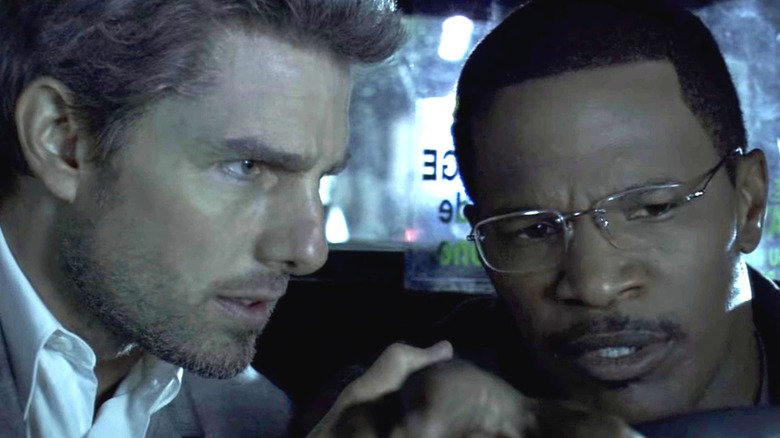
For the modern viewer, Collateral serves as a reminder of a time when mid-budget, high-concept adult thrillers were the staple of the cinematic landscape. Its visual style, captured largely on digital cameras to enhance the moody, neon-soaked atmosphere of LA, remains influential in modern cinematography.
Final Analysis
Tom Cruise’s turn as Vincent is a masterclass in economy. He conveys more with a slight tilt of his head or a cold, unblinking stare than most actors convey in pages of dialogue. By embracing the role of the villain, he didn’t tarnish his brand; he expanded it. He proved that he could disappear into a character, and in doing so, he delivered one of the most memorable antagonists in 21st-century cinema.
If you have yet to witness this performance, or if it has been a few years since your last viewing, Collateral is currently available on Prime Video. It is a film that demands your attention—not because of the explosions or the car chases, but because of the terrifyingly quiet man in the backseat, watching the city go by, waiting for his next chance to strike. It is, quite simply, a must-watch.