
Seven years after her breakout debut, Moving On, established her as a preeminent voice in contemporary Korean cinema, filmmaker Yoon Dan-bi has returned with her highly anticipated sophomore feature, The World Before. Premiering at the Toronto International Film Festival (TIFF) as part of the prestigious Platform section, the film marks a distinct shift in both tone and technique for the director, serving as a visceral meditation on the turbulent threshold between childhood innocence and the emergence of adult desire.
The Evolution of a Visionary
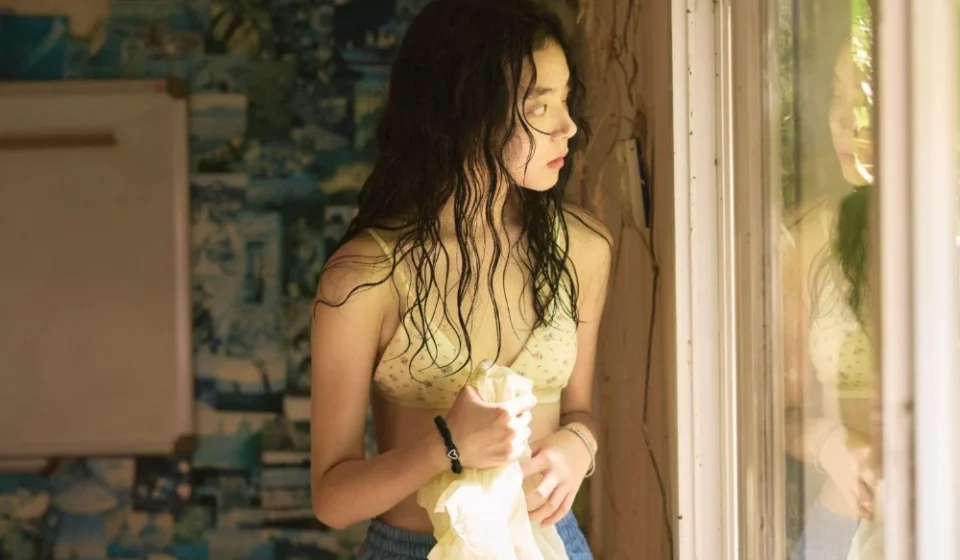
In Moving On, Yoon garnered international acclaim for her ability to blur the lines between fiction and documentary, employing a stationary, observational lens that captured the mundane beauty of familial grief. However, The World Before is a departure from that stillness. The film tracks the story of 17-year-old Jin, who experiences an unexpected and transformative reunion with her childhood friend, Du-jae, during a funeral on a remote, isolated Korean island.
For Yoon, the project was an exercise in capturing the "fever" of adolescence. "I want to make films about things that can’t be described in one sentence," Yoon remarked in an interview with Variety ahead of the TIFF premiere. "In my previous movie, I wanted to capture nostalgia. Here, I wanted to capture the restlessness—that fever you experience when innocence turns into desire."
Chronology of an Island Odyssey
The production of The World Before was as much a test of endurance as it was an artistic endeavor. Filmed during the sweltering, humid months of the Korean summer, the shoot took place across two remote islands in Wando County. The logistical challenges were immense; the island of Soan-do, where much of the production was staged, lacks a bridge to the mainland, requiring the crew to manually transport heavy cinematic equipment across the rugged, bridge-less landscape.
The production was further complicated by the capricious nature of the environment. Despite the team’s hope for rain to mirror the emotional volatility of the protagonists, the weather remained stubbornly dry. "We wanted rain scenes, but it didn’t rain that summer," Yoon recalled, reflecting on the challenges of chasing a specific aesthetic in a landscape that refused to cooperate.
Despite the physical toll, the island’s unique atmosphere proved to be a character in its own right. Soan-do, with its self-sufficient economy based on abalone and seaweed harvesting, offered a glimpse into a traditional version of rural Korea that is rapidly fading. The villagers’ hospitality, which included sharing meals and providing local color, allowed the cast to immerse themselves in the island’s rhythm—a process that eventually recalibrated Yoon’s own narrative approach.
Supporting Data and Creative Methodology
Yoon’s process is defined by an extreme dedication to chronological storytelling and on-set spontaneity. She prefers to film in order, allowing the narrative to breathe and evolve alongside the actors’ performances. This philosophy is evident in the casting and the final edit of the film.
The Art of Movement
A central pillar of the film’s visual language is the observation of human physicality. Yoon transitioned away from the static camerawork of her debut, favoring a fluid, almost sentient camera. "The camera moves around a lot as if it had its own soul," she explains. "I wanted to move it unexpectedly to create a rhythm."
This is best illustrated in a pivotal beach scene between Jin and Du-jae. Rather than relying on post-production lighting effects to control the atmosphere, Yoon insisted on capturing the erratic, natural interplay of sunlight as it moved behind clouds. It was a choice that prioritized authenticity over convenience, underscoring her commitment to capturing the organic, unscripted moments of human connection—the way a hand is held or the way guard is lowered in moments of affection.
Casting the Unseen
In selecting her leads, Sim Su-bin (as Jin) and newcomer Kim Eo-jin (as Du-jae), Yoon deliberately sought out performers who were not yet household names. She balanced this with an ensemble of lesser-known character actors to ensure the focus remained squarely on the central pair.
"I was worried that if the older actors were too famous, they’d take the focus away from them," she noted. This casting strategy, combined with her habit of encouraging actors to abandon the script in favor of their own natural vernacular, creates a rare, documentary-like intimacy. The film even features a local grandmother, chosen by the village community for her singing prowess, and an improvised moment of the leads watching ants, which now stands as one of the film’s most authentic vignettes.
Official Perspectives and Behind-the-Scenes Insights
Yoon admits that her own perceptions of the island life changed during the production. "Looking back, I realized I went with a sort of prejudice," she confesses. "I thought everyone would want to escape, but it turns out they all wanted to stay there." This realization directly impacted the character arc of Jin, who, in the final cut of the film, finds a sense of belonging on the island rather than a longing for the mainland.
The crew’s dedication was essential, particularly as they navigated the complexities of shooting during a summer marked by the threat of typhoons and the exhaustion of manual transport. Yet, the final result is a film that feels both timeless and urgent, capturing the "season of growing up" through the sensory details of cicada songs, the shifting light on skin, and the stillness of the coast.
Implications: A New Direction for Korean Cinema
The selection of The World Before for the Toronto Film Festival’s Platform section—the second time a Korean film has received such an honor following Yoon Ga-eun’s The World of Love—signals that Yoon Dan-bi is at the forefront of a new wave of Korean auteurs. Following its world premiere, the film is set to head to the San Sebastian Film Festival’s New Directors competition, further solidifying its trajectory on the international festival circuit.
The implications of Yoon’s work are profound. By moving away from the conventional, plot-driven coming-of-age narrative and toward a filmography defined by physical emotion and environmental atmosphere, she is expanding the boundaries of what constitutes a "youth drama." The World Before is not merely a film about first love; it is an exploration of the transition into the world of adults—a transition characterized not by grand events, but by the subtle, often imperceptible shifts in how we move, how we touch, and how we learn to exist in a place we once thought we would outgrow.
As she continues to refine her process, Yoon Dan-bi remains a director who trusts her instincts over technical shortcuts, ensuring that her work remains deeply rooted in the soil of human experience. Whether she is waiting for the sun to emerge from behind a cloud or allowing her actors to rewrite their own dialogue, her commitment to the "authenticity of change" continues to set her apart as one of the most compelling voices in contemporary global cinema.