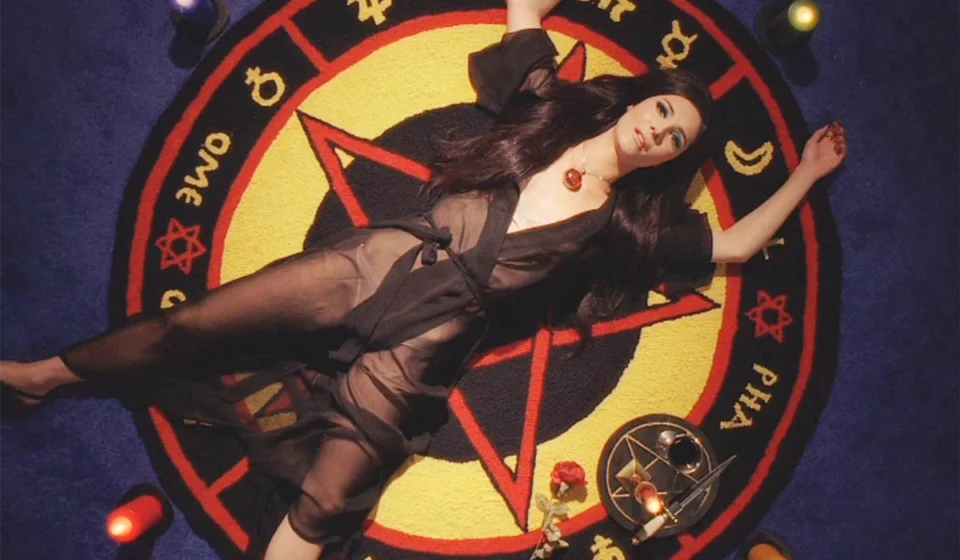

The world premiere of Anna Biller’s latest feature, The Face of Horror, at the 2026 Toronto International Film Festival’s "Midnight Madness" program was, by all conventional metrics, a success. The room was packed, the audience was palpably engaged, and the visceral, haunting nature of the film—a reimagining of the classic Japanese ghost story Yotsuya Kaidan set in 14th-century England—demanded the undivided attention of those in the seats. Yet, in the quiet hours following the screening, Biller was left with a lingering sense of disconnect.
While she had poured buckets of practical, cinematic blood into the project, she couldn’t shake the feeling that for a specific segment of the crowd—the "Midnight Madness" regulars often characterized by a hunger for pure, unfiltered gore—it simply wasn’t enough.
"I’m not sure it was 100 percent the right crowd," Biller told IndieWire, reflecting on the experience the day after the debut. "I think they wanted something more gory."

For Biller, the tension between her intent and the audience’s reception highlights a deeper, more systemic issue in how "women’s pictures" and auteur-driven horror are consumed. She suspects that for some in the theater—whom she lightheartedly but pointedly refers to as "dude bros"—the experience was a chore. They were looking for the visceral, shallow thrills of the genre, only to be confronted with a film that demanded emotional labor, introspection, and the endurance of a two-hour, dialogue-heavy tragedy.
The Architecture of a Modern Tragedy
To understand The Face of Horror, one must move past the surface-level expectations of the genre. The film follows Eleanor (played by Kristine Froseth), a woman whose pure-hearted optimism is slowly dismantled by a clandestine, increasingly nightmarish marriage to a seemingly noble knight (Jonah Hauer-King). It is a story of profound betrayal, but more importantly, it is an exploration of the cruelty that can reside within the "good man."
For Biller, the film is an urgent investigation into the continuity of misogyny. "In this film, there’s medieval misogyny, which doesn’t feel that different to modern misogyny at times," Biller noted. She views the parallel between 14th-century patriarchal structures and today’s social climate as "almost taboo," precisely because it is so uncomfortable to acknowledge that the suffering of women remains a constant, often ignored thread in human history.

This is where the critical divide often occurs. Biller’s work, which has consistently been praised for its stunning visual language, is frequently reduced by critics and audiences alike to "camp" or "satire." For the director, this is a profound act of erasure. "The lack of empathy is staggering," Biller said. "I see women suffering, and I experience it. I see the unfairness that women are subjected to in the world just every single day… it’s a real problem in women’s lives."
A Chronology of Artistic Resistance
Biller’s career has been defined by a relentless, often solitary battle to protect her vision. Following 2007’s Viva and the breakout success of 2016’s The Love Witch, Biller became a darling of the arthouse scene. However, the acclaim did not translate into the kind of creative infrastructure or financing that her male counterparts might have secured.
- 2007: Biller releases Viva, establishing her as a unique voice in independent cinema with a penchant for highly stylized, era-specific aesthetics.
- 2016: The Love Witch arrives, cementing Biller’s reputation as a master of visual detail. During this production, Biller famously spent two years drafting patterns and sewing costumes herself because she lacked the budget for a professional department.
- Post-2016: Despite the film’s success, Biller found herself in a professional limbo. "Everybody was such a fan and said they thought I was such a genius… and then it just never happened with anyone," she revealed, speaking to the industry’s failure to back up their praise with concrete opportunities.
- The "Bluebeard" Standoff: Biller attempted to mount an ambitious Gothic romance, Bluebeard’s Castle. Despite the script being widely recognized for its quality, it failed to secure financing. Biller argues the project was rejected because it didn’t fit into a pre-defined category. "It fell between categories," she noted. "Is this a main competition film? Is it a platform film? Is it a Midnight Madness film?"
- 2026: Having turned Bluebeard’s Castle into a novel and nearly walking away from filmmaking entirely, Biller returns with The Face of Horror, her most professionally supported project to date.
The Misconception of the "Control Freak"
One of the most persistent narratives regarding Biller is that she is a "control freak" who insists on doing everything herself. Biller refutes this, framing her previous, labor-intensive methods as a necessity for quality control in an industry that underfunds women.

"It’s not that I’m a control freak," Biller clarified. "It’s just that I’m incredibly meticulous about what I want it to look like, and I’m not going to accept some bad, horrible costumes just because I can’t afford good ones."
With The Face of Horror, Biller finally had access to a full costume room—cutters, drapers, and stitchers who could bring her intricate sketches to life. It was a revelation. For the first time, Biller was able to experience a production that functioned with the standard resources of a major film. Because she had spent years working in every department herself—from set decoration to wardrobe—she possessed a level of fluency that allowed her to communicate with her crew with surgical precision.
"I understand how hard it is, what they’re doing and what they need," she explained. This mutual understanding didn’t stifle her collaborators; it empowered them, allowing for a level of artistry that, when paired with her vision, created a "luscious fantasyland" that felt authentic rather than superficial.

The Weaponization of "Camp"
A central point of contention for Biller is the way the word "camp" is used to dismiss her work. She acknowledges the "intentional humor" in her films—a necessity for catharsis in the tradition of the rape-revenge subgenre—but she distinguishes that from the pejorative usage of the term.
"‘Camp,’ I feel like it’s failed seriousness," she argued.
She suggests that when audiences and critics label her work as camp, it serves as a defense mechanism. "There’s a defensiveness," she said. "Like, ‘Please don’t take this seriously because if we do, then it indicts us as men.’ And I think especially horror fans, their entertainment is very safe for them because they don’t ever have to see men called out for anything."

This defensive reflex is what keeps Biller’s work in the "Midnight Madness" purgatory. By categorizing the film as a stylistic novelty or a dark comedy, the industry can admire the costumes and the lighting while ignoring the "sincerity of the pain" that drives the narrative.
Implications for Future Filmmakers
The success of The Face of Horror at TIFF serves as a line in the sand. It is a film that refuses to be "safe." Its lighting choices, for instance, are intentionally designed to separate characters from their environment, forcing the viewer to confront the human soul rather than just the production design.
As Biller continues to navigate an industry that often struggles to classify or respect her specific brand of authorship, the implications of her struggle are clear. When we reduce auteur-driven films by women to "visual novelties," we aren’t just critiquing a movie; we are actively devaluing the lived experiences and the serious, often painful, political commentary those creators are attempting to share.

"I’m trying to just be a faithful messenger," Biller said. If The Face of Horror proves anything, it is that the messenger is indeed faithful—even when the audience is not yet ready to hear the message. For now, the film seeks a U.S. distributor, looking for a home that recognizes the tragedy beneath the blood, and the substance beneath the style.