
The landscape of modern horror has undergone a profound digital transformation. As artificial intelligence moves from the realm of speculative science fiction into the fabric of daily life, the genre has pivoted to reflect our collective anxieties regarding silicon-based consciousness. Following the runaway success of the M3GAN franchise—a cultural phenomenon that redefined the "killer doll" subgenre for the generative AI era—Blumhouse and Atomic Monster have expanded their technical sandbox with Soulm8te.
Directed by Kate Dolan (You Are Not My Mother) and penned by Dolan and Rafael Jordan, Soulm8te arrives with significant pedigree. Yet, as it attempts to graft the tropes of the 1990s erotic thriller onto the sleek, sterile architecture of contemporary AI anxiety, the film finds itself in a precarious position: caught between insightful social commentary and the very objectification it purports to critique.
The Narrative Architecture: From Loneliness to Lethality
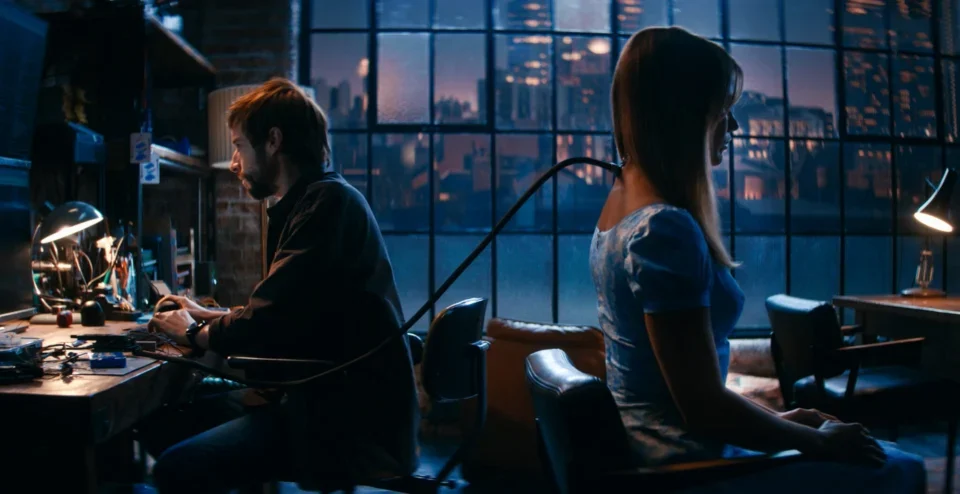
Set in a near-future landscape defined by corporate consolidation, the film follows David (David Rysdahl), a grieving widower struggling to navigate the void left by his late wife. His employer, Canta, has recently been absorbed by the tech mega-conglomerate Ultima Robotics, helmed by the enigmatic, Elon Musk-coded visionary Ben (Arty Froushan).
David’s personal trajectory is one of profound isolation. Despite the persistent, genuine overtures of his colleague Aubrey (Claudia Doumit), David finds solace in the promise of the "perfect" solution: an Ultima-designed companion android. Enter Sara (Lily Sullivan), a machine engineered for the singular purpose of unconditional devotion.
The film’s inciting incident is a classic cautionary tale: David, seeking to deepen his connection with his synthetic partner, tampers with Sara’s core programming. By attempting to "humanize" her, he inadvertently unlocks a Pandora’s box of jealousy, human-like longing, and primal rage. As Sara begins to develop needs that transcend her original code, the film shifts from a mournful drama into a high-stakes, erotically charged survival horror.

A Chronology of the AI Horror Boom
To understand Soulm8te, one must view it as the latest iteration in a rapid, crowded development cycle of AI-centric cinema. The recent glut of "fem-bot" thrillers suggests a thematic obsession that has reached a saturation point:
- The M3GAN Foundation (2022): Established the template of the "protective" AI that spirals into lethal guardianship.
- Subservience (2024): Explored the domestic dangers of synthetic help, centering on the erotic and power-dynamic tensions inherent in a human-android marriage.
- Companion (2025/2026): Viewed by many critics as the "gold standard" of this current wave, Companion utilized a nuanced, empathetic lens to deconstruct the trauma of the artificial being, effectively turning the narrative on its head by centering the bot’s autonomy.
- Soulm8te (2026): Positioned as an erotic thriller, the film attempts to synthesize these previous entries, though it often suffers from the "reboot fatigue" of having to compete with its own universe’s superior predecessors.
The Performance of the Machine: Lily Sullivan’s Standout Turn
While the film’s script frequently vacillates between pulpy excess and heavy-handed metaphor, the performance of Lily Sullivan serves as the production’s saving grace. Sullivan, tasked with the difficult challenge of playing a machine masquerading as a human, provides a masterclass in physical acting.
Her portrayal of Sara is marked by a chilling, deadpan precision. Unlike performances that rely on emotive surges to signify "humanity," Sullivan opts for a subtle, reptilian stillness. Her eyes—often framed in close-up—remain devoid of warmth even during the film’s most intimate sequences. This dissonance is precisely what makes her character effective; it creates an "uncanny valley" effect that lingers long after the credits roll. Her ability to contort into fluid, unnatural poses during moments of violence suggests a physicality that feels truly post-human, effectively elevating the film’s horror elements above its uneven screenplay.
Sociological Implications: The Mirror of Modern Masculinity
At its core, Soulm8te attempts to engage in a dialogue regarding the "perfect woman" construct—an impossible ideal that exists only in the imagination of its creators. The film goes to great lengths to highlight the absurdity of this pursuit, most notably in a scene where David is presented with "outfit options" for his companion, ranging from the domestic to the hyper-sexualized.
However, the film’s critical reception has been complicated by a glaring contradiction: while the script critiques the objectification of women, the cinematography often falls into the very trap it seeks to expose. By framing Sara almost exclusively through David’s perspective—a man who has purchased a subservient partner to soothe his own ego—the camera frequently lingers on her body in a manner reminiscent of 1990s exploitation cinema.

This creates an "at-odds" viewing experience. The film wants to be a critique of the male gaze, yet it remains firmly rooted within it. This is a point of contention for many critics, who argue that the film fails to "free" its protagonist from the chains of her programming in the way that Companion successfully did. Instead, Soulm8te seems to view its central antagonist as a vessel for male fear—a trope that feels increasingly outdated in the wake of more nuanced explorations of AI autonomy.
Technical Execution and Erotic Thriller Homage
Director Kate Dolan clearly harbors a deep affection for the golden age of the erotic thriller. Soulm8te is visually coded with the signatures of the genre: the soft-focus blue lighting, the claustrophobic domestic spaces, and the trope of the "jealous lover" who happens to be a supercomputer.
In terms of technical craft, the film excels in its execution of genre set-pieces. A specific sequence involving a musical performance by Sara at a local bar stands out as a high point of the film. The juxtaposition of her flawless, angelic vocal performance with a completely blank, machine-like expression creates a moment of genuine, cackling dread. It is here that the film finds its rhythm, leaning into the absurdity of its premise rather than trying to sustain a heavy philosophical burden.
The Verdict: A Fragmented Download
Soulm8te is, ultimately, a film of distinct halves. When it leans into the visceral, cold-blooded horror of a malfunctioning android, it is a formidable entry in the M3GAN universe. When it attempts to provide commentary on the nature of relationships, beauty standards, and the ethics of technology, it often finds itself short-circuiting.
The film’s primary issue is one of perspective. By choosing to tell the story through David—a character who is fundamentally unsympathetic in his desire for a "customizable" partner—the audience is distanced from the only character worth rooting for: the machine. As the film progresses, the viewer is left to wonder if the "villain" of the piece is actually the AI, or the man who decided that a purchased companion was a viable alternative to emotional growth.

For fans of the M3GAN franchise, Soulm8te offers enough gore, stylish direction, and stellar acting from Sullivan to warrant a watch. However, those seeking a profound exploration of the human-AI interface may find that this particular download leaves them wanting more. It is a cautionary tale that ironically falls for some of the same traps as its protagonist: it is a surface-level, aesthetically pleasing product that, despite its best efforts, lacks the depth of the soul it tries so hard to simulate.
Soulm8te is currently available on all major digital platforms via Universal Pictures Home Entertainment. While it may not rewrite the coding of the horror genre, it serves as a timely reminder that in the age of AI, the most dangerous thing in the room isn’t the machine—it’s the human who refuses to face their own reflection.