Through the Lens of Terror: An In-Depth Look at The Last Footage and the Evolution of Found-Footage Horror

The found-footage subgenre of horror has long been a polarizing landscape. Often dismissed by critics as a low-effort playground for aspiring filmmakers with limited budgets, the format possesses an inherent, raw intimacy that, when executed with precision, can produce some of the most terrifying experiences in cinema history. From the cultural phenomenon of The Blair Witch Project to the structural ingenuity of Paranormal Activity and the frenetic energy of the V/H/S anthology series, the genre continues to reinvent itself.
Enter The Last Footage, the debut feature from director Arker Soe Oo. Not only does the film stand as a landmark for Myanmar’s burgeoning horror scene, but it also represents a technical milestone as the first feature film shot entirely using 4K Pro camera glasses. By trading traditional cinematography for a persistent, wearable first-person perspective, The Last Footage offers a visceral, real-time nightmare that demands the viewer’s undivided attention.
Main Facts: A New Frontier in Immersive Horror
The Last Footage functions as a bridge between the classic tropes of cabin-in-the-woods horror and the technological advancements of the modern digital age. The premise is deceptively simple: a group of friends embarks on a nature getaway to the remote Wingabar Forest, seeking solace and relaxation. However, their excursion quickly devolves into a desperate struggle for survival as they stumble upon a series of ancient, cursed rituals.
The film’s central conceit is its camera technology. By utilizing 4K Pro camera glasses, the director eliminates the "shaky-cam" fatigue often associated with handheld cameras, opting instead for a stabilized, immersive gaze that mirrors the natural movement of the human eye. This decision grounds the supernatural occurrences in a disturbingly mundane reality. The plot follows a classic "domino effect" of dread—a child vanishes, a grieving witch (portrayed with unsettling intensity by Mo Khum) demands restitution, and the group finds themselves haunted by entities that defy scientific explanation.
Chronology: The Descent into the Wingabar Forest
The narrative arc of The Last Footage is structured to lull the audience into a false sense of security before systematically dismantling their comfort.
![‘The Last Footage’ Is a Gritty, Confining Found-Footage Assault [Fantasia Review]](https://www.dreadcentral.com/wp-content/uploads/2026/07/The-Last-Footage-Creature-Walks-In-Forest-1200x675.jpg)
The Setup: The Illusion of Leisure
The first act of the film leans heavily into the naturalistic, "hang-out" horror dynamic. We are introduced to the group of friends, whose natural chemistry and playful, self-aware humor establish a relatable baseline. This segment is crucial; it builds a rapport that makes the subsequent loss of life feel personal rather than purely academic.
The Inciting Incident: Breaking the Seal
As the group delves deeper into the Wingabar Forest, the pacing shifts. The discovery of a missing boy and the subsequent introduction of the witch provide the catalyst for the supernatural unrest. The film begins to introduce lore regarding the "guardians of a dark realm," entities tasked with keeping ancient, sleeping demons buried beneath the forest floor. The group’s presence acts as a psychic—and literal—intrusion that awakens these dormant forces.
The Climax: The Unrelenting Finale
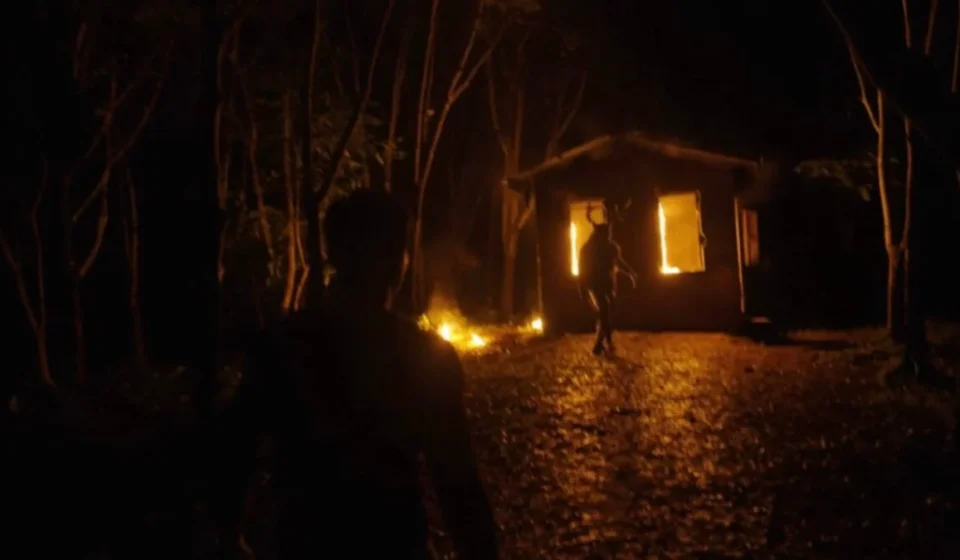
The final thirty minutes of The Last Footage are arguably its strongest, shifting from a slow-burn mystery into a high-octane, claustrophobic nightmare. As the friend group fractures, the film leans into its monster design. The antagonist, described as a chilling hybrid of a wendigo and a minotaur, is used with a masterclass of restraint. By showing the creature only in brief, terrifying glimpses, the film forces the viewer’s imagination to fill in the gaps, heightening the visceral impact of the final confrontation.
Supporting Data: Technical Innovation and Genre Context
The film arrives at a time when found-footage is experiencing a renaissance. Following the success of modern hits like Host, Late Night with the Devil, and the grassroots sensation Milk and Serial, audiences are proving that they have an appetite for low-budget, high-concept horror.
The Last Footage succeeds largely due to its technical limitations. Because the film is locked into the first-person perspective of the camera glasses, there is no "escape" for the audience. The framing is tight, the lighting is dictated by the environment, and the scares are often relegated to the peripheral corners of the frame. This "whack-a-mole" approach to horror—where threats emerge from the darkness at the edge of the screen—is a hallmark of effective, low-budget filmmaking.
![‘The Last Footage’ Is a Gritty, Confining Found-Footage Assault [Fantasia Review]](https://www.dreadcentral.com/cdn-cgi/image/width=788%2Cheight=444%2Cfit=crop%2Cquality=75%2Cgravity=auto%2Csharpen=1%2Cmetadata=none%2Cformat=auto%2Conerror=redirect/wp-content/uploads/2026/07/The-Last-Footage-Creature-Walks-In-Forest.jpg)
However, the film is not without its hurdles. With a runtime approaching ninety minutes, the middle act occasionally struggles with pacing. The "dead weight" of certain scenes suggests that the concept might have been even more potent if condensed into a shorter, more explosive format, such as a segment within a V/H/S anthology. Despite these lulls, the sheer technical competence on display serves as a testament to Arker Soe Oo’s potential as a director.
Official Responses and Critical Reception
Early screenings, particularly at major genre festivals like Fantasia, have painted a picture of a film that is "flawed but fascinating." Critics have praised the performance of Mo Khum, whose portrayal of the vengeful witch serves as the emotional anchor for the film’s supernatural elements.
The consensus among horror enthusiasts is that while The Last Footage does not necessarily break the mold of the cabin-in-the-woods subgenre, it effectively "polishes" the mold. The film’s commitment to its technical gimmick—the 4K Pro camera glasses—has been widely lauded as a clever solution to the perennial found-footage problem of justifying why someone would keep filming while being terrorized. In this case, the camera is an extension of the character’s body, making the "why keep filming" question moot.
Implications: What The Last Footage Means for the Future
The release of The Last Footage signals a shifting tide in international horror. As technology becomes more accessible, regional filmmakers are increasingly able to leverage modern tools to export their cultural folklore to a global audience.
The Democratization of Horror
Myanmar’s first foray into the found-footage genre sets a precedent for filmmakers in emerging markets. It demonstrates that a compelling, terrifying story does not require a Hollywood budget or complex practical effects. By focusing on atmosphere, naturalistic performances, and a singular, innovative visual conceit, The Last Footage proves that the "lo-fi" aesthetic remains a powerful tool for storytelling.
![‘The Last Footage’ Is a Gritty, Confining Found-Footage Assault [Fantasia Review]](https://www.dreadcentral.com/cdn-cgi/image/width=788%2Cheight=443%2Cfit=crop%2Cquality=75%2Cgravity=auto%2Csharpen=1%2Cmetadata=none%2Cformat=auto%2Conerror=redirect/wp-content/uploads/2026/07/The-Last-Footage-Heading-Through-Forest.jpg)
The Future of "POV" Filmmaking
The success of this film’s 4K Pro camera glasses suggests that we may see a wave of "wearable" horror in the coming years. This technology allows for a level of physical immersion that traditional shoulder-mounted cameras cannot replicate. As VR and AR technology continues to evolve, the lessons learned from The Last Footage—specifically regarding how to frame tension within a fixed, personal lens—will likely influence the next generation of interactive horror experiences.
A Lesson in Pacing and Scope
The film also serves as a case study for future directors. The struggle to maintain tension over a feature-length runtime is a common pitfall for debut directors. The Last Footage reminds us that even with a strong concept and technical prowess, the "shaggy" middle sections of a film can undercut the overall impact. Future projects from Soe Oo will likely benefit from the lessons learned here: the necessity of ruthless editing and the importance of maintaining a consistent, relentless pace.
Conclusion
The Last Footage is an imperfect, yet undeniably exciting, entry into the annals of found-footage horror. It is a film that wears its influences on its sleeve—echoing the intensity of The Ritual and the claustrophobia of Paranormal Activity—while simultaneously carving out its own identity through its innovative use of camera technology.
While it may occasionally stumble under the weight of its own runtime, the moments of genuine terror and the commitment to a singular, immersive vision make it a must-watch for fans of the genre. Arker Soe Oo has delivered a calling card that announces his presence on the global stage, and if this is the standard for his debut, the future of Myanmar’s horror cinema looks both bright and terrifyingly dark. For those willing to look through the lens, The Last Footage offers a glimpse into a new, sharper, and more personal brand of cinematic nightmare.