Echoes of the Mekong: "Soul Patrol" and the Unspoken Legacy of Black Special Ops

Editor’s Note: This review was originally published during the 2026 Sundance Film Festival. "Soul Patrol" opens in select theaters via Kino Lorber starting Friday, November 6.
The Vietnam War ended over a half-century ago, yet it remains a haunting, inexhaustible reservoir for American artists. It is a conflict that continues to be interrogated, re-evaluated, and deconstructed, as creators seek new avenues to articulate the experiences of a generation whose lives were irrevocably fractured by the jungles of Southeast Asia. While the cinematic canon of the war was long dominated by a singular, often homogenous perspective, recent years have seen a vital shift. From the focus on the Vietnamese civilian experience—as seen in HBO’s The Sympathizer—to the long-overdue exploration of the Black military experience in Spike Lee’s Da 5 Bloods, the lens is finally widening.
Joining this critical discourse is director J.M. Harper’s powerful new documentary, Soul Patrol. Following its well-received debut at the 2026 Sundance Film Festival, the film arrives in theaters as a poignant, if occasionally imperfect, testament to the intersection of racial identity, military service, and the lifelong pursuit of closure.
The Men Behind the Moniker
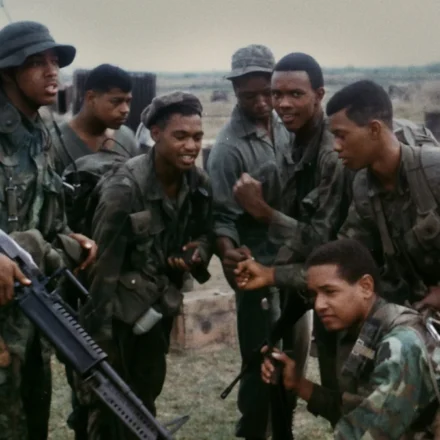
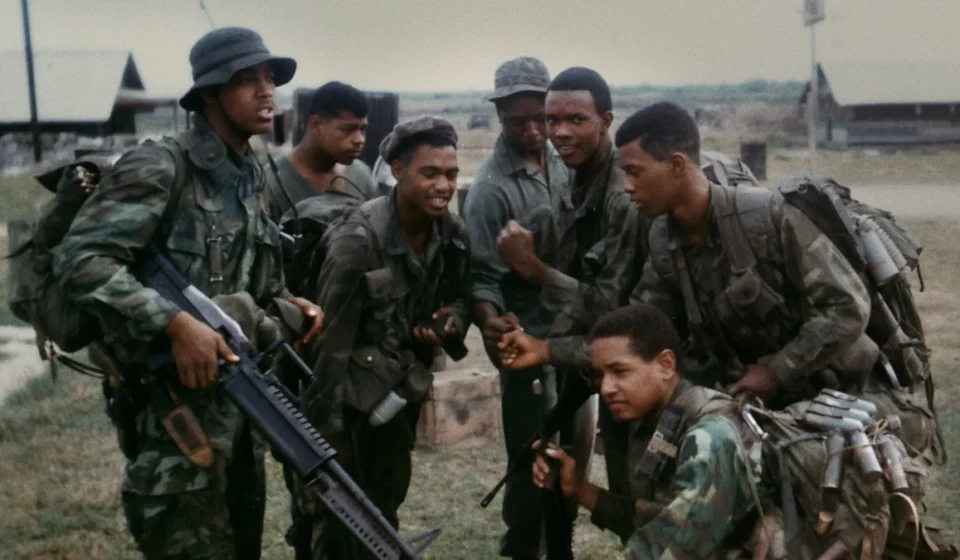
At the heart of Soul Patrol is the story of Ed Emanuel, a writer who, at the tender age of 17, found himself thrust into the chaos of the Vietnam War. Serving between 1968 and 1969, Emanuel was part of the first all-Black special operations Long-Range Reconnaissance Patrol (LRRP) team. Decades later, in his 2003 memoir of the same name, Emanuel chronicled the harrowing process of tracking down his brothers-in-arms, attempting to bridge the gap between their shared trauma and their separate lives.
Harper’s film picks up the thread in 2024, capturing what the participants have designated as their final reunion. The documentary brings together Emanuel, Lawton Mackey, Thad Givens, Emerson Branch, Jesse Lewis, Willie T. Brown, Willie Merkerson, and Norman Reid. In the sterile, fluorescent-lit confines of a Florida hotel conference room, these men confront the ghosts of their past. It is a space of catharsis, where the unspoken memories of the war are finally given voice in the hope that communal acknowledgment might lead to individual peace.
A Turbulent Backdrop: 1968 and the Fractured Homefront
To understand the weight of the men’s service, Harper provides essential historical context. The film highlights the irony that while these young men were shipped off to fight for an American ideal, that very ideal was crumbling at home.
Emanuel recalls being on a transport plane to Vietnam when the news of Robert F. Kennedy’s assassination broke. It is a jarring, symbolic moment—the death of a political icon coinciding with the beginning of a personal odyssey into violence. Throughout the documentary, the external turbulence of the Civil Rights movement and the burgeoning anti-war protests serve as a dissonant soundtrack to their service. The film utilizes a pivotal speech from Dr. Martin Luther King Jr. as a recurring motif, acting as a catalyst for Emanuel’s later, agonizing self-reflection: Was the trauma they endured in the name of a country that treated them as second-class citizens truly worth the cost?

The Complexity of Identity and Tokenization
One of the most compelling aspects of Soul Patrol is its willingness to linger on the uncomfortable nuances of the soldiers’ experiences. The documentary does not shy away from the intersection of race and military hierarchy.
A particularly illuminating sequence focuses on the unit’s name: "Soul Patrol." The men debate the nickname, dissecting how a moniker meant to denote camaraderie and Black pride could simultaneously feel patronizing or reductive. This internal tension—between the bonds of brotherhood and the systemic tokenization they faced within the U.S. Army—is captured with startling honesty.
Beyond the combat, the film explores the human experience of these young men in a foreign land. Emanuel’s recollections of a night in Bangkok are presented with a vulnerability that strips away the "warrior" archetype, revealing the confused, yearning teenagers they were when they were dropped into a conflict zone.
Directorial Choices: Style vs. Substance
J.M. Harper, whose debut feature As We Speak also earned acclaim at Sundance, brings an uncompromising, blunt aesthetic to this project. However, the film is at its strongest when it allows the men to simply occupy the frame.
The documentary falters when Harper’s directorial hand becomes too heavy. The inclusion of actor-led reenactments, while ambitious, feels jarringly slick and generic compared to the visceral, gritty reality of the archive footage. A recurring visual metaphor—an older veteran haunted by a literalized, ghostly vision of his past—feels overly didactic, stripping away the mystery and nuance that the subjects’ own words provide. Similarly, a string-heavy score occasionally pushes for an emotional response that the material, in its rawest form, already earns effortlessly.
These stylistic flourishes can feel like an attempt to "elevate" the story, but the story is already at its peak when the camera is static, focusing on the faces of these men as they laugh, weep, and struggle to articulate the inarticulable.
The Archival Power and the Human Element
When the film gets out of its own way, Soul Patrol is nothing short of breathtaking. The Super 8 footage, shot by the men themselves during their tour, provides an intimacy rarely seen in war documentaries. These are not the polished, propaganda-tinged clips of government archives; they are fragments of life—fleeting moments of joy, boredom, and terror captured on the ground.

Harper artfully weaves these home movies with contemporary, black-and-white cinematography of the reunion. The decision to shift the visual palette for the 2024 scenes creates a clear, respectful demarcation between the past and the present. A standout segment involves the wives and partners of the soldiers, whose perspectives on the long-term effects of PTSD and the emotional distance of their husbands add a vital, humanizing layer to the narrative. It reminds the audience that the war did not end in 1969; it continued in the living rooms and bedrooms of these men for decades.
Implications: The Necessity of Testimony
The documentary arrives at a time when the generation that fought in Vietnam is entering its final chapter. As the number of living veterans dwindles, the urgency of their testimony becomes paramount. Soul Patrol does not attempt to be a definitive historical record of the war; rather, it serves as a profound, localized study of what that war stole from and gave to a specific group of men.
In the film’s final act, the focus shifts to the agonizing process of returning home—not as heroes, but as survivors of a conflict that the American public was increasingly desperate to forget. The vulnerability displayed here is gut-wrenching. As one member of the unit poignantly notes: "We need to tell the stories to look at where we were at, where we come from, and where we headed. You need to know your beginning before you can figure out your ending."
Conclusion
Soul Patrol is a flawed but deeply necessary addition to the Vietnam War cinematic archive. While it occasionally suffers from the trappings of modern documentary tropes, its core—the testimony of the men who survived the "Soul Patrol"—is an essential, harrowing, and ultimately redemptive piece of history.
By centering the voices of those who were often relegated to the margins of the narrative, J.M. Harper has created a space for a different kind of truth. It is a film about the long shadow of war, the resilience of brotherhood, and the slow, painful process of healing. For those seeking to understand the human cost of the conflict beyond the headlines and history books, Soul Patrol is an invaluable, if difficult, watch.
Grade: B