The Anatomy of a Myth: ‘Capturing Bigfoot’ and the Definitive Unmasking of an American Legend

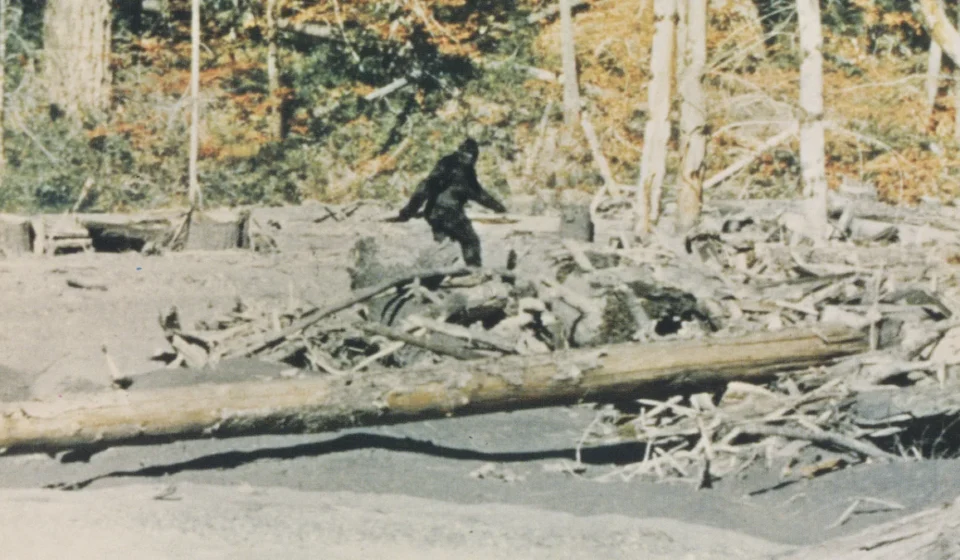
The shaky, grainy 16mm footage shot in the woods of Northern California on October 20, 1967, remains perhaps the most scrutinized piece of amateur film in history, rivaled only by the Zapruder film. For over half a century, those 59 seconds of celluloid—depicting a massive, hairy bipedal creature strolling through a sun-drenched clearing—have served as the foundational scripture for a global subculture of believers. However, a new documentary, Capturing Bigfoot, directed by Marq Evans, seeks to provide the final word on the matter.
Rather than merely revisiting the "is it or isn’t it" debate that has fueled cable television for decades, Evans’ film acts as a forensic autopsy of a hoax. It is an astounding piece of investigative journalism that explores not just how the footage was made, but why the world was so desperate to believe it was real. In doing so, Capturing Bigfoot offers a sobering reflection on the human appetite for the uncanny and the birth of modern "viral" misinformation.
Main Facts: The 59 Seconds That Defined a Century
The Patterson-Gimlin film, as it is formally known, was captured by Roger Patterson and Robert "Bob" Gimlin in Bluff Creek, California. The footage shows a creature, later nicknamed "Patty," walking along a sandbar near the woods. The creature pauses, turns its head toward the camera for a fleeting moment, and then disappears into the foliage.
For decades, the film’s authenticity remained in a state of perpetual limbo. Skeptics pointed to the "man-in-a-suit" theory, while proponents argued that the creature’s gait, muscle definition, and biological proportions were impossible to replicate with 1960s costume technology. Capturing Bigfoot effectively dismantles this stalemate. Through the discovery of never-before-seen "rehearsal" footage and the testimony of those within Patterson’s inner circle, the documentary concludes that the film was a meticulously planned production—a DIY masterpiece of mid-century deception.
The documentary highlights three primary revelations:
- The Rehearsal Footage: Evans uncovers 16mm film from 1966, a full year before the famous sighting, which shows a "rehearsal" of the Bigfoot walk.
- The "Actor": The film identifies Bob Hieronymus, an associate of Patterson, as the man inside the suit, noting his distinctive "loping" walk that matches the creature in the 1967 film.
- The Financial Motivation: The footage was not a scientific discovery but a commercial venture that generated millions of dollars in revenue, much of which was siphoned off into a family construction empire.
Chronology: From Obsession to Viral Phenomenon
The legend of Bigfoot did not emerge in a vacuum. To understand the 1967 film, Capturing Bigfoot traces the trajectory of Roger Patterson’s life and the cultural climate of the era.
1959–1965: The Seeds of Obsession
The obsession began with a 1959 article in True magazine titled "America’s Abominable Snowman." Roger Patterson, a rodeo rider and eccentric resident of Yakima, Washington, became consumed by the idea of an undiscovered primate living in the Pacific Northwest. Patterson was a "camera-ready" character—a cowboy cosplayer who often took his son, Clint, on camping trips in a VW van, famously stuffing two live horses into the vehicle to maintain his "mountain man" persona.
1966: The Blueprint for a Hoax
A year before the Bluff Creek incident, Patterson published a book titled Do Abominable Snowmen of America Really Exist?, which he illustrated with his own drawings. These drawings bore a striking resemblance to the creature that would eventually appear on film. During this period, his son Clint recalls discovering a stash of second-hand fur coats in his father’s locked shed—the raw materials for what would become the most famous costume in history.
October 20, 1967: The Event
Patterson and Gimlin claimed to have stumbled upon the creature while riding horses in the remote wilderness of Northern California. The resulting 59 seconds of footage was immediately treated as a sensation. Patterson, a natural showman, took the film on a road-show tour, charging $2 a ticket. In Salt Lake City, the film reportedly out-earned a Simon & Garfunkel concert held at the same venue just weeks prior.
1972–Present: The Afterlife of a Hoax
Following Patterson’s death in 1972, the film transitioned from a traveling sideshow to a scientific anomaly. It was featured in academic journals and documentaries, becoming a staple of "National Enquirer culture." As the digital age dawned, the footage went "viral" before the term existed, cementing Bigfoot as a permanent fixture of American folklore.
Supporting Data: The Science of Believing
One of the most compelling aspects of Capturing Bigfoot is its inclusion of expert witnesses who spent their careers defending the film. This data provides a crucial look at how "confirmation bias" operates within the scientific community.
The Anatomical Argument
Dr. Jeff Meldrum, a professor of anatomy at Idaho State University, features prominently in the film. His "Evolutionary Morphology Laboratory" is essentially a shrine to Bigfoot. Meldrum argues that the 1967 footage shows detailed muscle groups and mammary glands, suggesting the creature is a female biological entity. He maintains that the "compliant gait" seen in the film is a specialized form of locomotion that a human in a suit could not easily replicate.
The Special Effects Perspective
Bill Munns, a veteran Hollywood makeup artist who started at Universal Studios in 1969, provides a different layer of "evidence." Munns argues that even big-budget studios of the late 60s lacked the technology to create a suit that fit so tightly to the wearer’s muscles. To many believers, the perceived impossibility of the costume was the ultimate proof of the creature’s reality.
However, the documentary counters these "expert" opinions with the cold reality of the 1966 rehearsal footage. By showing the evolution of the suit and the walk, Evans demonstrates that the "impossible" was simply a matter of creative ingenuity and trial-and-error.
Official Responses: Family Secrets and Financial Fallout
The documentary draws much of its emotional weight from the testimony of those closest to the event.
The Son’s Perspective
Clint Patterson, now in his late 60s, serves as the film’s central narrator. For much of his life, Clint remained a true believer in his father’s legacy. His transition from a protective son to a man acknowledging the "smoking gun" provides the film’s narrative arc. His memories of the "locked shed" and the "fur coats" serve as the domestic foundation of the hoax.
The Silent Partner
Bob Gimlin, Patterson’s partner on that fateful day in 1967, remains a fixture on the Bigfoot convention circuit. While Gimlin has never explicitly confessed to a hoax, the documentary paints a picture of a man who was largely left out of the financial windfall. While Patterson’s brother-in-law, Al DeAtly, used the film’s millions to build a construction empire and a Mar-a-Lago-style mansion, Gimlin received virtually nothing.
The Man in the Suit
The most damning testimony comes from the identification of Bob Hieronymus. By comparing Hieronymus’s natural, loping gait with the movements of "Patty" in the 1967 film, Evans provides a visual link that is difficult to ignore. Hieronymus’s involvement suggests that the "encounter" was a scripted performance involving a tight-knit group of associates.
Implications: From Bigfoot to the Post-Truth Era
The conclusion of Capturing Bigfoot is less about the creature and more about the culture that sustained it. The film suggests that Roger Patterson was a "classic American snake-oil salesman" who understood the media age long before his peers. He didn’t just create a fake film; he created a "reality" that took on a life of its own.
The Loss of Wonder
The documentary draws parallels to other famous hoaxes, such as the 1934 "Surgeon’s Photo" of the Loch Ness Monster (revealed in 1994 to be wood putty on a toy submarine) and the 1978 crop circle phenomenon (confessed to by Doug Bower and Dave Chorley in 1991). As these mysteries are solved, the world arguably feels "smaller." The film explores the "crestfallen fascination" that comes when the teasing possibility of the supernatural is replaced by the mundane reality of human deception.
The Bridge to Modern Misinformation
Perhaps the most striking implication of the film is the direct line it draws from Bigfoot to contemporary "magical thinking." Evans argues that the desire to believe in Bigfoot—despite overwhelming evidence to the contrary—is the same psychological mechanism that fuels modern conspiracy theories. Whether it is the obsession with Unidentified Aerial Phenomena (UAPs) or the wacked-out theories surrounding the 2020 presidential election, the Patterson-Gimlin film provided the blueprint for how "evidence" can be manufactured to sustain a preferred narrative.
As the credits roll, Capturing Bigfoot leaves the audience with a haunting realization: we are no longer looking for a monster in the woods. We are the monsters, or rather, we are the "Ape Believers" who have moved out of the woods and into a digital landscape where the truth is whatever we want it to be. Roger Patterson may have died in 1972, but the world he helped build—a world where a 59-second clip can override a lifetime of logic—is the world we now inhabit.