Venice Film Festival Announces Last-Minute Competition Entry: The Urgent Dispatches of "Naza"

In a surprise maneuver that has sent ripples through the international film community, the Venice Film Festival has announced a late-breaking addition to its prestigious competition lineup: Naza, a harrowing new documentary directed by Yuval Abraham and Rachel Szor. The film, which promises to be one of the most talked-about entries in recent festival history, joins a high-profile roster of features competing for the coveted Golden Lion at the 83rd edition of the Biennale.
The inclusion of Naza is not merely a scheduling update; it is a significant programming statement. As the only documentary selected for this year’s main competition, the film occupies a singular space, challenging the traditional boundaries between cinematic art and frontline investigative journalism.
The Genesis of a Documentary: Unveiling "Naza"
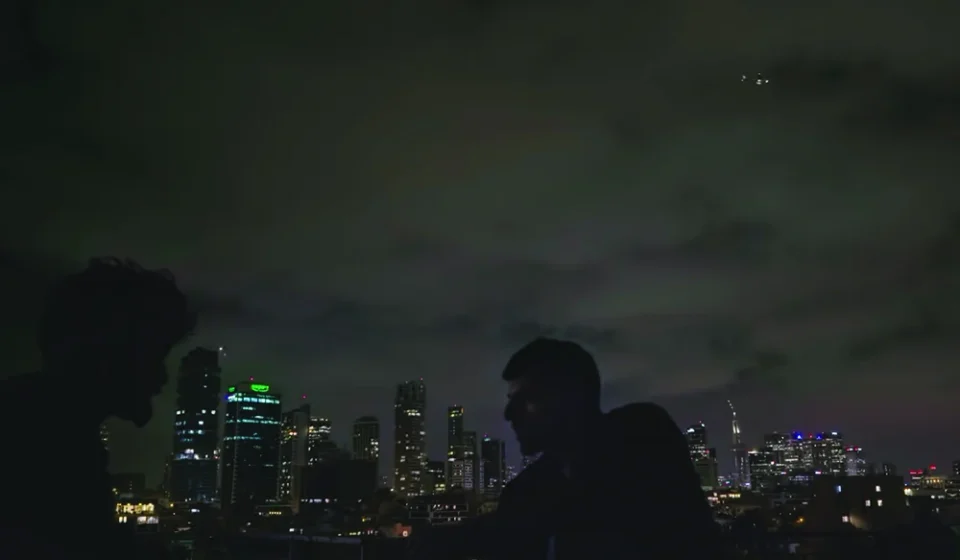
Naza, which translates to the "Lookout" or "Observation," is a visceral exploration of the mechanisms of modern warfare. Filmed under the cover of darkness from the vantage point of Tel Aviv’s rooftops, the documentary employs a stark, observational aesthetic to dissect the logistical and systemic architecture behind the ongoing conflict in Gaza.
According to the official synopsis provided by the festival, the film does not merely recount the events of the war; it attempts to map the granular details of the systems facilitating the mass killing of Palestinian civilians. By focusing on the urban periphery—the rooftops—Abraham and Szor create a disorienting, immersive experience that juxtaposes the mundane normalcy of a bustling metropolis with the devastating reality unfolding just miles away.
The production of Naza is a powerhouse collaboration. The project is backed by The Guardian and produced by James Wilson of JW Films. Wilson is a figure of considerable industry gravity, having recently garnered critical and commercial acclaim for his work on Jonathan Glazer’s The Zone of Interest (2023). Glazer himself, whose Oscar-winning meditation on the banality of evil in the shadow of the Holocaust resonated globally, serves as the executive producer for Naza. This creative lineage suggests that the film will carry the same rigorous, unflinching intellectual scrutiny that defined The Zone of Interest.
Chronology: From Masafer Yatta to the Global Stage
To understand the weight of Naza, one must look at the trajectory of its directors. Yuval Abraham and Rachel Szor are no strangers to high-stakes, politically charged filmmaking. They are two of the four co-directors behind the 2025 Oscar-winning documentary No Other Land, which made its world premiere at the Berlin Film Festival.
No Other Land served as a poignant, localized study of the destruction and displacement occurring in Masafer Yatta, a cluster of Palestinian villages in the West Bank. The film was lauded for its intimate access to the residents and its refusal to look away from the slow-motion erasure of a community.
The transition from the West Bank’s rural periphery to the systemic, bird’s-eye view of Naza marks a thematic evolution for the duo. If No Other Land was a study of the human cost of occupation on the ground, Naza appears to be a study of the command-and-control structures that enable it. The chronology of their work demonstrates an increasingly ambitious scope, moving from the documentation of individual suffering to a structural analysis of the state-level systems that perpetuate that suffering.
The film is scheduled to have its world premiere on September 10 at 5:15 p.m. in the Sala Grande at the Palazzo del Cinema. The screening will be a major event, attended by the directors, the production team, investigative journalists from The Guardian, and an official delegation.
Supporting Data: The Convergence of Art and Investigation
The choice to include Naza in the main competition is a bold departure for Venice. Historically, documentaries have often been relegated to out-of-competition slots or specialized sidebars. By placing Naza in the direct running for the Golden Lion, the festival programmers are signaling that the film’s narrative power and technical execution stand on par with the works of veteran narrative auteurs like Danny Boyle (Ink), Hirokazu Kore-eda (Look Back), and Werner Herzog (Bucking Fastard).
The involvement of The Guardian as a producer further underscores the film’s hybrid nature. In an era where "post-truth" narratives often obscure the reality of conflict, the film leans into the credibility of investigative journalism. The production team spent months verifying technical data, surveillance patterns, and logistical movements, ensuring that the film functions not just as a piece of cinema, but as a primary document of the conflict.
The surrounding competition is remarkably strong, featuring an eclectic mix of international talent. From the psychological intensity of Casey Affleck’s Company to the surrealist landscapes of Martin McDonagh’s Wild Horse Nine, the 83rd edition of the Venice Film Festival is curated to reflect the anxieties and aspirations of the current cultural moment. Naza acts as the anchor of this lineup, grounding the festival’s high-concept dramas in the urgent, unyielding reality of the present.
Official Responses and Industry Expectations
While the festival organizers have kept the specific contents of the film largely under wraps to preserve its impact, the reaction from within the industry has been one of intense anticipation. Festivals are often criticized for avoiding "too hot to handle" subject matter, but Venice’s decision to slot Naza into the main competition is being interpreted by many as a defense of the documentary form’s right to occupy the center of the cinematic conversation.
"This is not a film that invites passive viewing," one industry insider remarked. "It is designed to force a reckoning with the systems we often choose not to see."
The partnership between the filmmaking duo and the production team from The Zone of Interest has set the bar high for critical reception. When The Zone of Interest premiered, it was praised for its innovative sound design and its ability to render the horror of the Holocaust through the mundane life of a Nazi commandant. Audiences and critics alike will be watching to see if Naza employs a similar technical rigor to expose the realities of the modern battlefield.
Implications: A Shifting Landscape for Political Cinema
The arrival of Naza on the Lido raises profound questions about the role of film festivals in global discourse. In an age where digital media allows for the rapid spread of misinformation, the film festival serves as a curated space of verification and contemplation.
By crowning Naza as a central competition title, Venice is making a statement about the responsibility of the artist. The film does not merely document; it interrogates. It demands that the audience confront the "systems behind the killing," as the synopsis states. This move could influence how other major festivals, such as Cannes or Toronto, curate their own slates, potentially leading to a larger influx of investigative, reality-based cinema in prestigious competition sections.
Moreover, the presence of the directors and The Guardian journalists on the red carpet signifies that this film is intended to be a catalyst for debate. The festival’s decision to host a public-facing event for the film, involving the delegation and the journalists, underscores that Naza is intended to move beyond the screen and into the political sphere.
Looking Ahead: The Closing Ceremony
As the 83rd edition of the Venice Film Festival begins on September 2, all eyes will be on the Palazzo del Cinema. The competition for the Golden Lion is always fierce, but the inclusion of Naza has fundamentally changed the stakes. When the jury, presided over by industry luminaries, gathers to decide the winner on September 12, they will be forced to weigh the artistic merit of traditional narrative features against the sheer, devastating urgency of Naza.
Whether or not it takes home the top prize, the film has already achieved a significant victory: it has ensured that the realities it captures cannot be ignored by the global cultural elite. In the quiet darkness of the cinema, the noise of the world is often tuned out; with Naza, it seems the festival is demanding that we turn the volume up.
The festival, and the film, represent a turning point. As cinema continues to grapple with its relevance in a world of fractured narratives, Naza stands as a testament to the power of the camera to act as a witness. It is a film that demands to be seen, not just as a piece of art, but as an essential, undeniable record of our time.