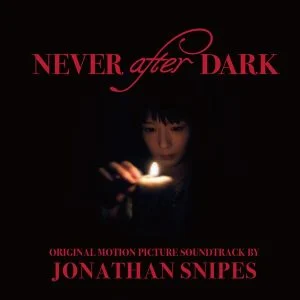
Sonic Dread: Jonathan Snipes’ Chilling Score for the Horror Thriller ‘Never After Dark’ Set for Digital Release

As the autumn season descends, bringing with it a penchant for macabre cinema, the intersection of Japanese supernatural horror and avant-garde composition takes center stage. Compression Artifact has officially announced the upcoming digital release of the original motion picture soundtrack for Never After Dark, a genre-bending thriller that has already garnered significant attention on the international festival circuit. The score, crafted by the prolific and genre-defying composer Jonathan Snipes, promises to be as unsettling as the film’s premise, offering a sonic landscape that mirrors the isolation and psychological terror of the narrative.
The soundtrack is scheduled to arrive on digital platforms on September 25, coinciding with the film’s highly anticipated limited theatrical rollout in the United States, courtesy of Magnolia Pictures.
The Intersection of Sight and Sound: Main Facts
The film Never After Dark is the latest directorial effort from Dave Boyle, a filmmaker known for his meticulous approach to character-driven genre pieces. The story follows a wandering medium whose life’s work—guiding restless spirits away from the mortal realm—is upended when she is summoned to a remote, decaying country house. There, she encounters a grotesque, malevolent apparition that challenges her supernatural abilities and her understanding of death itself.
The film boasts a robust ensemble cast, including Moeka Hoshi, Kurumi Inagaki, Kento Kaku, Bokuzō Masana, Mutsuo Yoshioka, and Tae Kimura. However, the emotional and atmospheric weight of the film is arguably carried by the score composed by Jonathan Snipes. Snipes, whose previous credits include the cult-classic Starry Eyes, the psychological depth of Room 237, and the grit of Mope, has established himself as a master of tension. For Never After Dark, Snipes collaborated with musician Sharon Udoh, creating a soundscape that utilizes dissonance and unexpected acoustic textures to heighten the audience’s sense of dread.
A Journey into Darkness: Chronology of the Production
The journey of Never After Dark from concept to international release has been a steady climb of critical acclaim.
- Early 2024: The film completes post-production, with Jonathan Snipes finalizing a score designed to reflect the film’s rural Japanese setting and supernatural stakes.
- March 2024: The thriller makes its world premiere at the SXSW Film Festival. Critics at the event praised the film for its refreshingly tactile approach to horror, noting that the sound design and music were instrumental in elevating the film’s "grotesque apparition" beyond traditional jump-scare tropes.
- June 2024: Following its festival run, Never After Dark is released in Japanese theaters. The domestic reception solidified its status as a significant entry in the modern J-horror canon.
- September 2025 (Present): Magnolia Pictures prepares for the film’s U.S. theatrical debut. Simultaneously, Compression Artifact confirms the digital release of the score, allowing audiences to experience the film’s atmospheric intensity in isolation from the visuals.
Compositional Analysis: Supporting Data
The Never After Dark soundtrack features a comprehensive list of 28 tracks, ranging from haunting melodic interludes to aggressive, industrial-inflected compositions. The tracklist is as follows:
- Silhouette (feat. Sharon Udoh)
- Never After Dark
- Show Me Where You Saw Him
- Stakeout
- The Gaping Mouth Man
- Sororibus, Pt. 1
- Breaking Out the Kit
- Into the Mirror
- The Spirit World
- The Grab
- Finding the Teeth
- Break Time
- Closed for the Day
- The Phone Call
- Ceremony 2
- A Soul of My Own
- Strangled!
- Dead and Alive
- Les Voix des Dents
- Four Dead Bodies
- A Man and His Teeth
- Goodbye Gunji
- Chase in the House
- Teiko, Jump!
- Chapel Fight
- Mann Gegen Mann
- Sororibus, Pt. 2
- Every Detail (feat. Sharon Udoh)
The inclusion of tracks like "The Gaping Mouth Man" and "A Man and His Teeth" suggests a focus on the film’s specific physical horrors, while the "Sororibus" suite points toward a more thematic, perhaps ritualistic, musical backbone. Snipes’ ability to weave together disparate sounds—from the clinical precision of "The Phone Call" to the chaotic energy of "Chase in the House"—showcases a composer at the height of his craft, capable of navigating the delicate balance between silence and cacophony.
Industry and Creative Perspectives: Official Responses
While official statements from the production team remain focused on the theatrical rollout, early reviews from the SXSW screening highlighted the synergy between director Dave Boyle’s vision and Snipes’ musical accompaniment.
"The horror is in the details," one early review noted, referencing the film’s patient pacing. "Snipes doesn’t just score the scary moments; he scores the anticipation of them. The music makes the silence in the film feel heavy, almost suffocating."
Jonathan Snipes himself has historically spoken about his process as one of "emotional manipulation," where the goal is to make the audience feel physically uncomfortable before the screen action even demands it. By collaborating with Sharon Udoh, Snipes has brought a layer of organic, human performance to the digital-heavy soundscape of a supernatural horror, a choice that has clearly resonated with the film’s creative leads.
Implications for the Horror Genre
The release of Never After Dark in the U.S. market is indicative of a broader trend in horror cinema: the cross-pollination of international sensibilities. Japanese horror has long influenced Western filmmaking, but recent years have seen a move away from the "remake" culture of the early 2000s toward a more authentic appreciation of original Japanese productions.
The success of Never After Dark suggests that audiences are increasingly eager for horror that relies on folklore, atmosphere, and complex sound design rather than formulaic storytelling. The fact that the soundtrack is receiving a standalone digital release is a testament to the growing market for "prestige horror" scores. Collectors and horror aficionados often seek out these soundtracks not just as mementos of the film, but as standalone pieces of ambient and experimental music.
Furthermore, the involvement of a boutique label like Compression Artifact suggests that the score is being positioned as a "must-listen" for fans of modern experimental music. As soundtracks continue to bridge the gap between film accompaniment and concert-hall composition, Snipes’ work here serves as a vital case study in how music can define the boundaries of a film’s reality.
Conclusion: The Lingering Echo
As the digital album drops on September 25, listeners will have the opportunity to dissect the auditory architecture of Never After Dark. Whether it is the eerie vocalizations in "Silhouette" or the rhythmic anxiety of "Teiko, Jump!", the album promises to be a haunting addition to any horror fan’s library.
For those heading to the theater, the film represents an opportunity to see a masterclass in tension, supported by a score that treats the supernatural not as a gimmick, but as a visceral, auditory threat. As the medium walks through the doors of that isolated country house, audiences will be reminded that, in the world of Never After Dark, the shadows—and the sounds that emerge from them—are never truly empty.
The Never After Dark Original Motion Picture Soundtrack will be available on all major streaming platforms tomorrow. Check your local listings for theatrical showtimes.