
For generations, Franz Kafka’s The Metamorphosis has stood as the definitive literary exploration of alienation, body horror, and the crushing weight of the mundane. It is a text that forces readers to confront the grotesque and the pitiable in equal measure. Yet, in his latest directorial effort, Insectasy, filmmaker Angus Silver takes the thematic DNA of Kafka’s work and subjects it to a radical, eroticized transmutation. If Kafka was interested in the tragedy of the human-turned-insect, Silver is interested in the intersection of human desire and the visceral, unsettling world of the invertebrate.
Insectasy is a film that refuses to be ignored. It is a daring, polarizing, and deeply stylized piece of cinema that operates on a frequency rarely touched by mainstream horror or art-house projects. By blending high-concept eroticism with the stark, often isolating reality of modern dating, Silver has crafted a fever dream that is as repulsive as it is compelling.
The Core Premise: A Portrait of Unconventional Longing
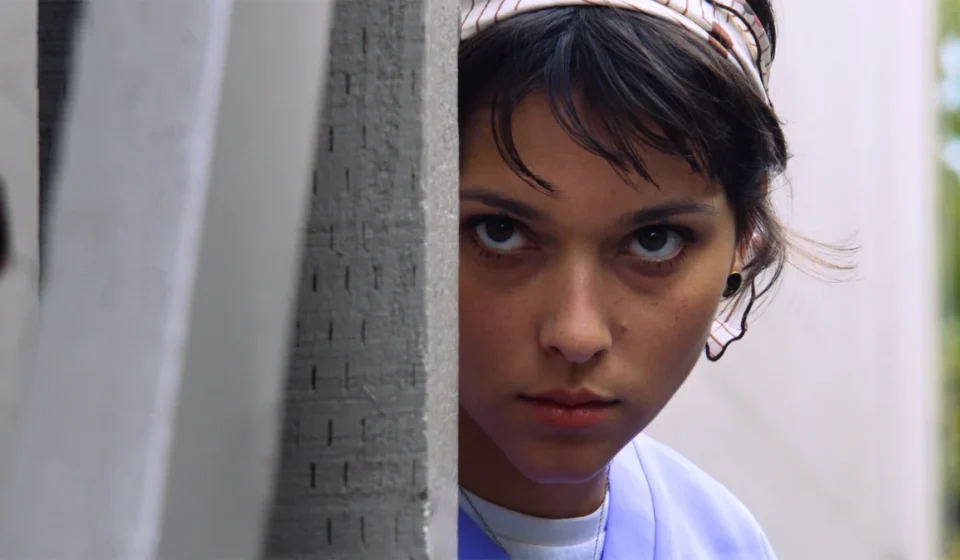
The film introduces us to Sadie, played with a captivating, dualistic intensity by Tirion Healy. Sadie is a medical receptionist whose professional life is a study in beige—a sterile, monotonous environment that stands in stark contrast to her internal world. From the opening frames, Silver establishes that Sadie is not a protagonist in search of a traditional romance. She is a woman who finds a singular, intense gratification in the presence of insects.
Unlike conventional narratives that might spend an hour building toward a "reveal" of a character’s quirk, Insectasy bypasses hesitation entirely. In the film’s first act, the audience is confronted with the full extent of Sadie’s predilection. We witness her in moments of intense intimacy, not with a partner, but with the organic, skittering life forms she keeps in jars. The imagery is deliberately provocative—a mix of soft-focus lighting, ASMR-style audio, and a frankness that dares the viewer to turn away.
Chronology of Obsession: From Solitude to Pursuit
The narrative arc of Insectasy follows a trajectory of desire, projection, and inevitable disillusionment. Following the establishment of her solitary habits, the film pivots when Sadie sets her sights on Theo (Emmett Roiko).
![‘Insectasy’: A Kink-Positive Erotic Fantasy…With Bugs [Fantasia Review]](https://www.dreadcentral.com/wp-content/uploads/2026/08/insectasy2-1200x675.jpg)
- The Initial Gaze: Similar to the protagonist in Lucky McKee’s cult classic May, Sadie begins by observing her object of desire from a distance. The cinematography here is key, utilizing lingering close-ups that emphasize her psychological projection onto Theo.
- The Intersection of Worlds: The two characters briefly bridge the gap through the shared, mundane ritual of a cigarette break and workplace conversation. These scenes are essential for the audience, providing a baseline of "normalcy" against which Sadie’s interiority is measured.
- The Fantasy Fracture: As the film progresses, the barrier between reality and Sadie’s constructed fantasy begins to dissolve. Silver employs a suite of visual techniques—sepia-toned sequences, stop-motion animation, and matte paintings—to represent her internal state. When the real world fails to match the intensity of her desires, the film shifts from a romanticized drama into something far more volatile.
Supporting Data: Aesthetic Choices and Cinematic Language
Silver’s visual language is perhaps the most defining element of Insectasy. He does not merely film a story; he constructs an environment that reflects the protagonist’s psyche. The aesthetic dichotomy between the sterile, monotone reality of the doctor’s office and the lush, vibrant, and surreal nature of her daydreams is handled with surgical precision.
The Role of Surrealism
The use of stop-motion, particularly the recurring imagery of aquatic life manifesting outside windows or within domestic spaces, serves to unmoor the audience from reality. These choices evoke the "uncanny"—the feeling that something is familiar yet fundamentally wrong. By incorporating these elements, Silver transforms the film into a psychological landscape rather than a straightforward character study.
Sound and Performance
The score, which draws heavily from 1960s romantic cinema, creates a jarring contrast with the onscreen imagery. This "sonic irony" highlights the disparity between what society deems "romantic" and the reality of Sadie’s unconventional preferences. Tirion Healy’s performance is the linchpin here. She navigates the role with a blend of vulnerability and detachment that keeps the audience tethered to her perspective, even when the actions on screen veer toward the transgressive.
Conversely, Emmett Roiko’s performance as Theo—characterized by a flat, monotone delivery—serves as a narrative foil. Whether this was a directorial choice to emphasize the "boredom" of the non-initiated world or a byproduct of the production, it effectively renders Theo as a blank slate onto which Sadie’s desires are projected, further isolating her in her own private world.
Implications: The Metaphor of the Kink
Beyond the surface-level shock, Insectasy functions as a broader commentary on the nature of shame, self-acceptance, and the isolation of the "outsider."
![‘Insectasy’: A Kink-Positive Erotic Fantasy…With Bugs [Fantasia Review]](https://www.dreadcentral.com/cdn-cgi/image/width=788%2Cheight=444%2Cfit=crop%2Cquality=75%2Cgravity=auto%2Csharpen=1%2Cmetadata=none%2Cformat=auto%2Conerror=redirect/wp-content/uploads/2026/08/insectasy2.jpg)
The film posits that the disgust others feel toward a person’s private proclivities is a reflection of the observer’s own narrow boundaries. By centering a protagonist who is unapologetic about her desires, Silver forces the viewer to examine their own reaction. The insects are not merely a kink; they are a metaphor for the parts of ourselves that we hide to gain social acceptance.
This is where the film finds its emotional resonance. It is not about the "nasty" details of the act itself, but the journey of a woman who realizes that the person she needs to accept most is herself. In this sense, Insectasy functions as a dark, twisted coming-of-age story. It explores the idea that true self-actualization often involves embracing the things that society—and perhaps even the protagonist herself—initially labeled as "wrong."
Critical Reception and Industry Context
Since its debut at the Fantasia International Film Festival, Insectasy has been a frequent subject of debate. Critics are divided, with some praising its fearless commitment to its own singular vision, while others argue that the film lacks the emotional depth required to elevate its premise beyond the "pulpy" nature of its subject matter.
The Argument for Maturity
Critics have noted that while the film succeeds in establishing a mood, it occasionally struggles to delve into the underlying psychological motivations of its characters. The film captures the feeling of being an outcast, but it sometimes misses the opportunity to fully explore the why behind Sadie’s specific, extreme manifestations of desire.
The Argument for Fearlessness
On the other hand, proponents of the film argue that its lack of "emotional maturity" is a deliberate stylistic choice. By keeping the viewer at a slight distance, the film avoids becoming a didactic lecture on trauma or psychology. Instead, it remains a raw, visceral experience—a "fever dream" that asks the viewer to feel rather than analyze.
![‘Insectasy’: A Kink-Positive Erotic Fantasy…With Bugs [Fantasia Review]](https://www.dreadcentral.com/cdn-cgi/image/width=788%2Cheight=443%2Cfit=crop%2Cquality=75%2Cgravity=auto%2Csharpen=1%2Cmetadata=none%2Cformat=auto%2Conerror=redirect/wp-content/uploads/2026/08/insectasy.jpg)
Conclusion: A Bold Step into the Unknown
Insectasy is not a film for the faint of heart. It is a work that tests the boundaries of empathy and challenges the audience to find beauty in the grotesque. While it may falter in its narrative pacing and character depth, its strengths as an exercise in atmosphere and thematic boldness are undeniable.
Angus Silver has delivered a film that lingers in the mind long after the credits roll. Whether one views it as a profound statement on the complexities of human sexuality or a surrealist experiment in discomfort, Insectasy succeeds in its primary goal: it forces a conversation. It stands as a testament to the idea that cinema, at its best, should be capable of confronting the strange, the hidden, and the often-unspoken aspects of the human experience.
In the lineage of horror and experimental cinema, Insectasy is a singular, unsettling, and ultimately brave addition that cements Silver as a director to watch—one who is clearly comfortable working in the shadows of the masters, even if he chooses to populate those shadows with something entirely his own.