Beyond the Mirage: ‘The Daughters of Abraham’ Examines the Collision of Tradition and Modernity

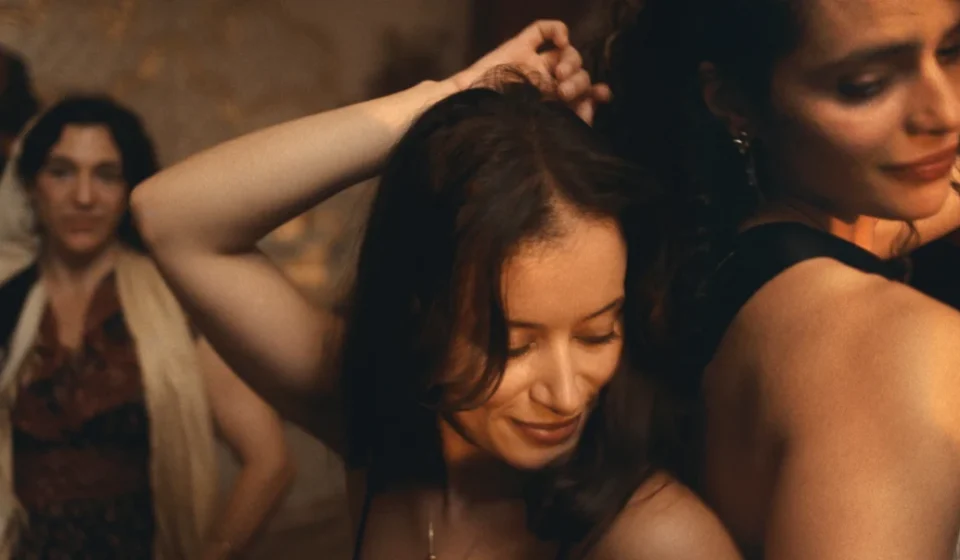
The opening frames of Hanaël El Yousfi’s feature debut, The Daughters of Abraham, are nothing short of intoxicating. Set against the kinetic, neon-drenched backdrop of a Marrakech nightclub, the film captures a world that seems to exist outside of time. We follow Myriam (Melissa Guers) and Eva (Ava Baya) as they navigate the dance floor, enveloped in amber lighting and rhythmic pulse, flirting with strangers and living with a carefree abandonment that makes even the most entrenched homebody reconsider the allure of the night.
However, this idyll is fleeting. A moment of crass, intrusive male behavior—a sharp reminder of the external threats women must navigate even in their most liberated spaces—serves as the film’s first pivot point. It is a masterclass in atmospheric storytelling, establishing the central tension that defines the lives of its protagonists: for Myriam and Eva, the internal world of friendship and nightlife feels like their most authentic self, while the external world, governed by rigid, manmade social expectations, feels like a labyrinthine prison.
The Cultural Landscape: A Modern Paradox
While an American or European film might frame this premise as a coming-of-age story about arrested development, The Daughters of Abraham operates with a more nuanced, sociological focus. El Yousfi is interested in the specific friction that arises when traditional cultures modernize—providing women with the tools of education and professional ambition—only to place a glass ceiling on their personal autonomy once they reach a "marriageable" age.
At 25, Myriam and Eva are essentially peers to any other young, urban hedonist. Yet, the specter of 35 looms over them like a deadline. The film masterfully portrays a reality where, despite their modern sensibilities, these women find themselves trapped in a social script reminiscent of a Jane Austen novel. Their mothers, driven by communal pressure and the fear of social obsolescence, begin to maneuver their daughters toward marriages that feel less like unions of love and more like strategic alliances, threatening to consign them to a life of stifled domesticity.
Chronology of a Drifting Bond
The narrative is anchored by a significant time jump, a structural choice that allows El Yousfi to map the erosion of intimacy. We first see the duo at the height of their youthful, rebellious alliance. As the years pass, the demands of family, faith, and duty act as a slow-acting solvent, dissolving their closeness.
When they reconnect at a wedding five years later, the audience is invited to observe the scars of that separation. They are no longer the same women who danced in Marrakech. They are now, in many ways, strangers to one another—caught in the exhausting process of maintaining their individual identities while being pulled into the gravity of their respective family expectations. The wedding, intended to be a celebration, becomes a battlefield of social performance where the two women must negotiate their past intimacy against the backdrop of their new, constrained realities.

Religious DNA and the Illusion of Tolerance
One of the most poignant elements of the film is its handling of the religious identities of its leads. Eva is Jewish and Myriam is Muslim—a pairing that, in the context of their families, is perpetually described as "not a problem." The film highlights the irony of this insistence: the more the families declare there is no tension, the more palpable the friction becomes.
It is a subtle, biting critique of the polite, performative tolerance that often masks deep-seated prejudice. The film suggests that while these families claim to be progressive, they are unified by an unspoken agreement: as long as the children marry within their own "preferred circles," the peace is kept. Should one stray, the veneer of civilization would instantly collapse.
El Yousfi moves beyond the geopolitical noise that usually surrounds such themes. Instead, she grounds the conflict in the mundane. The tension is not found in grand debates about theology, but in petty, deeply human grievances—the resentment over a missed bachelor party falling on a High Holy Day, or the silent judgment passed over a meal. By focusing on these granular cultural differences, El Yousfi captures the essence of communal resentment: the things we leave unsaid that eventually build into impenetrable walls.
Supporting Data: Universal Struggles in Local Contexts
The title, The Daughters of Abraham, is a brilliant, layered allusion to the shared religious lineage of Judaism and Islam. As the film progresses into a haunting and tragic third act, this title takes on a deeper, more cynical resonance. El Yousfi argues that the superficial theological differences between the two faiths are, in practice, entirely overshadowed by a shared, conservative social infrastructure.
In its most compelling moments, the film functions as an anthropological study of the conflict between individual liberation and the desire for belonging. The "tragedy of life," as portrayed here, is that the two are often mutually exclusive. To gain the security of a strong, traditional community, one must often sacrifice the liberty of self-expression. The film’s brilliance lies in its refusal to paint either side as the "villain." Instead, it treats the choices of the characters—to conform, to rebel, or to compromise—with a profound sense of empathy, acknowledging just how agonizing those choices are to make in real-time.
Official Responses and Industry Reception
Following its premiere at the 2026 Toronto International Film Festival, The Daughters of Abraham has been hailed by critics for its sensitive, observational style. While industry insiders have noted that the film’s 93-minute runtime occasionally struggles to contain the sprawling cast of side characters, the strength of the lead performances has been universally lauded.

Melissa Guers and Ava Baya have been particularly praised for their internal, emotive performances. In a landscape where dialogue often does the heavy lifting, these two actresses excel in the quiet, unspoken moments. Their facial expressions and body language convey the exhaustion of women who are constantly performing for an audience that wishes they were someone else. The film is currently seeking U.S. distribution, and given the growing appetite for international narratives that bridge the gap between specific cultural experiences and universal human struggles, it is expected to find a significant audience.
Implications for Future Filmmaking
The Daughters of Abraham serves as a calling card for Hanaël El Yousfi as a director of significant promise. Her ability to balance the aesthetic beauty of the nightclub sequences with the claustrophobic tension of family gatherings suggests a filmmaker who understands the power of contrast.
The film’s implications for contemporary cinema are clear: there is a hunger for stories that move past the "topical" labels of current news cycles and into the deeper, more complex territory of how belief systems shape the intimate architecture of our lives. By focusing on the "middle ground"—the space between modern adaptation and traditional duty—El Yousfi has crafted a film that feels both like a specific portrait of Moroccan-European society and a universal mirror for anyone who has ever felt the weight of their family’s expectations.
As the industry looks to the future, The Daughters of Abraham stands as a reminder that the most compelling human dramas are not found in the grand, sweeping gestures of history, but in the quiet, devastating choices made at a wedding, at a dinner table, or in the reflection of a mirror in a Marrakech club. It is a flawed, yet deeply human achievement, and one that marks the arrival of a distinct and necessary voice in world cinema.
Grade: B
The Daughters of Abraham premiered at the 2026 Toronto International Film Festival. It is currently seeking U.S. distribution.