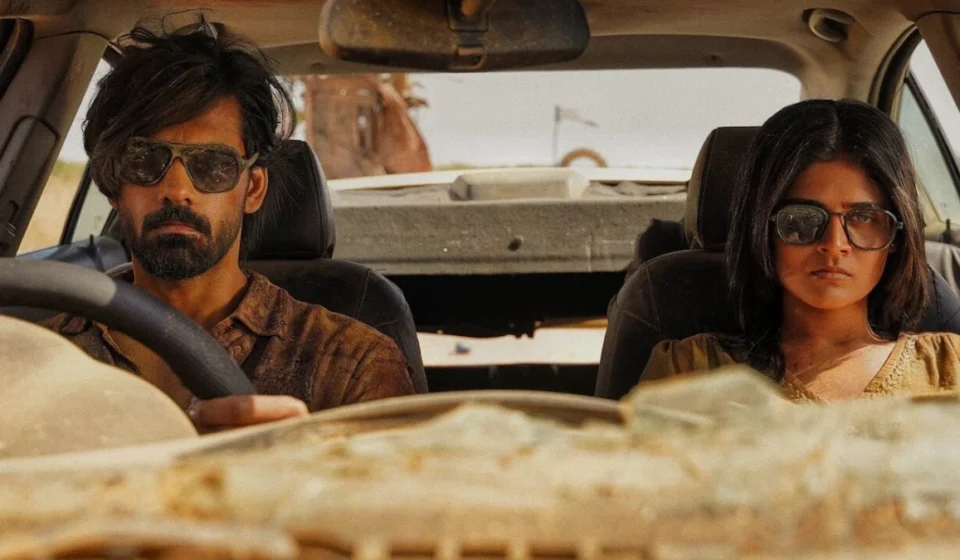

In the ever-evolving landscape of global genre cinema, few sub-genres have felt as stagnant as the modern vampire flick. Often trapped in the tropes of gothic romance or brooding urban fantasy, the nocturnal predator has long been in need of a shot of adrenaline. Enter Half, the sophomore feature from Indian filmmaker Samjad, which effectively tears up the rulebook. By fusing the sun-scorched aesthetic of a Sergio Leone "Curry Western" with the bone-shattering, visceral choreography found in Indonesian action staples like The Raid 2, Samjad has crafted something entirely singular: a high-octane, hyper-violent road movie where the protagonists aren’t just surviving the night—they are reclaiming the day.
Main Facts: A New Breed of Vengeance
At its core, Half is a masterclass in narrative economy. Written by Samjad and Praveen Viswanath, the film centers on twins Ethan (Ranjith Sajeev) and Ivy (Aiswarya Raj). Born from an interspecies union, the siblings are "half-vampires," possessing the preternatural strength and regenerative abilities of their kind without the traditional handicaps that plague their folkloric ancestors.
The inciting incident is as brutal as it is swift: while traveling across the unforgiving expanse of the Rajasthan desert, the twins are intercepted by a ruthless gang of highway marauders. The encounter ends in a massacre, with the villains leaving the twins for dead in the blistering sand. However, as the sun dips below the horizon, the siblings’ vampiric biology initiates a terrifying resurrection. What follows is not a story of survival, but a calculated, relentless campaign of retribution. With no time for exposition and even less for mercy, the twins embark on a path of destruction that turns the Rajasthan wasteland into an open-air slaughterhouse.
Chronology of the Carnage
The pacing of Half is arguably its most radical departure from contemporary horror-thriller standards. Following an atmospheric, if brief, introduction, the film hits its stride around the twenty-minute mark. Once the twins recover from their initial "death," the narrative transitions into a relentless road movie.
- The Inciting Assault: The first act establishes the sheer brutality of the antagonists. By showcasing the villains’ willingness to target the most vulnerable, the filmmakers ensure that the audience’s moral compass is firmly aligned with the twins.
- The Resurgence: The transition from victims to predators is marked by a tonal shift. The initial sorrow of their death is quickly eclipsed by a cold, calculating rage.
- The Campaign of Justice: The remainder of the film is a series of escalating confrontations. Each stop along the twins’ journey serves as a stage for increasingly creative, and often gruesome, executions. From dingy desert bars to abandoned, off-road homesteads, the twins systematically dismantle the gang.
- The Climax: The final act eschews the traditional "boss battle" trope in favor of a sustained, high-intensity assault where the twins finally reclaim their agency, leaving nothing behind but the wreckage of their tormentors.
Supporting Data: The Anatomy of Action
The visceral impact of Half is not an accident; it is the result of a deliberate collaboration with world-class talent. The film’s action choreography is helmed by Very Tri Yulisman, whose previous work on The Raid 2 and The Night Comes for Us redefined the expectations for modern martial arts cinema.
Yulisman’s influence is felt in every frame. The combat in Half is not merely about exchanging blows; it is about environment and improvisation. Because the twins are vampires, they treat the world around them as a potential arsenal. Traditional vampire lore—specifically the reliance on stakes—is subverted and weaponized in ways that feel both inventive and sickeningly creative. One sequence involving the remains of an enemy’s own limb is already being cited by critics as a benchmark for practical effect-driven violence in 2026.
Supporting this physical spectacle is the technical prowess of cinematographer Pappinu and composer Midhun Mukundan. Pappinu’s camera work is frenetic and claustrophobic, pulling the viewer into the center of the brawls. Meanwhile, Mukundan’s score acts as the film’s heartbeat; it is a sonic tapestry that weaves the mournful, lonely trumpets of Ennio Morricone with a modern, driving electronic pulse that mirrors the twins’ own nightclub-inflected, edgy aesthetic.
Official Responses and Creative Vision
In various promotional statements, director Samjad has emphasized that Half was never intended to be a deep, philosophical exploration of immortality. Instead, it is an exercise in pure, unadulterated genre filmmaking. "The violence is the story," Samjad noted during early press screenings. By stripping away subplots, romance, or unnecessary dialogue—made easier by the fact that the character of Ivy is mute—the film maintains an unrelenting velocity.
![‘Half’ Takes Vampires on a Bloody, Full-Throttle Road Trip of Revenge [TIFF Review]](https://www.dreadcentral.com/wp-content/uploads/2026/08/HALF_Still-1200x675.jpg)
The casting of Ranjith Sajeev and Aiswarya Raj has also been lauded for its balance of physicality and style. The two actors manage to convey a sense of "sizzling confidence" without the need for extensive monologues. They inhabit the roles of the twins with a cool, detached demeanor that contrasts sharply with the frantic, terrified reactions of their victims. This stylistic choice creates a "cartoonish giddiness" in the violence, allowing the audience to process the extreme gore as a form of karmic justice rather than mere cruelty.
Implications for the Horror and Action Genres
The success of Half carries several implications for the future of genre cinema, particularly within the Indian film industry and beyond.
1. The Death of the "Slow-Burn"
Half serves as a counter-argument to the current trend of "elevated horror" or slow-burn thrillers. It proves that there is still a massive, hungry audience for films that prioritize momentum and visceral satisfaction. By eschewing "fat on the bone," the film respects the audience’s time, delivering a high-impact experience that demands to be seen in a theater.
2. Globalizing the "Raid" Aesthetic
The inclusion of Yulisman suggests that the "Indonesian style" of hyper-violent choreography is becoming a global language. Filmmakers like Samjad are successfully integrating these techniques into local folklore and settings—in this case, the Indian desert—creating a hybrid style that feels fresh and exciting.
3. Subverting Vampire Trope
For decades, the vampire has been a symbol of seduction or sorrow. Half strips the vampire of its romantic baggage, returning the creature to its roots as an apex predator. By making the twins "half-vampires," the film provides a logical framework for their resilience, removing the vulnerability that usually necessitates a "cat and mouse" plot. In Half, there is no mouse; there are only two wolves and a flock of sheep who made the mistake of thinking they were the predators.
Conclusion: A Rousing, Bare-Knuckled Brawl
Half does not aim to reinvent the wheel, nor does it attempt to offer a commentary on the human condition. It is a film of singular purpose: to deliver a blood-soaked, adrenaline-fueled road trip that feels like a classic western directed by a modern master of action.
While the villains may lack the complexity of a Shakespearean antagonist, they serve their purpose perfectly as targets for the audience’s righteous anger. The film’s ability to transition from brutal, shocking violence to a cool, stylistic, and even humorous tone is a testament to Samjad’s growth as a filmmaker.
In a cinematic climate where many films feel overproduced and bloated, Half is a lean, mean, and remarkably effective piece of work. It is a reminder that sometimes, the most satisfying story is the simplest one: a journey of vengeance, a dash of the supernatural, and an uncompromising commitment to the spectacle of the fight. For those looking to sink their teeth into something that will leave them feeling truly full, Half is an essential watch. It is, quite simply, a bloody blast.