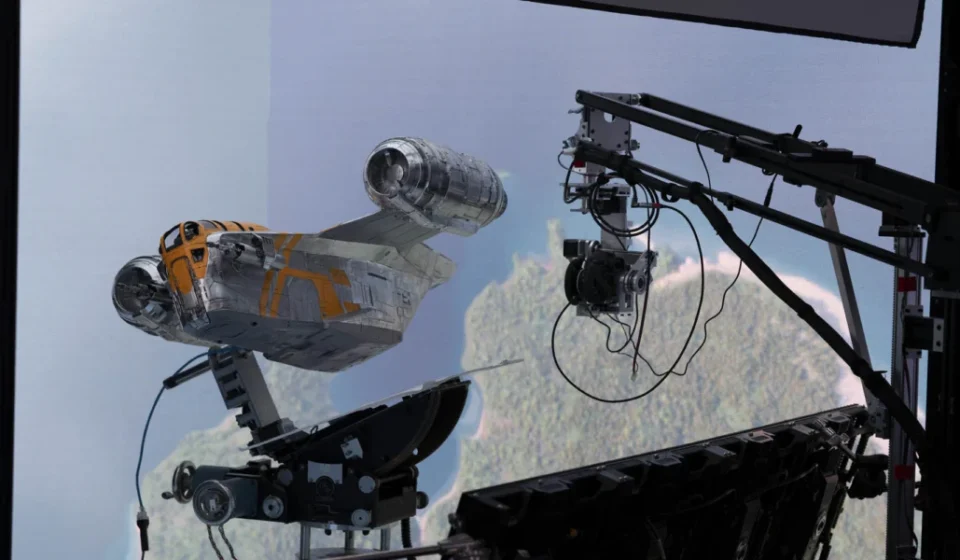

In the history of cinema, few franchises have defined the technological trajectory of visual effects (VFX) as fundamentally as Star Wars. As the saga transitions from television serial to theatrical event with The Mandalorian and Grogu, Industrial Light & Magic (ILM) finds itself once again at a crossroads of innovation. In a recent fxpodcast, Oscar-winning visual effects supervisor John Knoll sat down to discuss the challenges of maintaining a consistent visual identity nearly five decades after George Lucas first captured the imagination of the world.
For Knoll, whose career is inextricably linked to the evolution of the franchise—from the practical, optical-driven mastery of the original trilogy to the digital revolution of the prequels and the current era of virtual production—the core mission remains unchanged. It is the perennial “ILM problem”: how to synthesize impossible imagery into a form that feels photographed, physical, and emotionally resonant.
The Evolution of an Aesthetic: From Chaos to Consistency
A Legacy of Inconsistency
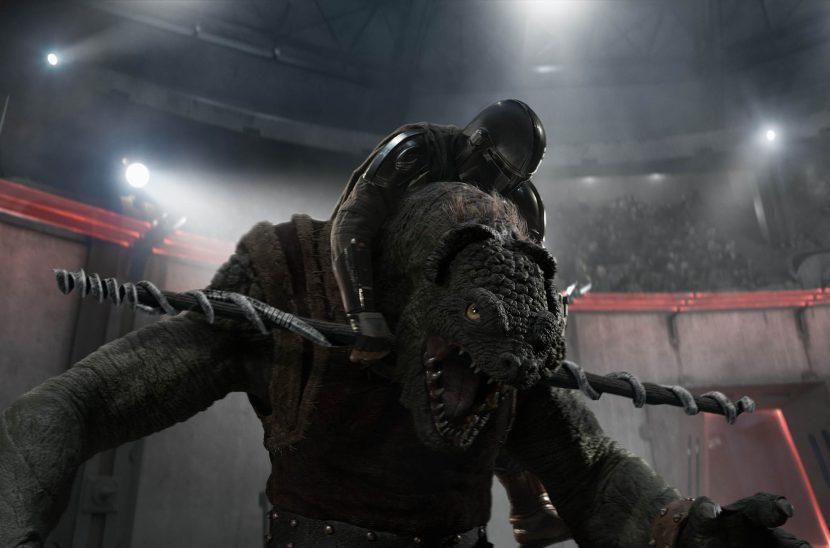
One of the most fascinating revelations in the discussion is the demystification of the “classic” Star Wars look. While modern fans often view the aesthetic of the original 1977–1983 films as a rigid, unified design language, Knoll highlights that this is largely a product of historical revisionism.
In the original films, visual elements such as blaster bolts, the intensity of lightsabers, and the density of star fields varied significantly from shot to shot. These inconsistencies were not intentional stylistic choices but the byproduct of the limitations of optical printing and the frantic, pioneering nature of production at the time.
The Birth of the Style Book
As the franchise expanded, ILM was tasked with turning this inherited visual memory into a formal lexicon. Knoll explains that this did not result in a rigid rule set, but rather a "style book"—a living document that protects the "feeling" of Star Wars while providing enough elasticity for new directors and cinematographers to innovate. This balance between continuity and invention is the hallmark of the current Mandalorian and Grogu production, which leverages the franchise’s history to anchor its forward-looking techniques.
Hybrid Craft: The Return of the Miniature
Perhaps the most compelling technical highlight of the new film is the sophisticated integration of legacy model photography with cutting-edge LED volume technology.
The Razor Crest Reimagined
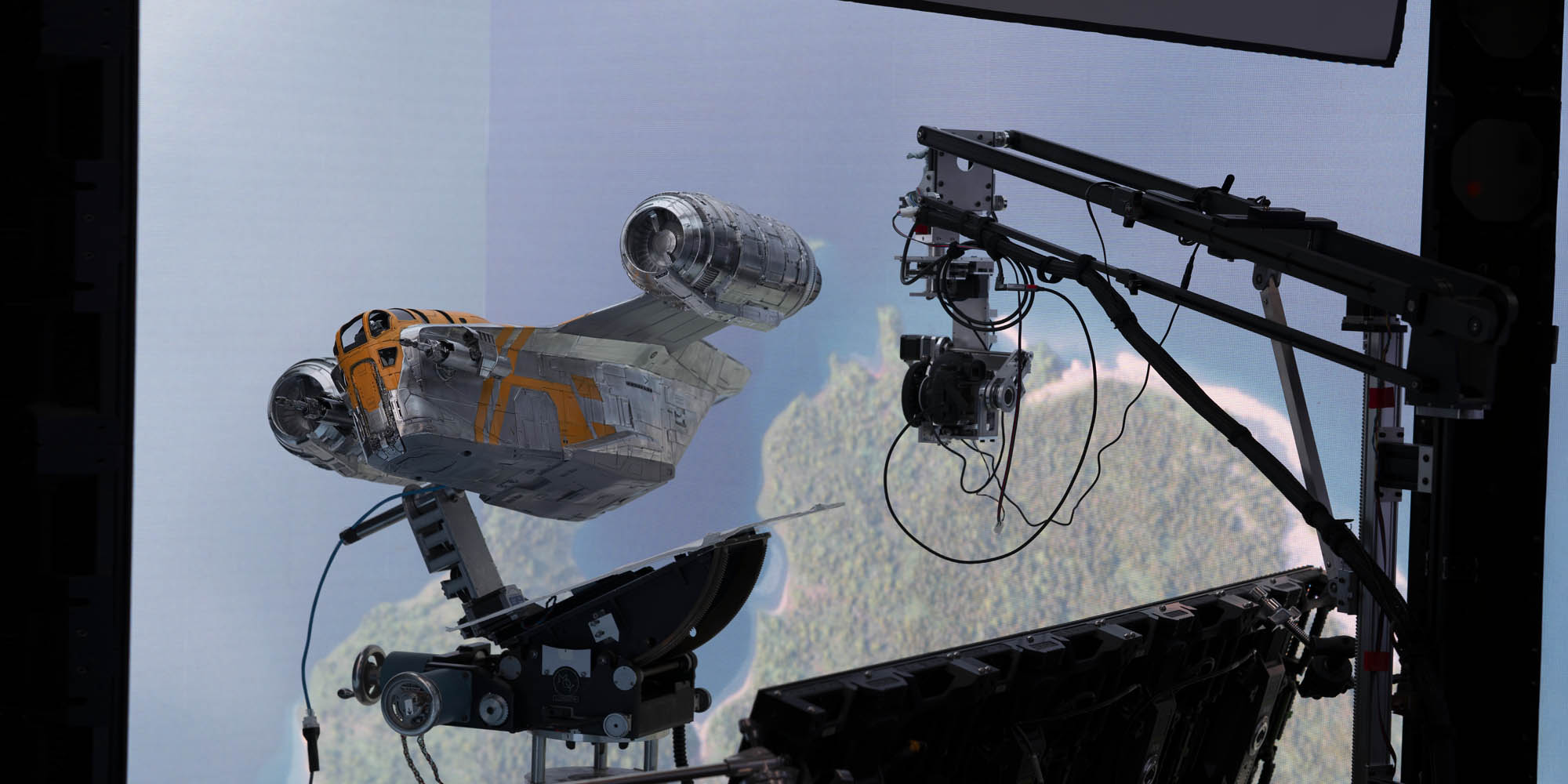
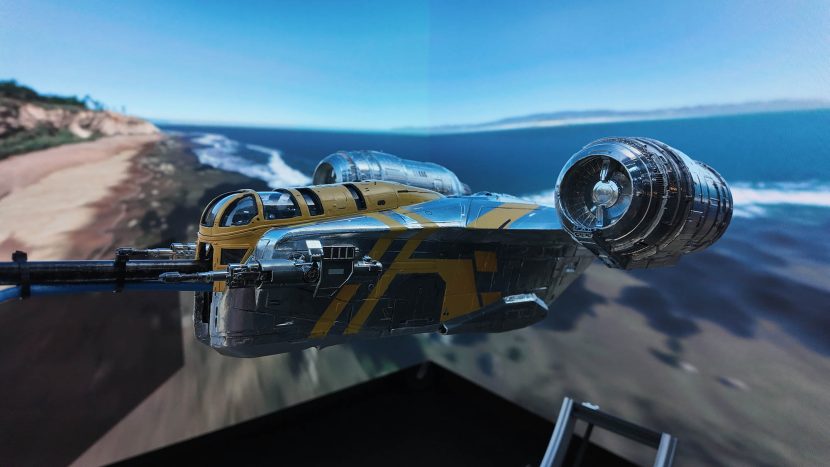
Rather than relying solely on computer-generated imagery (CGI) or traditional blue-screen compositing for the Razor Crest, the production team opted for an elegant, hybrid approach. ILM constructed an eight-foot LED volume specifically to house a physical miniature of the ship.
By placing the model within a custom-built LED environment, the production ensured that the ship’s bare-metal surfaces captured authentic, real-time interactive lighting. The resulting imagery is a masterclass in hybrid filmmaking:
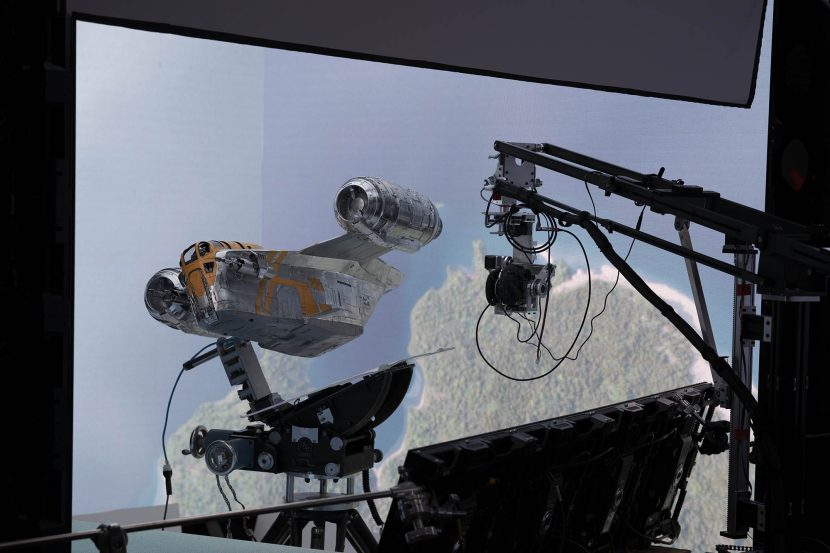
- Motion-control photography: Capturing the physical model with precision.
- LED-based illumination: Providing environmental light cues that digital renders often struggle to replicate perfectly.
- Modern compositing: Fusing these elements into a seamless final frame.
Solving the Raster Challenge
Knoll notes that this approach was not without its hurdles. At a miniature scale, the relative size of the LED pixels (the "raster") becomes significantly more pronounced, leading to potential edge aliasing and aliasing artifacts that could break the illusion of scale. Through meticulous planning and multiple lighting passes—separating engine glows, running lights, and blue-screen elements—the team managed to overcome these limitations, resulting in a shot that feels tactile, heavy, and physically "present" in a way that purely digital shots rarely achieve.
Performance-Driven Digital Creatures
The emotional heart of The Mandalorian and Grogu remains the titular duo, particularly the challenge of maintaining Grogu’s charm and physical presence across different mediums.
The Puppet-First Philosophy
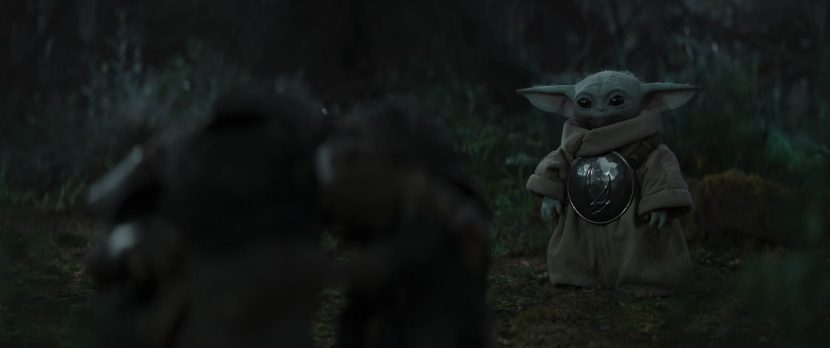
Knoll reveals that the production logic for Grogu shifted toward a "puppet-first" approach. The practical asset created by Legacy Effects provided a level of nuance and "imperfect" charm that was difficult to replicate in the early stages of digital animation.
When the character requires digital enhancement or full-CG replacement, the ILM animation team is tasked not with creating an anatomically perfect digital puppet, but with emulating the limits of the physical prop. By honoring the weight, the mechanical constraints, and the tactile nature of the puppet, the animators ensure that the digital performance feels like a natural extension of the practical one, rather than a jarring transition.
Pushing Creature Boundaries
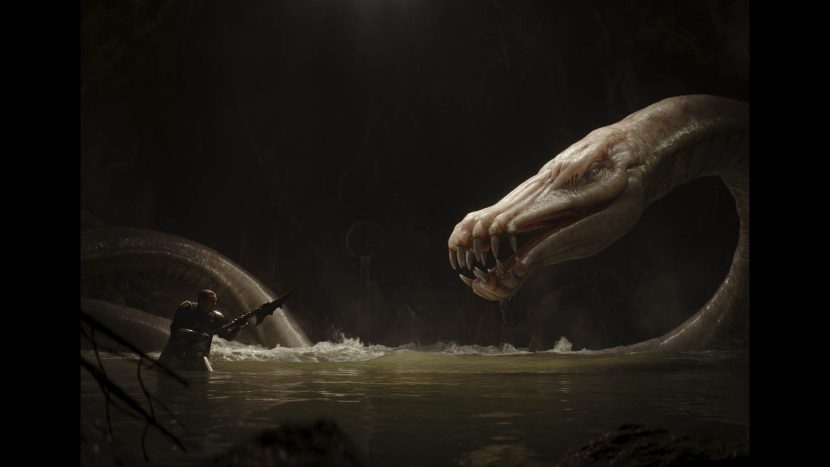
This philosophy extends to the wider alien cast. The production team faced the difficult task of evolving the "creature language" of the galaxy. When characters like the Hutts are required to perform more active, expressive, and nuanced roles—such as speaking English or engaging in physical combat—the challenge becomes one of restraint. The team must constantly calibrate how much "performance" can be added before a creature crosses the line from being a Star Wars inhabitant to something that feels incongruous with the established universe.
Technical Integration: The Water Test
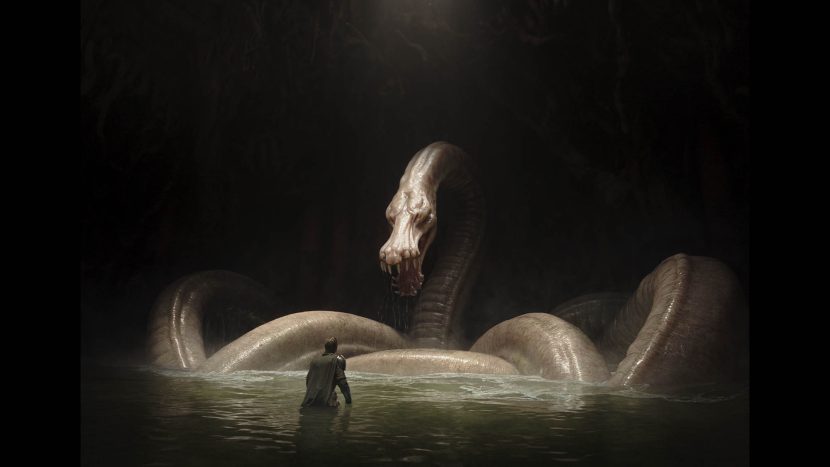
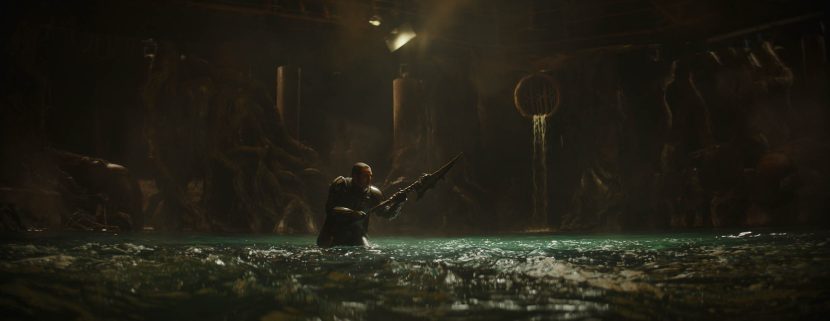
Water has long been considered the "final boss" of visual effects, and the new film utilizes a complex water-based sequence to push the limits of integration. The scene required a seamless blend of:

- Live-action performers.
- Physical set pieces.
- Digital creature work.
- Complex fluid simulations.
Knoll describes the balancing act of preserving photographed water where possible while relying on simulation for creature interactions. Because water carries so many simultaneous cues—refraction, reflection, surface tension, and scale—any error in the simulation or the composite becomes immediately obvious to the human eye. The success of this sequence, largely credited to the ILM Vancouver team, relies on "invisible complexity," where the technical heavy lifting serves only to make the scene feel natural.
Virtual Production: A Tool, Not a Default
The discussion also clarifies a common misconception regarding virtual production. The usage of the Shakari Street environment serves as a prime example that virtual production is a toolbox, not a singular technique.
Rather than defaulting to a standard LED volume, the team utilized a real-world location augmented by a tracked, distant LED wall. This hybrid approach, combined with practical "wet-down" floors and precise camera tracking, provided the filmmakers with a more versatile environment than a conventional set or a purely virtual one. It highlights a critical shift in industry thinking: the technology should adapt to the scene, not the other way around.
Implications: The Future of VFX
By the conclusion of the interview, John Knoll’s stance on the industry is clear: visual effects are not a "cheat code" to hide a lack of reality, but a core, collaborative discipline of modern filmmaking.
The Filmmaking Continuum
Knoll views the entire spectrum of production—miniatures, puppets, LED volumes, digital animation, and fluid simulation—as part of a single, coherent continuum. The objective is never to determine if a shot is "real" in a literal sense, but rather if the imagery serves the narrative, maintains internal logic, and carries the necessary emotional weight.
A New Standard for Authenticity
The implications of this approach are profound for the future of the Star Wars franchise and the film industry at large. By embracing the "handcrafted" aesthetic even while using the most advanced digital tools available, ILM is setting a standard for how franchises can avoid the "uncanny valley" of over-reliance on digital tools. As The Mandalorian and Grogu prepares for its theatrical release, it serves as a testament to the idea that the most effective visual effects are those that disappear into the story, leaving the audience with the sense that they have witnessed something truly, undeniably, and wonderfully real.