The Evolution of an Icon: Dwyane Wade’s Statue Makeover and the Legacy of "Our House"

Introduction: A Slam Dunk Makeover
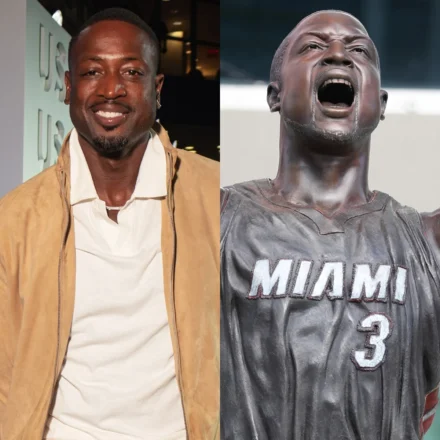
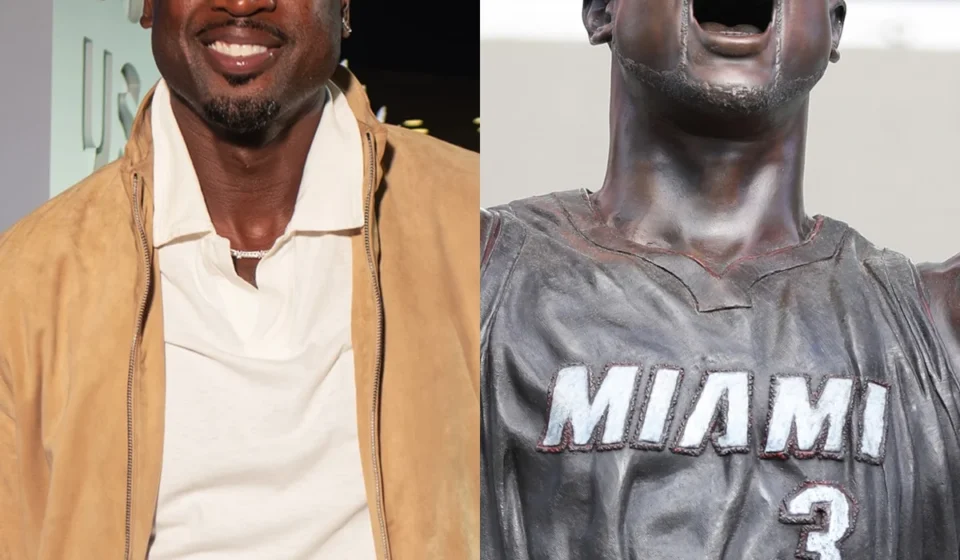
In the high-stakes world of professional sports, few honors are as significant as having a bronze statue erected in one’s likeness outside a home arena. For NBA legend Dwyane Wade, the unveiling of his sculpture outside the Kaseya Center in Miami was meant to be the crowning achievement of a storied 15-season career with the Miami Heat. However, the initial reception was far from a victory lap. After years of viral memes and public debate, the Miami Heat organization—with Wade’s blessing—has debuted a refreshed, "enhanced" version of the sculpture.
The update, which specifically addressed concerns regarding the likeness of the basketball icon’s facial features, marks a rare moment of humility and collaboration between a sports franchise and its fanbase. Wade, ever the showman, addressed the situation with characteristic grace and humor, signaling that while the statue may be his likeness, its true purpose is to serve as a testament to the collective spirit of the Miami community.
Chronology: From Unveiling to Refinement
The October 2024 Debut
The journey began in October 2024, when the Miami Heat honored the franchise’s greatest player with an eight-foot bronze statue. The pose, famously capturing Wade’s "This is my house" stance—a gesture he famously performed after hitting a double-overtime game-winner against the Chicago Bulls in 2009—was intended to encapsulate his defining moment in Miami.
The Backlash
Almost immediately following the unveiling, the internet erupted. Fans and critics alike noted a significant discrepancy between the real-life Dwyane Wade and the bronze rendition. The facial features, in particular, became the subject of intense scrutiny, leading to a wave of memes that dominated social media discourse for months. While the posture was praised for its accuracy, the head and face became a "major foul" in the eyes of the public.
The "Refresh"
Recognizing the disconnect, the Miami Heat and the creative team behind the sculpture opted for a re-evaluation. On October 30, 2025, the team revealed the "refreshed" look. By modifying the headpiece and refining the facial detailing, the sculpture now bears a much closer resemblance to the three-time NBA champion. Wade, sharing photos of the upgraded tribute on his Instagram, joked, "Ok ok ok there’s nothing wrong with getting a little work done!"
Supporting Data: A Legacy of Leadership and Growth
Dwyane Wade’s influence extends far beyond his statistics on the hardwood. His transition from an elite athlete to a public figure, father, and advocate has been marked by a commitment to authenticity and family.
A Family-Centric Philosophy
Wade’s approach to his personal life mirrors the resilience he demonstrated during his professional career. As a father to Zaire (24), Zaya (19), Xavier (12), and Kaavia (7), Wade has consistently championed the importance of unconditional support. His public defense of his children, particularly in the face of online vitriol, has solidified his reputation as a protective and progressive parent.
In a 2019 interview on the All the Smoke podcast, Wade spoke about his daughter Zaya, stating, "If you want to talk about strength and courage, my 12-year-old has way more than I have. You can learn something from your kids." This philosophy of learning from the next generation is a cornerstone of his current public persona.
Defending the Inner Circle
Wade’s loyalty is not reserved solely for his children. When his wife, actress Gabrielle Union, faced professional adversity following her departure from America’s Got Talent in 2019, Wade was her most vocal defender. By utilizing his platform to challenge the narrative, he demonstrated a commitment to "10 toes down" support—a mantra he has applied to his family, his marriage, and now, his legacy in Miami.
Official Responses: The Philosophy Behind the Bronze
In a thoughtful Substack essay published on October 30, Wade provided context for why the statue’s accuracy mattered so deeply. He emphasized that the sculpture was never meant to be a vanity project; it was a communal asset.
"This is the first statue ever to stand in front of that arena," Wade wrote. "That means something to me, but it also means something to the city."
He acknowledged the "noise" that followed the initial unveiling but framed it as a necessary part of the process. "Miami deserves to feel proud of it. The 305 deserves to look at that statue and feel the same energy it felt that night. And the fans deserve to see themselves in that moment because their noise, their belief, and their love were part of what made it possible."
Wade’s response effectively pivoted the conversation from the aesthetics of the statue to the emotional investment of the city. By framing the fan reaction as a contribution to the "making" of the statue, he validated the criticism while simultaneously bringing the fanbase back into the fold.
Implications: The Intersection of Art, Sports, and Accountability
The "Wade Statue Saga" serves as a compelling case study in the modern intersection of professional sports and digital-age feedback loops.
The Democratization of Public Art
In previous decades, a statue was a static, unchangeable monument. In the age of social media, the public now acts as an immediate editor. The fact that the Miami Heat chose to refine the statue suggests a shift toward a more collaborative relationship between teams and their supporters. The organization proved that they are "listening," a move that—while costly and complex—has ultimately strengthened the bond between the franchise and the fans.
Redefining the "Legend"
For Wade, the incident reinforces his image as a leader who does not take himself too seriously. By embracing the memes and joking about "getting work done," he successfully neutralized potential negativity. It transformed a source of potential embarrassment into a story of growth and refinement. It serves as a metaphor for his career: when faced with a challenge, whether on the court or in the public eye, the solution is not to retreat, but to "go back to work" and get it right.
The Enduring Legacy of "Our House"
The ultimate goal of the statue was to capture the essence of the Miami Heat experience. As Wade concluded in his essay, "I hope when people see it now, they see a better likeness of me. But more than that, I hope they see themselves. Because it may be my likeness, but it will always be our house."
This sentiment underscores the transition of Dwyane Wade from a singular star to an institution. The statue is no longer just a monument to a shooting guard; it is a monument to a shared history between a player and a city.
Conclusion: A Monumental Success
As the sun sets over the Kaseya Center, the newly refined statue of Dwyane Wade stands as a testament to the evolution of a sports icon. The process was not without its trials, and the initial misfire became a catalyst for a broader conversation about what it means to be honored by one’s city.
Through his willingness to engage with his fans, his humor in the face of criticism, and his profound dedication to his family and the Miami community, Wade has ensured that his legacy remains untarnished. The statue is, at last, a "slam dunk"—not just because of the accuracy of its features, but because it accurately represents the spirit of a man who, despite his immense fame, remains deeply connected to the people who helped build his house.
The story of the statue is now closed, but the legacy of Dwyane Wade continues to grow, marked by the same resilience, grace, and commitment to excellence that defined his time on the court. Whether through his advocacy for his children, his public support for his wife, or his ongoing commitment to the city of Miami, Wade proves that true greatness is found in the ability to evolve, to listen, and to always, always "leave a legacy."