The Architecture of Change: Sian Heder on the Revolutionary Spirit of ‘Being Heumann’

[Editor’s note: This interview was originally conducted during the 2026 Toronto International Film Festival. Apple will release “Being Heumann” in select theaters on Friday, November 6, and on Apple TV+ on Friday, November 13.]
When director Sian Heder began conceptualizing Being Heumann, she didn’t start with grand speeches or sweeping political montages. She started with a curb cut.
Those graded concrete ramps at the edge of sidewalk corners—the silent facilitators of urban mobility—are often invisible to the able-bodied. But for the disability community, they represent the front line of a battle for basic existence. It is fitting, then, that Heder’s film, a biopic of the late, legendary activist Judith Heumann, begins exactly where the world once stood still: at a street corner without a ramp, forcing its subject to navigate a world that was fundamentally not designed for her.
Following her Oscar-winning success with CODA, Heder has returned with a project that is as much a historical procedural as it is an intimate character study. By casting British actress Ruth Madeley as Heumann, the “Mother of the Disability Rights Movement,” Heder bypasses the tropes of the traditional biopic to deliver a kinetic, often humorous, and deeply human portrait of a woman who transformed the American landscape.

The Genesis of a Movement: From Camp to the Capital
The film’s narrative engine is anchored in the mid-1970s, a period when the Rehabilitation Act of 1973 had been signed into law, yet languished in bureaucratic limbo. Section 504 of that Act, which promised to prohibit discrimination against people with disabilities, was effectively a dead letter until Heumann and a coalition of activists forced the government’s hand.
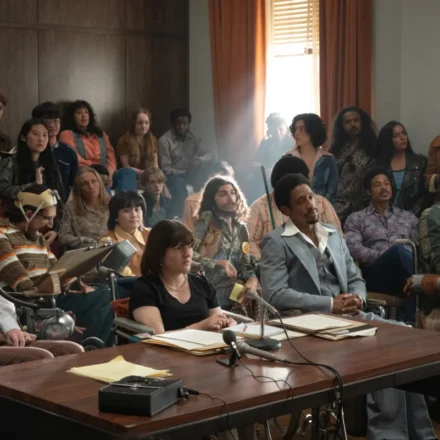
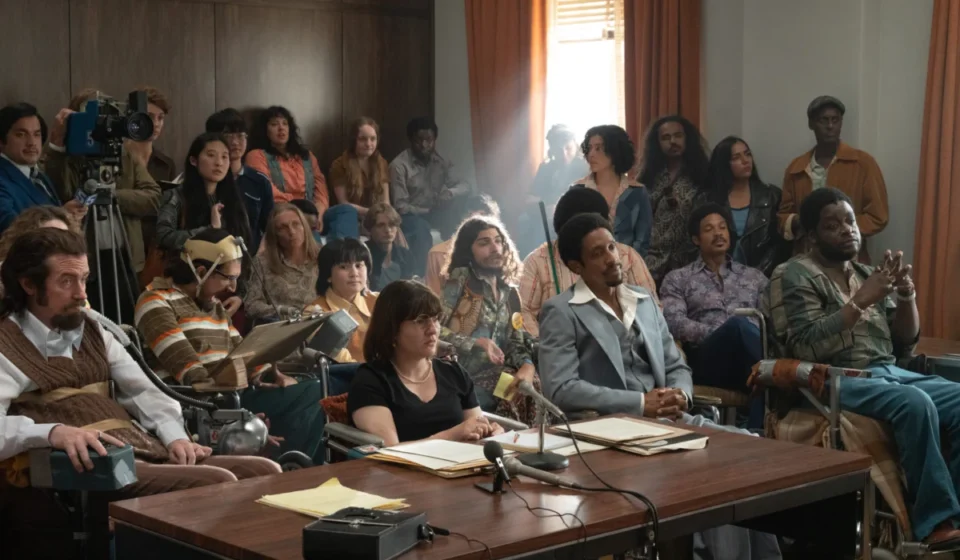
The film chronicles the historic 1977 San Francisco federal building sit-in—a month-long occupation that remains one of the most significant, yet under-documented, acts of civil disobedience in U.S. history. While the film captures the intensity of this standoff, Heder insists on highlighting the humanity of the protesters. “These people were building sex tents in the hallway, they were smoking pot, and the Black Panthers showed up!” Heder says. “I didn’t want to make an ‘eat your spinach’ movie. I wanted to make Dog Day Afternoon with disabled people.”
Navigating the Industry: The Price of Power
Heder’s trajectory toward Being Heumann was not a straight line. Following the global phenomenon of CODA—which became the first film with a predominantly deaf cast to win the Academy Award for Best Picture—Heder found herself in the rare position of having significant industry leverage.
“It was a shocking moment as a filmmaker,” Heder reflects. “Suddenly, there’s a bunch of eyes on you that were never there before. You’re asked, ‘What are you going to do next? How are you going to follow that up?’”

Despite the pressure to capitalize on her success with more traditional, big-budget studio fare, Heder chose the path of highest resistance. “I could have used that capital to go make a Marvel movie and get a big paycheck,” she admits. “Instead, I chose to tell the hardest story I could imagine—a period piece with an all-disabled cast and no major movie-star names.”
Her partnership with Apple, which also distributed CODA, was crucial. While the studio was supportive of her as a filmmaker, the pitch was a difficult sell on paper. It wasn’t just the subject matter; it was the commitment to an authentic, inclusive production process that defied conventional Hollywood logistics.
The Art of Casting: Finding the Unicorns
Casting Being Heumann was a monumental challenge, described by Heder’s casting directors, Bernie Telsey and Adam Caldwell, as the “Casting Olympics.” The search for the titular role required an actor who could embody Heumann’s specific alchemy of brilliance, prickliness, and raw, unadulterated drive.
Ruth Madeley, known for her work in Then Barbara Met Alan, emerged as the definitive choice. “She has an earthy, wry humor, and she exudes intelligence,” Heder notes. Yet, Heder was deliberate in her process, putting Madeley through multiple auditions to ensure she could handle the emotional and physical demands of the role.

The supporting cast, including newcomer Charlie Rush-Reese as activist Dennis Billups, was recruited with the same rigor. “Every character was a unicorn,” Heder laughs. “I was looking for a 19-year-old Black blind man who could sing, who embodied this relentless optimism. And we found him.”
Mark Ruffalo and the Complexity of the "Bad Guy"
Perhaps the most notable departure in casting is Mark Ruffalo as Joseph Califano, the Secretary of Health, Education, and Welfare. Califano is the bureaucratic antagonist who refuses to sign the 504 regulations. However, Heder refuses to frame him as a cartoonish villain.
“Mark is someone who has been unafraid in his life to be principled,” Heder says. “And Califano was someone who really considered himself a good guy. He had stood with the students at Kent State; he thought he was on the right side of history.” The film portrays the conflict not as a battle between good and evil, but as a test of moral courage in the face of political fear. “It’s speaking to the good guys who are stuck in inaction because it feels too hard or too scary.”
Production Realities: Accessibility as Innovation
The production of Being Heumann became a meta-commentary on the film’s central theme. Building an accessible set for a cross-disability cast—ranging from wheelchair users to blind actors and those with chronic pain—required a total reimagining of traditional filmmaking practices.

“We didn’t know what we didn’t know,” Heder explains. “How do you do a table read with a blind actor? How many Braille scripts do you need? How do you call action and cut for deaf performers?”
The solutions were found in real-time, through a culture of radical interdependence. “It was about making a set that is accessible to a deaf cast at the same time you’re making it accessible to a blind actor,” Heder says. The result was a set where ramps were built everywhere, not just for the cast, but for the crew. “The grips were coming up to me saying, ‘Thank you. We’re lugging thousands of pounds of equipment, and this is the first set I’ve been on where we can wheel that stuff up.’”
The Lasting Legacy of the Sit-In
The film reaches its emotional peak when it explores the necessity of letting go. There is a poignant moment in the third act when Judy, unable to be physically present at the protest, must entrust the movement to her confidant, Kitty Cone (Madeline Delp). It is a moment of vulnerability for a character defined by her control.
For Heder, this was the most profound part of the journey. “Judy was fighting for this group of people to be seen as human. But being a human on a very basic, connective level—saying thank you, being kind, putting people first—that was also a journey Judy had to go on.”

Implications: A Call to Inclusivity
Being Heumann is a potent reminder that accessibility is not a charity; it is an innovation. The tools we use today—from FaceTime and Zoom to the very curb cuts on our streets—were born from the advocacy of disabled people fighting for a seat at the table.
As the film prepares for its release, Heder hopes it will challenge the industry’s archaic standards. “When you refuse to provide any accommodations, you are shutting off an avenue to so much talent and creativity,” she says. “It’s about knowing what you need. Once we figured out what our actors needed, the work flowed just like any other set.”
Ultimately, Being Heumann serves as a mirror to our current social climate. It argues that progress is not achieved through individual heroism alone, but through the collective, messy, and beautiful work of building a world where everyone can move. As the credits roll, the audience is left with a simple, profound realization: we are all interdependent. And, as Heder reminds us, thank God for those curb cuts.