

In the landscape of contemporary documentary filmmaking, few works dare to tackle the fragmented, often erased history of a nation with the visceral intensity of Lana Daher’s Do You Love Me (2026). A Beirut-based multidisciplinary artist, Daher has crafted a 76-minute kaleidoscopic portrait of Lebanon that functions less like a conventional historical account and more like a collective subconscious. Premiering at Venice Days and currently enjoying a run at New York’s Metrograph, the film is a monumental act of archival retrieval—a cinematic collage that stitches together seven decades of found footage to interrogate the nature of memory, trauma, and the persistent, defiant humanity of a people living in a state of permanent crisis.
The Architecture of an Unofficial Archive
The genesis of Do You Love Me was rooted in a search for rhythm and resonance. What began in 2018 as a research project into the intersection of war and music—specifically the cultural legacy of the popular Lebanese band, The Bendaly Family—slowly metastasized into a deeply personal odyssey.
"The film started as research into the relationship between war and music; how music carries memory and moves through conflict," Daher explains. "It was always intended to be an archive-based doc, but little by little, I realized that what mattered to me was much more personal: my own relationship with Beirut, my own childhood, my own traumas; our relationship to memory and history as a society."
The logistical challenge of the project cannot be overstated. In a country that lacks a centralized national archive—and where the teaching of history remains a fractured, contested exercise—Daher’s process was akin to an archeological dig. Her team sourced material from over 106 fiction and documentary features produced between 1958 and the present day. When combined with newsreels, home movies, radio broadcasts, and private photographs, the raw material totaled over 20,000 audiovisual fragments. From this exhaustive hunt, which required the clearing of nearly 400 separate rights contracts, only seven percent survived the final cut.

A Chronology of Disorientation: The Editing Logic
One of the most striking formal decisions in Do You Love Me is its refusal to adhere to a linear timeline. The film purposefully collapses the distance between the 1970s and the 2020s, weaving together disparate threads: a scene from a fictional action movie, a piece of archival reportage, and a grainy, intimate home video of a birthday celebration.
This non-linear approach was a deliberate creative choice, necessitated by the nature of the subject matter. "I didn’t want a linear chronology precisely because memory isn’t linear and neither is trauma," Daher notes. To achieve this, she collaborated with the acclaimed Paris-based Syrian editor Qutaiba Barhamji, whose previous work on Four Daughters (2023) and The Voice of Hind Rajab (2025) demonstrated a masterclass in handling delicate, emotionally charged narratives.
The two worked with a rigorous set of self-imposed rules: no full scenes from existing films were to be lifted in their entirety, and, significantly, no Lebanese politicians were permitted on screen or on the soundtrack. By stripping away the official narratives of the political class, Daher and Barhamji forced the focus onto the civilian experience—the intellectuals opining in Arabic and French, the families searching for the disappeared, and the everyday moments of tenderness that persist amidst the wreckage.
The Female Gaze and the Keeper of Records
A central pillar of the film is its commitment to centering the female perspective. As Daher points out, the survival of the archive itself is largely a testament to the labor of women.

"So much of what survives as ‘the record’—home videos, family photographs, personal collections—was shot, kept, and passed down by women, even when they weren’t the ones holding the camera," she says. "Women were often witnesses to time in the most literal sense: they were the ones who preserved what nobody thought to institutionalize."
The film pays explicit homage to pioneering figures like the late filmmaker and journalist Jocelyne Saab. In one of the film’s most haunting sequences, an excerpt from a Saab documentary captures the director reporting from the ruins of her own demolished home, lamenting the loss of 150 years of family history. By placing these images alongside her own, Daher creates a dialogue across generations, suggesting that while the physical structures of Beirut may be subject to constant bombardment and demolition, the emotional and artistic spirit of the city remains resilient.
Implications: The Reality of Permanent Crisis
The release of Do You Love Me arrives at a time of renewed catastrophe for Lebanon. When asked about the relevance of her film amidst the current regional conflict, Daher is quick to challenge reductive Western narratives. She bristles at the notion that Lebanon is merely "caught in the crossfire," noting that such phrasing ignores the long, violent history of foreign occupation and internal fragmentation that predates current political actors like Hezbollah.
"I stopped trying to explain the country in a conventional way and learned instead to accept it in its full and unresolved complexity," she says. During the film’s premiere in Beirut, the boundaries between the screen and the reality of the theater blurred when the sound of an Israeli drone overhead became, in effect, part of the film’s own soundscape.
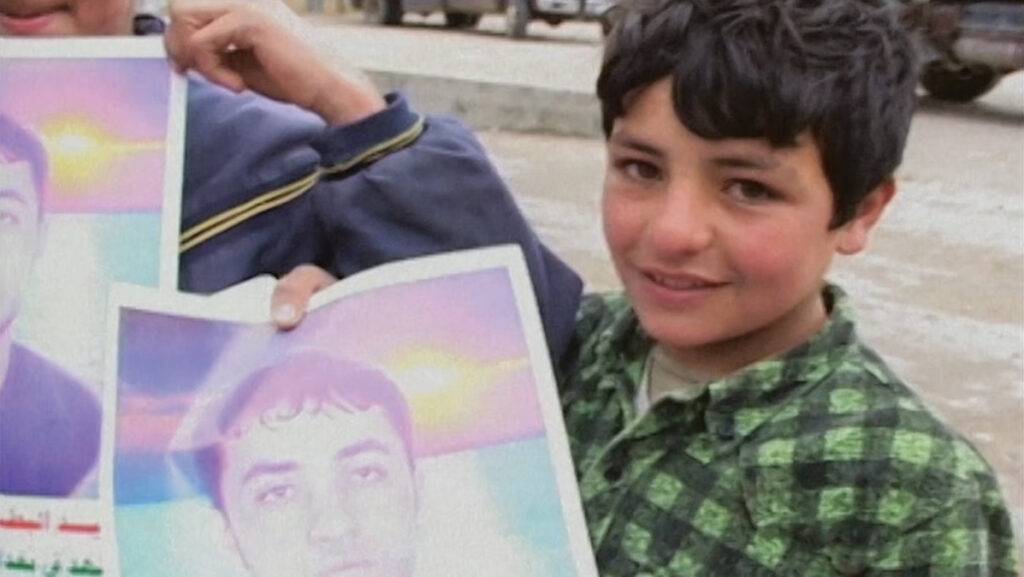
This blurring of reality is perhaps the film’s most profound implication. It asks the audience to confront the reality that for the people of Beirut, the past is never actually past. The trauma is inherited, and the cycle of destruction is not an anomaly but an integrated feature of life.
A Living Archive
Ultimately, Do You Love Me serves as a counter-narrative to the dehumanization often found in international news coverage. By shifting the lens from the statistic to the soul, Daher provides a space for grieving, remembering, and simply existing.
"I truly hope the film reminds people that Lebanon isn’t just another war-torn country where death becomes a statistic," Daher reflects. "We are people with stories, humor, and tenderness; we are people full of life."
By functioning as a "living archive"—one that is inherently incomplete, subjective, and deeply emotional—Daher has created a work that resists the total erasure of Lebanese identity. Whether the viewer leaves the theater feeling the weight of the country’s history or the lightness of its persistent human spirit, Do You Love Me succeeds in its primary goal: it forces the world to look at Lebanon not as a conflict zone, but as a home. Through this act of cinematic resistance, Daher has ensured that the stories, the music, and the memories of her city are not just archived, but kept vibrantly, defiantly alive.