The Joy of DIY Cinema: Why Josh Stifter’s ‘Slimy Joe’ Is the Creative Spark Filmmakers Need

By [Your Name/Journalistic Desk]
August 25, 2026
In an era defined by the pursuit of viral algorithms, massive production budgets, and the crushing pressure of "industry standards," filmmaker Josh Stifter has reminded the cinematic community of a fundamental, oft-forgotten truth: filmmaking is supposed to be fun.
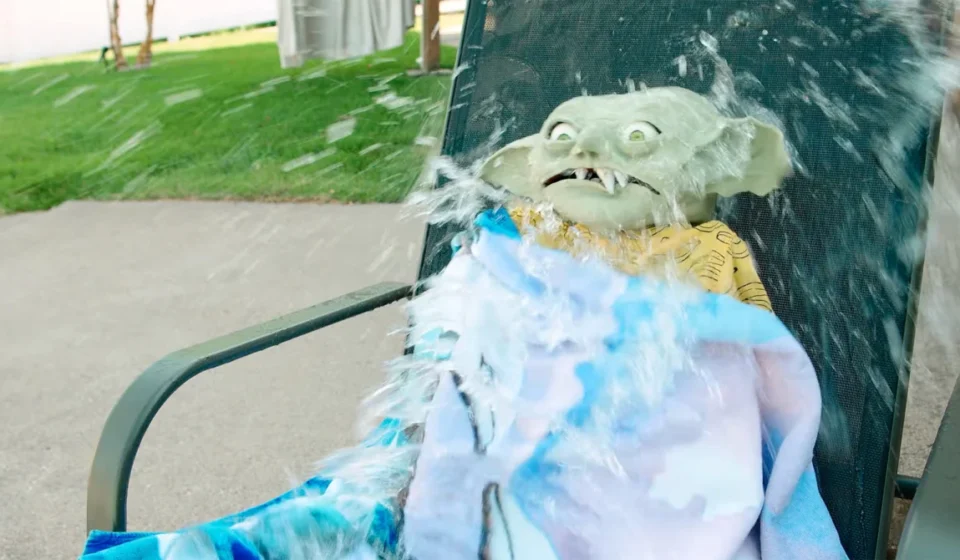
His latest project, Slimy Joe, a two-minute horror-comedy short, serves as a masterclass in the "just do it" ethos. With little more than a creature puppet, a backyard swimming pool, and a handful of friends and family, Stifter has crafted a piece of entertainment that resonates more deeply than many high-concept, big-budget studio shorts. It is a whimsical, gooey, and hilariously low-stakes affair that invites audiences to remember why they fell in love with movies in the first place.
Main Facts: The Anatomy of a Backyard Monster Movie
Slimy Joe is, at its core, a simple premise executed with infectious enthusiasm. The titular character—a mischievous, vibrant green goblin puppet—is governed by a singular, classic horror trope: he cannot get wet. When a group of children playing in a backyard swimming pool inadvertently splashes the creature, the resulting chaos is both comedic and visually charming.
The film stars Maximus and Raphael Stifter alongside Josh Stifter and Daniel Degnan, who play the harried, pool-side dads. The practical effects, which give the film its tactile, "slimy" charm, were designed by Nathan Strauss. The production is a testament to the power of practical puppetry, echoing the practical effects lineage of cult classics like Mandy (specifically the infamous "Cheddar Goblin" commercial).
The project was conceived and completed in a matter of hours in Atlanta, Georgia. It was not intended to win festivals, secure distribution, or launch a franchise. It was, as Stifter puts it, "made because making a stupid monster movie sounded fun."
Chronology: From Concept to Viral Short
The genesis of Slimy Joe reflects the spontaneity of independent filmmaking at its purest.

- The Idea Phase: Stifter, a filmmaker known for his work with Flush Studios, found himself with a rare window of free time and a desire to create something purely for the sake of creation.
- Pre-Production: With the help of Nathan Strauss, a puppet was sourced. The "set" was simply the backyard of their home in Atlanta. No location scouts, no permits, and no complex scheduling.
- Production: The film was shot in a single afternoon. The cast, comprised of Stifter’s own children and friends, performed with an unscripted, natural energy that only comes from a group of people enjoying themselves in the sun.
- Post-Production: Given the straightforward nature of the narrative, the editing process was lean and efficient, focused on maintaining the brisk, two-minute runtime.
- The Premiere: On August 25, 2026, the film was uploaded to YouTube. It quickly caught the attention of film enthusiasts and bloggers, spreading through the independent cinema community as a refreshing palate cleanser amidst a crowded digital landscape.
Supporting Data: The Value of "Low-Stakes" Creativity
Why does a two-minute monster movie matter in the current cinematic landscape? To understand the implications of Slimy Joe, one must look at the current state of independent filmmaking.
According to industry surveys of independent creators, the primary barrier to entry is no longer technical equipment—smartphones can now record in 4K—but "mental paralysis." The pressure to produce "important" or "marketable" content has created a bottleneck where many creators abandon projects before they even begin because they fear the result won’t be good enough for a portfolio or a festival submission.
Slimy Joe breaks this cycle. By releasing the film without a grand artistic manifesto, Stifter provides a data point for the "low-stakes" philosophy. The film’s success isn’t measured in box office receipts, but in engagement and the "positive ripple effect" it has had on other creators. It serves as a reminder that the cost of entry is lower than ever, and the cost of inaction is the atrophy of one’s creative muscles.
Official Responses and Creative Philosophy
Josh Stifter has been vocal about his motivations, using the release of Slimy Joe as a platform to encourage his peers. In his own words:
"Sometimes you don’t need a budget, a crew, a festival strategy or even a particularly good reason to make a movie. Just having a monster puppet, a swimming pool, your kids, a couple friends and a few hours to kill is enough of an excuse… We didn’t make it because it was important. We made it because making a stupid monster movie sounded fun. Sometimes that’s all the reason you need to make something."
This sentiment is echoed by the community that has championed the film. The response from the audience has been overwhelmingly positive, with many viewers noting that the "Cheddar Goblin" energy of the creature feels like a nostalgic nod to the horror-comedies of the 80s and 90s. The film has become a touchstone for those advocating for the "Flush Studios" approach: prioritize the act of doing over the act of perfecting.
Implications: The Future of Guerilla Filmmaking
The success of Slimy Joe carries significant implications for the future of digital content creation. We are currently witnessing a shift away from the "high-gloss" aesthetic that dominated the early 2020s. Audiences are showing a growing fatigue for hyper-produced, algorithmic content. Instead, they are gravitating toward projects that feel authentic, tangible, and human.

1. The Death of Perfectionism
The primary implication is the deconstruction of perfectionism. Stifter’s work demonstrates that a "monster movie" made with "weird shit you have lying around" can have more character than a project that spent six months in pre-production. This encourages a shift toward "agile filmmaking," where creators release more content at a faster pace, allowing them to experiment and fail without catastrophic consequences.
2. Democratizing the "Monster Movie"
Through the use of practical effects (courtesy of Nathan Strauss), the film proves that CGI is not a prerequisite for visual storytelling. The tactile nature of the puppet creates a sense of presence that CGI often struggles to replicate in short-form media. This could lead to a resurgence in practical effects usage among low-budget independent creators.
3. Community and Collaboration
The collaborative nature of Slimy Joe—involving children, friends, and local artists—highlights the importance of building a "creative village." Filmmaking, while often solitary in the writing phase, is a communal act in the production phase. By involving his children, Stifter is not just making a movie; he is fostering a culture of creativity that transcends the final product.
Conclusion: A Call to Create
As the film industry continues to grapple with the integration of AI, the dominance of massive IP-driven franchises, and the instability of traditional distribution, Slimy Joe stands as a quiet, slimy, green beacon of hope. It asks a simple, provocative question to every person with a camera in their pocket: What are you going to make next?
The film is not trying to change the world. It is not trying to win an Oscar. It is a testament to the fact that, sometimes, the most important artistic statement you can make is the one you make just because you can.
For those looking to find inspiration, look no further than the backyard in Atlanta where a green goblin meets a splash of water. It is a reminder that the barrier to entry into the world of cinema is merely a decision. So, grab your friends, grab your kids, and find something "weird" lying around. The world doesn’t need another masterpiece—it needs more people who are willing to have fun making "stupid" movies.
To follow Josh Stifter’s future projects, you can find him on X (formerly Twitter) @joshstifter or support his ongoing work through the Flush Studios Patreon page. The short film, Slimy Joe, is currently available to watch on YouTube.