A Triumph of Spirit: Celine Dion Returns to the Stage Amidst Stiff Person Syndrome Battle

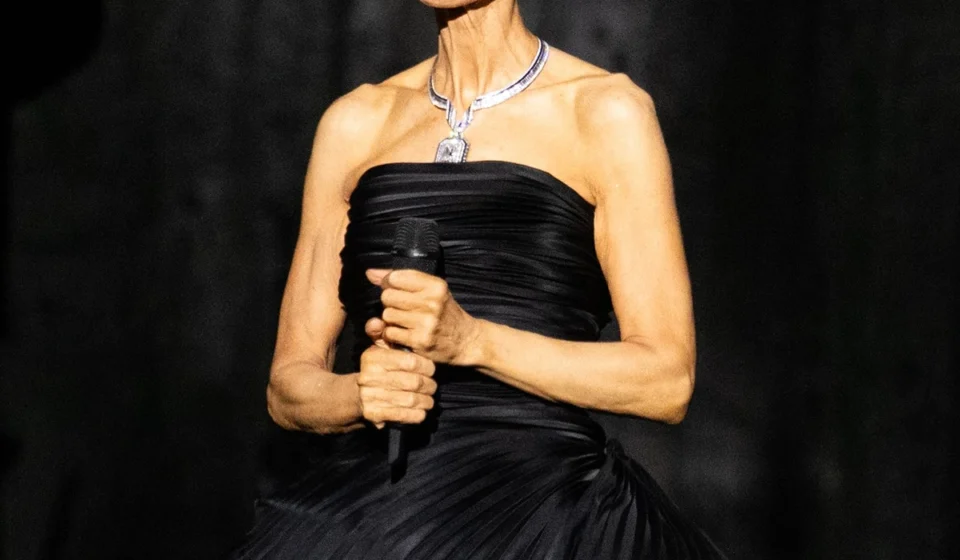
The atmosphere at Paris’s Plenitude Arena on September 12 was thick with anticipation, emotion, and the collective breath of 35,000 devoted fans. When the lights dimmed and the silhouette of one of music’s most iconic voices emerged, it wasn’t just a concert—it was a reclamation. Celine Dion, the Grammy-winning titan of pop, stepped onto the stage for the first night of her 16-show residency, marking her first full concert performance in six years and her triumphant return after a harrowing battle with a rare neurological disorder.
For fans who have followed her career through the highs of Titanic to the lows of her health-enforced silence, the night was a testament to resilience. "I had promised myself not to cry," Dion confessed to the roaring crowd during the opening moments of her set. "But I’m so happy to see you all. I missed you. I’m going to sing like you without crying."
The Long Road to the "City of Love"
Dion’s journey back to the spotlight has been anything but linear. Following her opening number, "On ne change pas" (We don’t change), the singer reflected on the "rocky" road that had led her to this moment. She spoke candidly about the unplanned stops, the dark days of diagnosis, and the flicker of hope she held onto during her most difficult times.
"I have to admit, though, that the road was rocky," Dion told the audience. "The journey was longer than expected, with unplanned stops along the way. But I hung in there. A faint ray of light in the distance, deep in the mountains. I believed in it. And here it is. The sun—the sun is here. The sun, right in front of me."
This residency, which she famously gifted herself as a 58th birthday present back in March, represents more than just a professional commitment. It is the culmination of years of rigorous physical, athletic, and vocal therapy. For the mother of three—René-Charles, 25, and 15-year-old twins Nelson and Eddy—performing is not merely a job; it is a vital extension of her identity.
A Chronology of Courage: The Stiff Person Syndrome Struggle
To understand the magnitude of this week’s residency, one must look back at the timeline of the disorder that nearly silenced one of the world’s greatest voices.
2020–2022: The Initial Silence
The onset of the global pandemic in 2020 forced a pause on her Courage World Tour. While the world waited for a return to normalcy, Dion’s health began to decline. By early 2022, persistent and severe muscle spasms were hindering her ability to perform. In a statement to fans, she noted, "I need to be in top shape when I’m on stage. I honestly can’t wait, but I’m just not there yet."
2022: The Diagnosis
In December 2022, the veil was lifted. In a vulnerable social media video, Dion revealed she had been diagnosed with Stiff Person Syndrome (SPS), a rare, progressive neurological condition. The disorder, which causes muscle stiffness and painful spasms, had begun to affect every aspect of her daily life, making walking and singing—her primary means of connection—increasingly difficult.
2023: Navigating the Uncertainty
The year 2023 was marked by hard decisions. In May, Dion made the heartbreaking choice to cancel all remaining dates of her Courage World Tour through 2024. Despite the setback, she remained visible in her own way. She contributed to the soundtrack of the film Love Again—marking her acting debut—and was seen in October 2023 attending a Las Vegas Knights hockey game with her sons. It was here that she offered a glimpse of her spirit, reportedly singing a few notes for the team and providing a morale-boosting pep talk.
2024: A Year of Re-emergence
The dawn of 2024 brought a shift in narrative. In January, she announced the documentary I Am: Celine Dion, directed by Irene Taylor, aimed at raising awareness for SPS. Her surprise appearance at the 2024 Grammy Awards to present the Album of the Year, followed by her breathtaking performance at the Paris Olympics Opening Ceremony in July, signaled to the world that her voice was not just intact—it was evolving.
The Science of the Struggle: Understanding SPS
Stiff Person Syndrome is a condition that many in the general public had never heard of until Dion brought it to the forefront of global discourse. According to the National Institutes of Health (NIH), the disorder is characterized by fluctuating muscle rigidity and heightened sensitivity to stimuli such as noise, touch, and emotional distress, all of which can trigger severe, debilitating spasms.
For a vocalist, the condition is particularly cruel. The diaphragm and intercostal muscles are essential for breath control and pitch stability—the very tools of Dion’s trade. Her commitment to "training like an athlete" has involved a multidisciplinary approach, including sports medicine therapy and specialized vocal rehabilitation, to manage the stiffness and regain the strength necessary for the grueling demands of a live concert residency.
Official Responses and Public Sentiment
The music industry and the public have responded to Dion’s return with an outpouring of support. Following the Grammys, where she was captured backstage with Taylor Swift, Dion’s longtime stylist Law Roach expressed his overwhelming joy, posting on Instagram, "Not just to dress my Queen again but the fact that she’s HEALTHY AND HAPPY! The UNIVERSE always PROTECTS and PROVIDES."
Dion herself has been consistent in crediting her fanbase for her recovery. "Over these last few years, every day that’s gone by, I’ve felt your prayers and support, your kindness and love," she said during her Paris performance. "Even in my most difficult times, you were there for me."
The Implications of a Resurrected Career
Celine Dion’s return to the stage carries significant implications for both her legacy and the broader conversation regarding chronic illness.
- Awareness for Rare Diseases: By documenting her journey, Dion has turned a personal health crisis into a platform for medical education. Her transparency regarding SPS has likely driven record traffic to medical information portals, helping other patients feel less isolated.
- The "Athlete" Model of Performance: Dion has fundamentally shifted the narrative around how aging and ailing performers manage their craft. Her open admission that she treats her recovery like an athletic training regimen sets a new standard for longevity in the high-pressure world of touring music.
- Cultural Resilience: At a time when many artists face the pressures of social media and constant production, Dion’s choice to step away, focus on her family, and return on her own terms is a masterclass in agency. Her comeback serves as a cultural touchstone for the power of persistence.
Looking Forward
As the Paris residency continues, the world watches with bated breath. Each note sung is a victory against the physical limitations imposed by her diagnosis. The "rocky road" she described has not vanished, but it has become a path she is now navigating with a newfound, steely grace.
When she told her audience, "I am everything I am because you loved me," she was echoing the lyrics of her own song, but the sentiment resonated with the weight of someone who had nearly lost the chance to say it. Celine Dion is back, not because she was forced to return, but because the stage—and the connection it fosters—is the home she built for herself.
For the millions who consider her voice the soundtrack to their own lives, her return is a reminder that even when the body feels stiff and the journey feels impossible, the human spirit, much like her music, will go on.