The Red Island Unleashed: Ankama Animations Drops Brutal "Vikings Versus Cannibals" Short

In the landscape of modern animation, where the medium is often sanitized for broad, family-friendly appeal, a new entry has emerged that stands in stark, bloody defiance of industry norms. Released to coincide with the Halloween weekend, Vikings Versus Cannibals is a 14-minute, R-rated animated tour-de-force that pushes the boundaries of gore, intensity, and visceral storytelling. Produced by the French powerhouse Ankama Animations—the studio behind the acclaimed Dofus and Wakfu series—the short film serves as a harrowing prequel to a project titled The Blood Island.
Directed by industry veterans Jean-Jacques Denis and Anthony Roux (known professionally as "Tot"), the film is a masterclass in high-octane, adult-oriented animation that leaves little to the imagination. As it storms onto the internet, it serves as a potent reminder that animation remains a potent vehicle for visceral, uncompromising horror.
The Main Facts: A Clash of Savagery
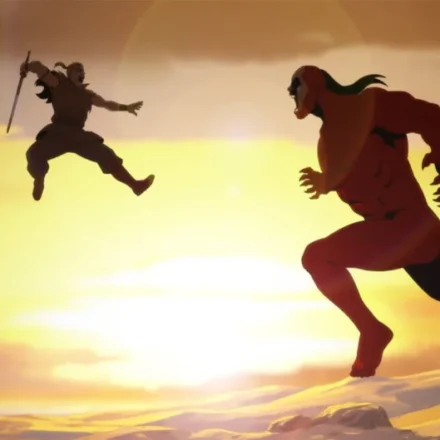
At its core, Vikings Versus Cannibals is a simple, albeit brutal, premise executed with unrelenting technical precision. A contingent of Viking warriors, renowned for their legendary ferocity and martial prowess, find themselves washed up on the shores of a mysterious, crimson-hued landmass known as the "Red Island." Expecting to conquer, they instead find themselves as the hunted.
The film serves as an origin story for The Blood Island, stripping away the romanticism often associated with Viking mythology and replacing it with the raw, chaotic terror of survival horror. The narrative trajectory is clear: the hunters become the prey. The film’s aesthetic is intentionally jarring, utilizing a hyper-kinetic animation style that emphasizes the fragility of the human form when pitted against primal, cannibalistic savagery. It is an unapologetic display of axes, dismemberment, and visceral biological horror that firmly positions itself in the "NSFW" category.
Chronology: From Concept to Digital Premiere
The journey of Vikings Versus Cannibals began within the walls of Ankama, a studio that has spent decades cultivating a reputation for ambitious world-building.

- Development Phase: Building on their previous success with the feature film Mutafukaz, directors Jean-Jacques Denis and Anthony Roux sought to pivot toward a darker, more mature narrative tone. The concept was developed as a thematic prequel to The Blood Island, intended to establish the lore of a terrifying, hostile environment.
- The Partnership: The project was developed in partnership with digital creator Inoxtag, bridging the gap between traditional animation production and modern digital distribution.
- Production: With music composed by Pierre-Jean Beaudoin, the film underwent an intensive production cycle in France, focusing on fluid, high-frame-rate action sequences that characterize the studio’s "Ankama style" while dialing up the graphic intensity.
- The Premiere: On October 31, 2026, the film was dropped directly onto YouTube, bypassing traditional film festival circuits and theatrical release windows to reach its target audience immediately. The timing, coinciding with the height of the Halloween season, maximized the impact of its debut.
Supporting Data: Behind the Visceral Aesthetic
To understand the significance of Vikings Versus Cannibals, one must look at the pedigree of the creators. Jean-Jacques Denis and Anthony Roux have been instrumental in defining the French animation aesthetic of the 21st century.
- Creative Team: Anthony Roux, writing under his pseudonym "Tot," has been the architect of the Ankama universe for years. By applying his experience in epic storytelling to a short-form horror format, he has effectively demonstrated that complex, high-stakes narratives can be condensed into a 14-minute runtime without losing emotional weight.
- Technical Execution: The film utilizes a distinct color palette centered around the "Red Island" motif, which serves as a visual metaphor for the bloodshed that defines the narrative. The animation techniques employed allow for rapid, seamless movement, ensuring that the fight choreography feels grounded despite the stylized character designs.
- Accessibility: The choice to release the film on YouTube reflects a shifting paradigm in how adult animation is consumed. By avoiding the gatekeeping of traditional streaming services like Netflix or Adult Swim, Ankama has empowered the audience to engage with content that might otherwise be deemed "too extreme" for mainstream platforms.
Official Responses and Industry Context
The release of Vikings Versus Cannibals has sparked a robust conversation among animation enthusiasts and critics alike. The consensus is that the film is a daring outlier in an industry increasingly obsessed with "safe" content.
While major studios are often criticized for leaning on nostalgia and established intellectual properties, Ankama’s approach highlights a "fearless" strategy. The response from the animation community—most notably via aggregators like Catsuka—has been one of shock and admiration. The film’s marketing, which cheekily asks, "Vikings or cannibals: Who would you rather have over for dinner?", highlights the creators’ awareness of the absurdity and extremity of their own work.
There has been no formal pushback from regulators, as the digital-first nature of the release allows the content to be self-regulated via platform age-gating. However, the film serves as a litmus test for how much gore an audience is willing to consume within an animated format. The creators have remained relatively quiet regarding future plans for The Blood Island, allowing the mystery of the "Red Island" to drive interest in the short.
Implications: The Future of Adult Animation
The success and visibility of Vikings Versus Cannibals signal several key shifts in the industry:

1. The Rise of "Indie" Adult Animation
The film proves that a studio does not need the backing of a massive conglomerate to produce high-quality, high-impact adult content. By leveraging digital platforms, Ankama has effectively created a "proof of concept" that could dictate the future of their larger projects.
2. Genre Hybridization
By blending historical fiction (Vikings) with extreme survival horror (cannibalism), the film highlights a growing trend of genre-hopping in animation. It proves that the medium is no longer confined to comedy or soft fantasy.
3. The "NSFW" Barrier
The explicit nature of the film—noted by creators as being inappropriate for workplace viewing—marks a line in the sand. It is an intentional move to alienate casual viewers in favor of a dedicated, cult-like following that craves intensity. This mirrors the "Midnight Movie" phenomenon of the 1970s, where films were designed specifically for a niche, thrill-seeking audience.
4. Prequel Marketing
Using a 14-minute short to build hype for a larger feature project is a sophisticated marketing strategy. It establishes tone, aesthetic, and world-building without requiring the financial risk of a full-length feature film. It allows the audience to "test the waters" of The Blood Island universe.
Final Thoughts: A Warning and an Invitation
For those brave enough to watch, Vikings Versus Cannibals is an experience that lingers. It is not a film for the faint of heart, nor is it a film that seeks to be "liked" by the masses. It is a raw, bloody, and technically impressive testament to the power of animation as a storytelling medium.

Whether or not the world is ready for a full-length feature film based on this brutal premise remains to be seen. However, if Vikings Versus Cannibals is any indication, the upcoming expansion of The Blood Island will be a dark, unflinching journey into the depths of human savagery. For now, the short stands as a visceral milestone in 2026’s animation landscape, reminding us that sometimes the most effective way to tell a story is to leave the polite conventions of society at the door and embrace the chaos of the "Red Island."
Viewer Discretion Advised: This film contains graphic violence, gore, and mature themes. It is strictly recommended for mature audiences only. Those who choose to view it should do so with the understanding that this is, in the words of its creators, a nightmare brought to life.