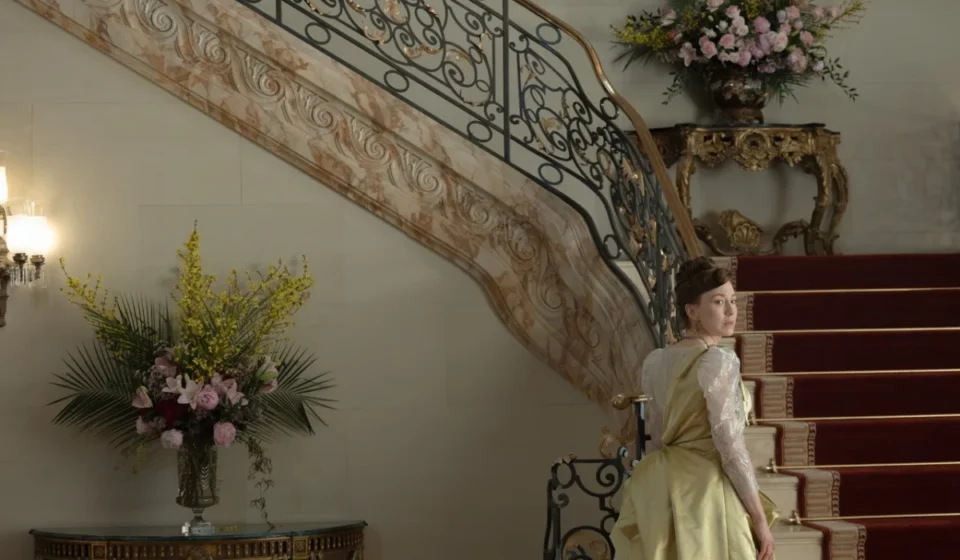
The Gilded Age Ascendant: HBO’s Period Epic Finds Its Stride in a High-Stakes Fourth Season

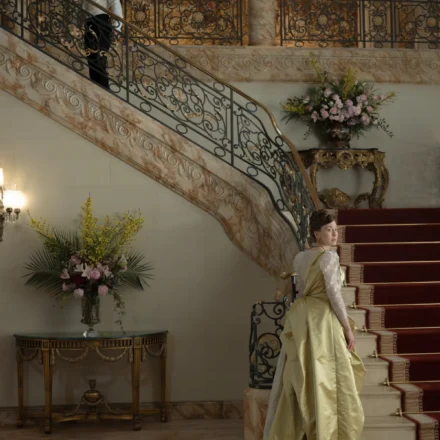
In the meticulously appointed drawing rooms of 19th-century New York, the air is thick with the scent of expensive perfume and the lingering tension of political maneuvering. On the set of HBO’s The Gilded Age, the cast is gathered for a postmortem of a presidential visit—a scene that mirrors the show’s own trajectory from a period-piece underdog to a cultural juggernaut. As the cameras roll and the actors inhabit the complex, corseted lives of the late 1800s, it is clear that the series has moved beyond its initial growing pains, cementing its place as the definitive prestige drama of the decade.
The Evolution of an Epic: A Chronology of Success
When The Gilded Age first premiered, it occupied a precarious position on the HBO slate. Created by Julian Fellowes, the mastermind behind Downton Abbey, the show was tasked with translating the rigid, high-stakes hierarchy of 1880s New York for a modern audience. The first two seasons were a period of establishment—a time for audiences to learn the players, from the indomitable Bertha Russell to the traditionalist Agnes van Rhijn.
"Season 1 was about establishing the world, and Season 2 was about building out the plot lines," explains co-creator Sonja Warfield. "But in Season 3, we hit the sweet spot. The actors really understood their characters, and the writers understood the nuances of the actors. We can now write to their strengths, which gives us much more real estate for their characters’ journeys."

This creative maturation has coincided with a seismic shift in audience reception. What began as a "bubble" show has transformed into appointment television. The cast reports that the change is palpable; from social media discourse to strangers stopping them on the street to debate the latest corporate battle between George Russell and the old-money elite, the show has firmly embedded itself in the global zeitgeist.
"Go Big or Go Home": The Production Scale of Season 4
The upcoming fourth season, debuting November 1, marks the most ambitious chapter in the series’ history. Production designer Bob Shaw notes that the scale has expanded exponentially. "Usually, we have two or three major events in a season," Shaw said. "This is the season where we keep saying, ‘It’s go big or go home.’"
The logistical reality of this "big" season is staggering. The narrative arc features multiple high-society weddings, a vibrant dance hall sequence, a city-wide parade, an inventors’ convention, the dedication of a national monument, and the pivotal visit from President Cleveland. Bringing this 19th-century world to life requires a small army of costumers, historical researchers, and technicians, all working in concert to ensure the period detail remains impeccable.

For the actors, this commitment to authenticity is a rigorous, often exhausting process. A typical day begins at 5:00 a.m. for hours of hair, makeup, and costume fitting. During a recent shoot, Taissa Farmiga, who plays Gladys Russell, found herself momentarily tongue-tied while delivering lines, resulting in a rare, modern expletive that would have sent her character’s Victorian contemporaries into a fainting spell. The moment served as a reminder of the intense pressure to maintain the show’s high standards amidst a grueling production schedule.
Supporting the Narrative: Character Arcs and New Stakes
The strength of The Gilded Age lies in its ensemble, and Season 4 pushes these characters into uncharted territory. Carrie Coon, who portrays the ambitious Bertha Russell, and Morgan Spector, who plays her husband George, remain the show’s gravitational center. However, their relationship—the bedrock of their power—is fracturing.
George, the "Railroad Daddy" of internet fame, finds himself adrift without Bertha’s counsel as his business empire faces new threats. "George is a disaster without Bertha," Spector admits. "He’s doing everything he can to fill the void." Meanwhile, Bertha stands by her choices, particularly the orchestration of her daughter’s marriage to a Duke. Coon defends the character’s cold pragmatism: "I’ve always maintained that Bertha was absolutely right. She’s a good judge of character."

Elsewhere, the Scott family is finding their own path. Audra McDonald, playing the matriarch of the family, highlights a shift toward "Black joy" in the narrative. "We had a lot of drama and tragedy in the first couple of seasons for the Scotts," McDonald said. "It’s wonderful to see them emerge in this way. Peggy is coming out of her cocoon to become an iron butterfly."
The van Rhijn household, too, faces a reversal of fortune. With Ada (Cynthia Nixon) now the woman of means following a fortuitous inheritance, the power dynamic between her and her sister Agnes (Christine Baranski) has shifted. "She’s getting more comfortable with her stature, with being a woman of means, and with being the head of the household," says Nixon. Baranski, meanwhile, hints at a transformative arc for Agnes, noting, "It’s my favorite year in terms of my character’s narrative line. Agnes’ sense of identity is challenged this season."
Implications: The New Gilded Age
The thematic resonance of the show has not been lost on its cast, many of whom have drawn parallels between the 1880s robber barons and today’s tech-billionaire class. As society grapples with the influence of AI, global networks, and extreme wealth concentration, the show feels unexpectedly contemporary.

"These billionaires are the main story of our moment, and it is the main story of The Gilded Age," says Cynthia Nixon. "You have these people who appear seemingly out of nowhere and have so much money, and because of their quest for more, they are destroying everything from the planet to democracy."
Julian Fellowes, however, offers a more nuanced perspective on the figures he writes. While acknowledging the rapacious nature of the industrialists, he argues for their historical importance. "I’m a lone voice in the other direction," Fellowes says. "I think the Gilded Age was a very exciting time for America. They built an economy that put America at the peace table with the loudest voice in both of the coming world wars. The fashion now is to hate them, and we ought to remember that they got America ready for the 20th century."
Looking Toward the Horizon: The Future of the Series
As the production team approaches the end of filming, there is a newfound confidence in the show’s longevity. While the creators haven’t mapped out the distant future, they are optimistic. "We have a Season 5 in us if we’re allowed to do it," Fellowes said.

The sentiment is echoed by the cast, who have found a profound sense of camaraderie. Donna Murphy, who plays the formidable Caroline Astor, notes that the company has "gelled" in a way that makes the work feel sustainable. "I remember at the end of filming the third season, Christine turned to me and said, ‘I could do this for the rest of my life.’ And you know what, she’s right."
As the cast and crew endure long days and complex filming requirements, they do so with the knowledge that they have finally secured their place in the television landscape. From the quiet of the drawing room to the bustling streets of New York, The Gilded Age has successfully bridged the gap between historical drama and modern social commentary, proving that while the characters may be obsessed with the past, the show itself is firmly focused on a bright, expanding future. Whether or not they reach a fifth or sixth season, the legacy of this series—as a triumph of production design, acting, and sharp-witted storytelling—is already secure.