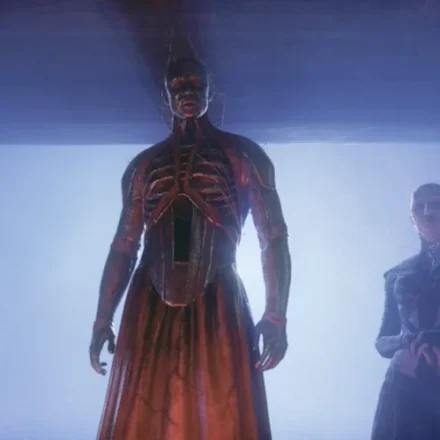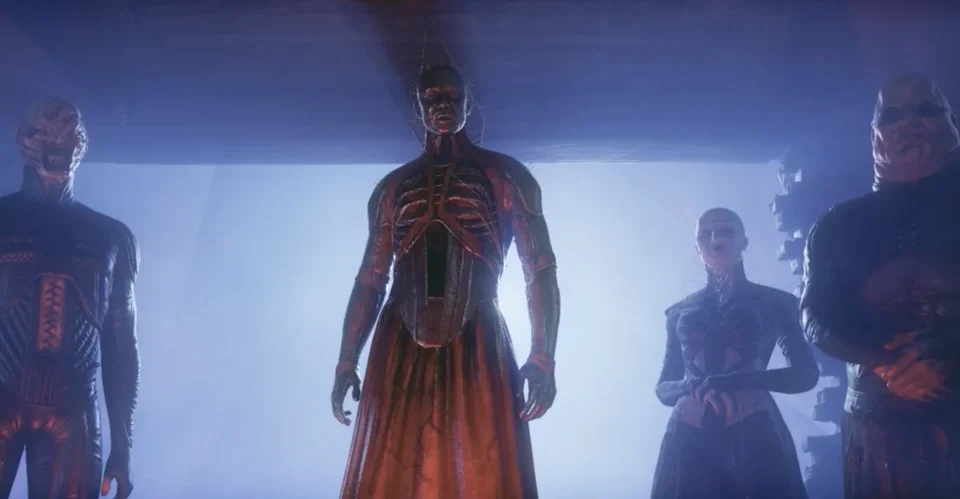

The landscape of interactive horror has been irrevocably altered. In a stunning upset that has sent shockwaves through both the gaming and cinematic communities, Clive Barker’s Hellraiser: Revival claimed the coveted Game of the Year title at this year’s Horror Game Awards. The victory, announced during a high-profile ceremony this evening, marks a watershed moment for a franchise that has spent years searching for its footing in the modern era of entertainment.
The win was not merely a triumph of atmosphere and mechanics; it was a resounding validation of the enduring power of Clive Barker’s mythology. By besting a formidable field of competitors—including the much-hyped Resident Evil Requiem—Revival has cemented its status as the gold standard for survival horror in 2026.
The Night of the Cenobites: A Historic Victory
The Horror Game Awards, which have become the premier litmus test for excellence in the genre, faced a Herculean task this year. With an initial field of 16 nominees, including highly anticipated titles like REANIMAL, Silent Hill: Townfall, and the Fatal Frame II: Crimson Butterfly remake, the competition was arguably the most intense in the history of the event.
While many critics and industry pundits had projected a neck-and-neck race between Revival and Resident Evil Requiem, the jury’s decision to crown Hellraiser: Revival suggests a shift in player preference toward titles that prioritize deep, thematic narrative and uncompromising, "old-school" survival horror mechanics.
Adding to the prestige of the evening, the legendary Doug Bradley secured the Best Performance award for his return as the iconic High Priest of Hell. His portrayal was not merely a nostalgic cameo; it was a nuanced, terrifying performance that breathed new life into the character of Pinhead. The dual win for Game of the Year and Best Performance underscores a singular truth: when handled with respect for its source material, Hellraiser remains one of the most potent intellectual properties in horror.
A Chronicle of Development: From Concept to Cult Classic
To understand the magnitude of this achievement, one must look at the turbulent, yet visionary, development cycle of Hellraiser: Revival. For decades, the franchise struggled with a fractured rights landscape and a series of direct-to-video sequels that, while creative, often lacked the gravitas of the original 1987 film.
The journey to Revival began in earnest two years ago, when the developers approached the project with a philosophy of "authentic restoration." Rather than rebooting the lore, the team worked in close collaboration with Clive Barker to weave a narrative that felt like a missing chapter of the original mythos.
The development was marked by a commitment to practical aesthetic sensibilities, even within the digital medium. The team utilized advanced motion-capture technology to replicate the specific, deliberate movements of the original Cenobites, ensuring that the visual language of the game echoed the visceral, S&M-inspired designs of the 80s.

A critical turning point in the game’s production was the active involvement of Doug Bradley. Unlike many voice-acting roles in gaming, Bradley’s contribution was granular. He worked extensively with the sound design team to reconstruct the vocal timbre of Pinhead, relying on his own archival memories of the character’s cadence and resonant, booming delivery. This dedication to the "voice" of the character became the backbone of the game’s immersive experience.
Supporting Data: Why ‘Revival’ Stood Out
The critical reception of Hellraiser: Revival has been nothing short of rapturous. With an aggregated score placing it firmly in the top tier of 2026 releases, the title has been praised for its mechanical difficulty and its refusal to hold the player’s hand.
In a professional assessment for Dread Central, Christian McKnight awarded the title a 4/5, noting: "But I had a damn good time playing it. And it felt like Hellraiser." This sentiment was echoed across the industry. The game’s design choices—specifically its scarcity of resources, complex environmental puzzles, and a non-linear map design—served as a direct challenge to the trend of "cinematic walking simulators" that have dominated the genre for the past decade.
The game also excelled in its pacing. By focusing on a "slow-burn" descent into madness rather than relying on an endless barrage of jump scares, Revival achieved a level of psychological tension that many of its peers failed to reach. The inclusion of the "Labyrinth" system, which procedurally generates hellish environments based on the player’s prior choices, ensured that the experience remained unpredictable even during subsequent playthroughs.
The Barker Perspective: "Doug is Pinhead and Pinhead is Doug"
The most poignant moments of the awards cycle have revolved around the relationship between the creator and his creation. During an exclusive interview conducted earlier this year, Clive Barker offered a candid reflection on the state of his franchise.
"Doug is Pinhead and Pinhead is Doug," Barker stated, emphasizing the symbiotic relationship between the actor and the icon. When asked about the final product of Revival, Barker was uncharacteristically blunt in his praise: "I’m proud as fuck at the end result."
Barker has viewed Revival as more than just a game; he sees it as a "wake-up call" for the broader horror industry. In his view, the success of the game proves that audiences are not looking for sanitized, mass-market horror, but are hungry for the challenging, philosophical, and transgressive themes that defined his original work. He explicitly mentioned that the success of Revival has sparked new ideas for the franchise—concepts that he is eager to explore in future projects, whether they be in gaming, television, or literature.
Implications for the Future of the Franchise
The implications of this win extend far beyond the gaming industry. In Hollywood, where the Hellraiser franchise has been trapped in a state of developmental stasis for years, the success of Revival acts as a potent piece of leverage.

Industry analysts suggest that the "game-to-screen" pipeline is currently the most viable path for long-dormant horror franchises. With Revival proving that the IP is not only relevant but highly profitable, the pressure on studios to greenlight a high-budget film or a prestige television series has reached a fever pitch.
1. The Call for a Sequel
The ending of Hellraiser: Revival left the door wide open for a continuation. Fans have already begun mobilizing online, petitioning for a sequel that maintains the same core creative team. If the developers can retain Barker as a creative consultant, a sequel could effectively build a cohesive "Barker-verse" within the gaming space.
2. A Paradigm Shift in Horror Media
The win signifies a broader shift: audiences are moving away from the "pop-up" scares of the early 2010s and toward "visceral existentialism." The success of Revival confirms that modern gamers are willing to endure high levels of difficulty if the atmosphere is sufficiently rewarding and the narrative is intellectually stimulating.
3. Restoration of the Mythos
Perhaps the most important implication is the restoration of the Cenobites’ dignity. After years of the characters being relegated to secondary roles in lackluster sequels, Revival restored the Order of the Gash to their status as terrifying, god-like entities. This reset button allows for a new generation of creators to build upon a version of the franchise that is once again respected by critics and fans alike.
Conclusion: The Labyrinth Awaits
As the lights dim on the Horror Game Awards and the industry turns its gaze toward the next fiscal year, the message from the community is clear: we want more of the Hellraiser universe. We want the complexity of Barker’s vision, the chilling presence of Bradley’s Pinhead, and the relentless, punishing nature of the Labyrinth.
Hellraiser: Revival has done the impossible—it has taken a property with a bruised reputation and polished it into a shining, sharp-edged diamond. Whether this leads to a direct sequel, a new cinematic chapter, or simply a long-overdue appreciation for the dark genius of Clive Barker, one thing is certain: the puzzle box has been solved, and we are all the better for it.
The gates of Hell have been reopened, and for the first time in a long time, the audience is eager to walk through.