The Architecture of Memory: Paweł Pawlikowski’s Fatherland and the Reconstruction of Post-War Trauma

Editor’s Note: This interview was originally conducted during the 2026 Cannes Film Festival. MUBI will release "Fatherland" in select theaters beginning Friday, October 23, 2026.
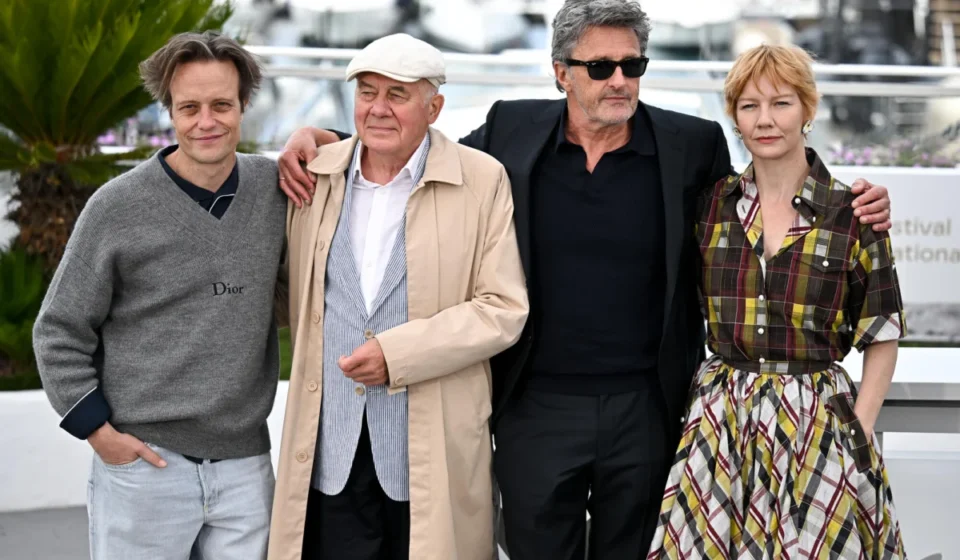
In the rarefied air of the Cannes Film Festival, where cinematic legacies are solidified or dismantled, Paweł Pawlikowski’s seventh feature, Fatherland, arrived with the weight of expectation. Having already cemented his status as a master of the form with the Oscar-nominated Cold War (2018) and the Academy Award-winning Ida (2013), the Polish auteur has returned to the themes that define his career: the intersection of intimate human frailty and the crushing machinery of European history.
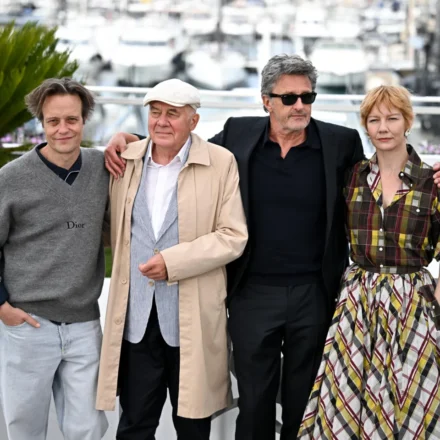
With Fatherland, Pawlikowski has inadvertently completed a trilogy of black-and-white, Academy-ratio explorations of the 20th-century soul. Featuring a tour-de-force performance by Sandra Hüller—currently a frontrunner for the Best Actress prize following her recent win in Berlin for Rose—the film is a haunting, intellectual, and deeply personal road movie that parses the debris of post-World War II Germany through the lens of the Mann family.
The Genesis of a Historical Drama
The film centers on the Nobel Laureate Thomas Mann (Hanns Zischler), his daughter and steadfast assistant Erika (Hüller), and his son Klaus (August Diehl). Rather than a standard, linear biopic, Pawlikowski constructs a narrative of "critical mass"—a collision of historical trauma and psychological isolation.

"There is this little moment, which I use as a starting point to invent a story," Pawlikowski told me during our meeting at the J.W. Marriott in Cannes. "When Thomas goes to Germany, he’s in an interesting situation. It rang a bell. Everything’s collapsed—everything he believed in. He’s trying to regenerate it in a one-man operation. He tries to bring together Germany and transcend the ideological division."
The film opens with a bravura, five-and-a-half-minute locked-off single take. We see Klaus, a brilliant but tortured intellectual, sitting naked on a floor in Cannes, speaking to his sister Erika over the phone. The scene is a masterclass in tension, as Erika attempts to coax her drug-addicted twin to join her on a journey back to a nation that is both their heritage and their exile. "When is the last time you felt anything?" Klaus asks, a line that serves as the thematic heartbeat of the entire film.
A Chronology of Artistic Discovery
Pawlikowski’s journey to Fatherland was unconventional. Initially approached by Italian producers to adapt Colm Tóibín’s fictionalized biography of Thomas Mann, the director initially recoiled from the prospect of a traditional biopic. He wasn’t interested in the "great man" theory of history, but rather the internal fractures of the family unit.
"The father-daughter relationship at the center of this heady literary movie… seems to connect things," he explained. The film follows the Manns as they navigate a landscape of physical and moral ruin. Pawlikowski spent months scouting for authentic locations, ultimately finding a damaged, post-war-esque street in a region of Poland that historically belonged to Germany.

The production design was meticulous. By blending practical, physical sets—actual ruins—with subtle digital removals of modern intrusions like satellite dishes, Pawlikowski achieved a hauntingly tangible sense of the past. "We wanted to establish this basic principle where you have an intimate relationship at the center, father-daughter in a capsule," he said. "The whole film is about a big vista and a small relationship."
Supporting Data: The Complexity of the Mann Legacy
The film’s depth is bolstered by its commitment to the complicated reality of the Manns. Pawlikowski, who studied German literature, leaned into the contradictions of Thomas Mann’s life. He acknowledges that Mann was a man who lived with a "super repressed" homosexuality, a truth that colored his writing and his complex relationship with his children.
"He sublimated it in his work," Pawlikowski noted. "He was writing about it [in Death in Venice], but quite overtly in his diaries about his fantasies. That’s what so annoys Erika at some point. He turns everything into words, he turns everything into art, and he exploits his feelings, repressed passions, and fantasies creatively."
The film explores the tension between art and life, particularly through the character of Erika. In one of the film’s most explosive sequences, she slaps her ex-husband, a former Nazi actor. While audiences might interpret the slap as a purely political gesture, Pawlikowski insists it is rooted in class and identity. "She slaps him because he hit a nerve, because she was a nepo baby," the director explained. "Without the father, they would have no money, no contacts, none of this lifestyle that they had."

Official Responses and Creative Direction
The performance by Sandra Hüller has been described as a "transformation of the face." Pawlikowski highlights her ability to move beyond scripted performance into something visceral and organic. In the slap scene, he notes, "She doesn’t seem to be acting. There was one take where things come to the surface, brilliantly, in a way that’s not scripted and not acted; it mysteriously unfolds."
The cinematography, helmed once again by Lukasz Żal, deviates from the static stillness of Ida or Cold War. While the framing remains rigorous, the camera movement is intentional, serving the road-movie narrative. "Everything results from the material," Pawlikowski said. "It’s a road movie, but the camera moves when it has to move… It’s super primitive and simple, like in silent movies."
The recurring appearance of Klaus as a "hovering ghost" was an experimental choice for the director. "I’ve never done that in my life," he admitted. "But this astral projection, if somebody dies, it has been recorded, and [Erika] is so missing and craving him."
Implications: The Broken Organ of Europe
The film’s conclusion, which takes place in the ruins of a church, offers a poignant metaphor for the post-war European condition. As Thomas and Erika stumble upon a damaged organ, they attempt to play a Bach chorale. It is imperfect, broken, and yet deeply affecting.

"It’s a mutual understanding and urge to see something that’s not official," Pawlikowski said. "It’s only more moving because it’s a broken organ, and it’s bad. But it still works."
The implication of Fatherland is that history is not a clean, narrated sequence of events, but a series of broken chords played on a damaged instrument. As the industry looks toward the upcoming awards season, the resonance of Fatherland seems likely to endure. With rumors of multiple Oscar nods for Hüller—for this, as well as her supporting turn in Project Hail Mary—and the critical acclaim mounting for Pawlikowski’s latest work, the film is poised to become a definitive document of contemporary historical filmmaking.
In the final analysis, Fatherland is more than a study of the Mann family. It is a meditation on the cost of legacy, the weight of the past, and the mysterious way in which, even when everything else has been razed to the ground, the music of human connection can somehow, miraculously, continue to play.