A Filmmaker in Flux: Danial Rifki Navigates Genre, Censorship, and the Indonesian Psyche

Indonesian director Danial Rifki is currently having a career-defining moment at the Jakarta World Cinema festival. While many directors are lucky to premiere a single project at such a prestigious event, Rifki has arrived with a trio of films that showcase his remarkable range, shifting fluidly from the claustrophobic tension of the thriller genre to the nuanced, socially conscious humor of romantic comedy.
However, the journey to this moment has been anything but smooth. Rifki’s most high-profile project—the Indonesian adaptation of the acclaimed Spanish thriller The Invisible Guest—has spent over a year in distribution purgatory due to complex contractual entanglements with HBO. Now, with those hurdles finally cleared, the director is using his platform at the festival to not only showcase his recent work but to engage in a deeper conversation about the state of Indonesian cinema, the lingering shadows of the Suharto era, and the evolving pressures placed on the nation’s youth.
The Long-Awaited Premiere of The Invisible Guest
The centerpiece of Rifki’s festival presence is his ambitious reimagining of Oriol Paulo’s 2016 hit Contratiempo (The Invisible Guest). Produced by Falcon Pictures, the film stars local heavyweights Reza Rahadian, Mawar de Jongh, and Arifin Putra. The production, which transposes the twist-heavy, locked-room mystery to an Indonesian setting, was completed in 2023. Yet, it remained largely unseen by the public until recently.
"The matter has only recently been resolved," Rifki told Variety regarding the exclusivity clauses that sidelined the film. Following its debut on HBO Max on August 7, the film finally received a theatrical screening at Jakarta World Cinema. The delay highlights a growing tension in the modern film industry: the conflict between international streaming exclusivity and the traditional, communal experience of the cinema. For a director like Rifki, whose work relies heavily on pacing and the visceral reactions of an audience, the opportunity to see his work on the big screen in his home country is a vital milestone.
A Triad of Visions: Diversifying the Indonesian Lens
Beyond the high-stakes intrigue of The Invisible Guest, Rifki’s presence at the festival serves as a testament to his versatility as a storyteller. He is presenting two additional features: the romantic comedy Tua Tua Keladi and the thriller Sandal Jepit No. 10.
Tua Tua Keladi: Redefining Maturity and Desire
Tua Tua Keladi stands out for its bold premise: set within a small village, the film explores the chaos that ensues when a mysterious chemical leak in the water supply acts as an aphrodisiac, reigniting the romantic desires of the village’s elderly residents.
"I was thinking, if they have young energy to live the second life, it is the second chance to love," Rifki explains. The film is designed to challenge the pervasive, deep-rooted assumption that older generations are devoid of passion or vitality. Interestingly, Rifki opts to strip the film of eroticism, even when focusing on its younger cast members. He expresses a profound concern regarding the digital era’s influence on modern intimacy, noting his apprehension about the "wild media" his own daughter might be exposed to. By keeping his young characters’ relationships pure and emotional rather than physical, he attempts to offer an alternative to the increasingly sexualized portrayals found in modern digital culture.
Sandal Jepit No. 10: A Thriller Steeped in Political Trauma
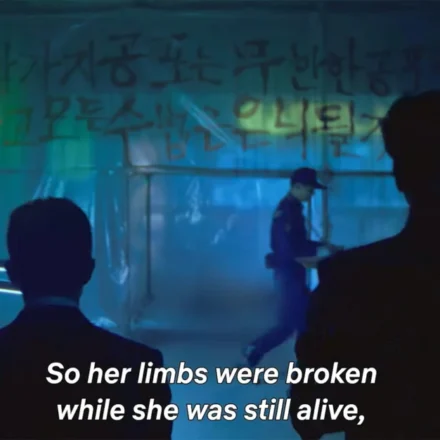
In stark contrast to the lighthearted absurdity of Tua Tua Keladi, Sandal Jepit No. 10 serves as a stark, claustrophobic examination of state power. The film tracks the brutal police interrogation of a grieving father named Akbar, who is detained on suspicion of murder.
Rifki is candid about the political underpinnings of the film, noting that the narrative is born from a desire to address the collective trauma of the Orde Baru (the 32-year New Order era under President Suharto). "Indonesians have trauma in politics," he observes. "Back in the days of the New Order, we could not criticize the government."
Rifki argues that while Indonesia has moved into a "Reformation Era," the mechanisms of oppression have simply evolved. He points to the digital landscape—where social media comments are shadowbanned or suppressed—as evidence that the spirit of censorship remains alive. The film acts as a metaphor for the struggle of the "lower class" against those in power. "We are the low class of society with this kind of fear that, if we do something, someone with power will oppress us. So the movie is about how to fight back."
The Digital Age and the Power of the Netizen
Despite his somber view of historical and modern political suppression, Rifki maintains a sense of cautious optimism regarding the role of the internet. He views the "netizen" as a potential check against abuse of power. "People power now is turning to a digital era so we can gain that power again," he says.
His film serves as a call to action, suggesting that while the avenues for resistance have changed, the necessity of standing up to authority remains constant. For Rifki, the common thread weaving through his diverse filmography is not genre, but "human moral conflict." Whether in a rom-com or a thriller, his characters are constantly forced to confront their ethics against a backdrop of societal pressure.
Looking Forward: The "Before Thirty" Mandate
Rifki shows no signs of slowing down, with his next feature, Before Thirty, already slated for a January 2027 release. Describing the project as a "survival drama," he turns his gaze toward the intense societal pressure placed on young Indonesians to achieve professional and personal success before their third decade.
"In Indonesia, people always ask: ‘What is your achievement before 30?’" Rifki notes. "Young people are punished by that value that you have to be successful before the age of 30." The film is intended to be a direct commentary on this cultural expectation, acting as a critique of the metrics of success that often leave young people feeling inadequate or trapped.
Conclusion: An Evolving Filmmaker
As a self-described "evolving and growing filmmaker still in the making," Danial Rifki is a director who refuses to be pigeonholed. His film school aspirations to master rom-com, thriller, and drama have evolved into a sophisticated career that balances entertainment with sharp social commentary.
With interests in expanding his repertoire into action and horror, Rifki is positioning himself as one of the most vital voices in contemporary Indonesian cinema. By weaving the personal with the political, and the comedic with the traumatic, he is creating a body of work that reflects the contradictions and aspirations of a nation in transition. As the curtain falls on the Jakarta World Cinema festival, Rifki’s message is clear: whether through the lens of a village romance or a police interrogation room, the human story is one worth fighting for.