Art as an Act of Defiance: Watermelon Pictures Acquires Dev Benegal’s ‘Everything Is Not OK’

In a significant acquisition for the independent documentary landscape, Watermelon Pictures has secured the distribution rights to Everything Is Not OK, a profound new documentary helmed by acclaimed director Dev Benegal. The film, which explores the intersections of displacement, trauma, and creative resistance, will debut exclusively on Watermelon+, the distributor’s burgeoning streaming platform.
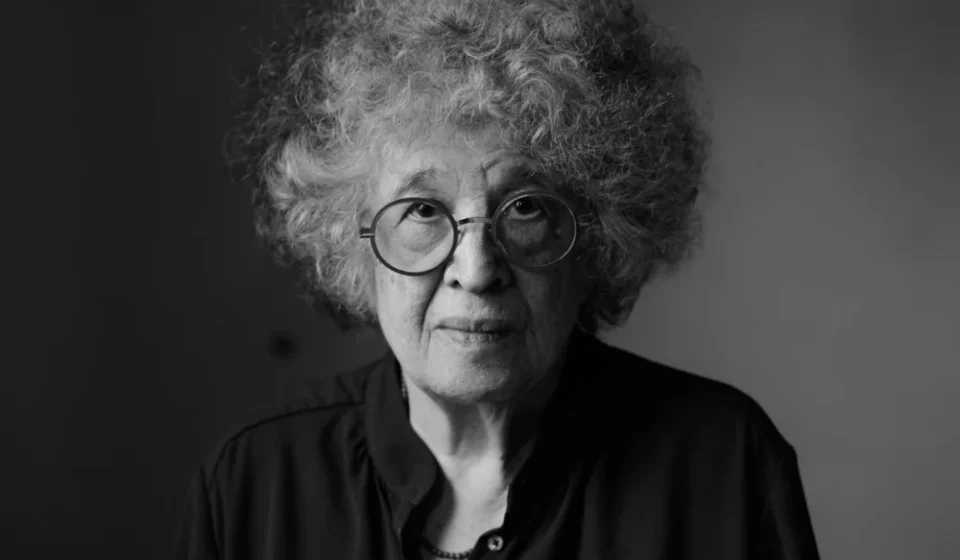
The documentary serves as a sprawling, intimate portrait of artist Judith Blum Reddy. By weaving together Reddy’s personal narrative with the lives of fellow artists and a tapestry of revolutionary poetry, Benegal has crafted a film that functions less as a traditional biography and more as a meditation on the persistence of memory.
The Life and Work of Judith Blum Reddy
At the heart of the documentary is the enigmatic figure of Judith Blum Reddy. Her artistic trajectory is inextricably linked to the seismic shifts of the 20th century. Having navigated the profound scars left by the Holocaust and subsequent waves of displacement that led her from the streets of New York to the cultural hubs of Paris and ultimately to India, Reddy’s work is deeply informed by the search for belonging.
For Reddy, the canvas is a battlefield. The film illustrates how she channeled the anxieties of a displaced identity into a visual language that refuses to remain silent. Her story is presented not in isolation but in dialogue with other creative spirits who have faced similar dislocations: Nil Yalter, Zarina, and Camille Billops. These artists, all of whom leveraged their craft to navigate the trauma of erasure, form the thematic backbone of Benegal’s work.
By positioning these women alongside the voices of Palestinian, Kashmiri, and Indian poets, the film creates a global dialogue. It asks a haunting question: What happens when the home you remember is erased, and staying silent is no longer a sustainable option?
A Creative Powerhouse: Behind the Lens
The production of Everything Is Not OK brings together a formidable team of international talent. The film is produced by Maya S. Patel and Neeraj Jain of Min(d) Studio, with the visionary filmmaker Annemarie Jacir—known for her work on Palestine 36—serving as executive producer.
The technical and creative team represents a collaborative effort to ground the film’s high-concept themes in visceral, sensory storytelling. The film features an evocative score composed by Dhruv Goel, with cinematography provided by Jean-Luc Panda and additional footage captured by Neeraj Jain. The pacing and emotional arc are shaped by editor Mona Gesbel, while sound designer Anurag Jadhao and colorist Rob Sciarratta ensure that the documentary’s aesthetic matches the weight of its subject matter.
Furthermore, the film gains an ethereal quality through the inclusion of voice-over work by Annemarie Jacir and actor Adam Bakri, who lend their voices to the readings of revolutionary poetry that punctuate the documentary’s narrative flow.
The Philosophy of Resistance
Director Dev Benegal, perhaps best known for his seminal works English, August and Road, Movie, brings a seasoned perspective to this documentary. His own legacy in cinema—currently underscored by the restoration of English, August by the Film Heritage Foundation and its subsequent spotlight at the Venice Film Festival—informs the gravitas he brings to this project.
Speaking on the motivations behind the film, Benegal described the artistic process as a form of rebellion. "For Judy, making art is an act of confrontation," Benegal noted. "An act of liberation. A refusal to let erasure win. Everything Is Not OK is not only a portrait of an artist; it is a meditation on what it means to create, remember, and resist through art when silence is no longer an option."
Annemarie Jacir, who was drawn to the project by its raw exploration of memory, emphasized the urgency of the film in the current global climate. "In a moment when the world tilts towards intolerance, Judy’s story is a reminder that memory refuses to disappear and art can still be an act of resistance," Jacir remarked.
Chronology and Context: A New Era for Watermelon Pictures
The acquisition of Everything Is Not OK is a milestone for Watermelon Pictures, a distributor that has rapidly established itself as a pivotal force in global cinema since its launch in 2024. Despite its relative youth, the company has curated a library of immense cultural weight.
The company’s rise has been marked by a focus on stories of displacement and resilience. Notable credits include From Ground Zero and All That’s Left of You, both of which—alongside Palestine 36—were shortlisted for the Academy Award for Best International Feature. Additionally, the company’s involvement in the Oscar-nominated The Voice of Hind Rajab has solidified its reputation for championing narratives that might otherwise be marginalized in the mainstream market.
The launch of the Watermelon+ streaming platform in May 2025 represents the culmination of these efforts. Spearheaded by Hamza Ali and co-founder Badie Ali, the platform is currently positioned as the largest single collection of Palestinian cinema in existence. By housing Everything Is Not OK on this platform, Watermelon Pictures is framing the film as part of a larger, urgent conversation about global heritage and the preservation of truth.
Implications for the Documentary Genre
The release of Everything Is Not OK arrives at a time when the documentary genre is undergoing a period of intense self-reflection. As audiences demand more transparency and more authentic voices, films like Benegal’s offer a blueprint for how to bridge the gap between individual biography and collective history.
The film’s reliance on poetry and the juxtaposition of diverse artistic voices suggests a move toward a more lyrical form of political documentary. It rejects the "talking head" tropes of the past in favor of a sensory-rich, nonlinear exploration of the psyche. This approach is likely to influence how future filmmakers address themes of historical trauma.
Furthermore, the success of Watermelon+ signals a shift in distribution models. By creating a dedicated space for specific cultural narratives, the company is bypassing the gatekeeping of traditional streaming giants, ensuring that films like Everything Is Not OK find their intended audience—those who are looking for stories that challenge the status quo rather than merely entertaining.
Conclusion: A Call to Remember
Everything Is Not OK stands as a testament to the idea that, in the face of systemic erasure, art is the most durable form of witness. Through the lens of Judith Blum Reddy, Dev Benegal has created a work that demands we look closer at the spaces where memory and reality collide.
As the film prepares to stream on Watermelon+, it brings with it the weight of history and the defiance of the present. It serves as a reminder that while the title suggests a world in disarray, the act of making art—the act of creating beauty in the shadow of destruction—is perhaps the only way to ensure that what has been lost is never truly gone.
With its blend of profound human insight, poetic structure, and a clear-eyed political perspective, Everything Is Not OK is poised to be one of the most talked-about documentaries of the year. It is a vital, necessary addition to the contemporary cinematic canon, ensuring that the voices of the displaced, the poets, and the resistors are not only heard but felt across borders and generations.