The Venetian Homecoming: George Clooney Reflects on Legacy, Politics, and the Future of Cinema

The Main Event: A Golden Lion for a Cinematic Icon
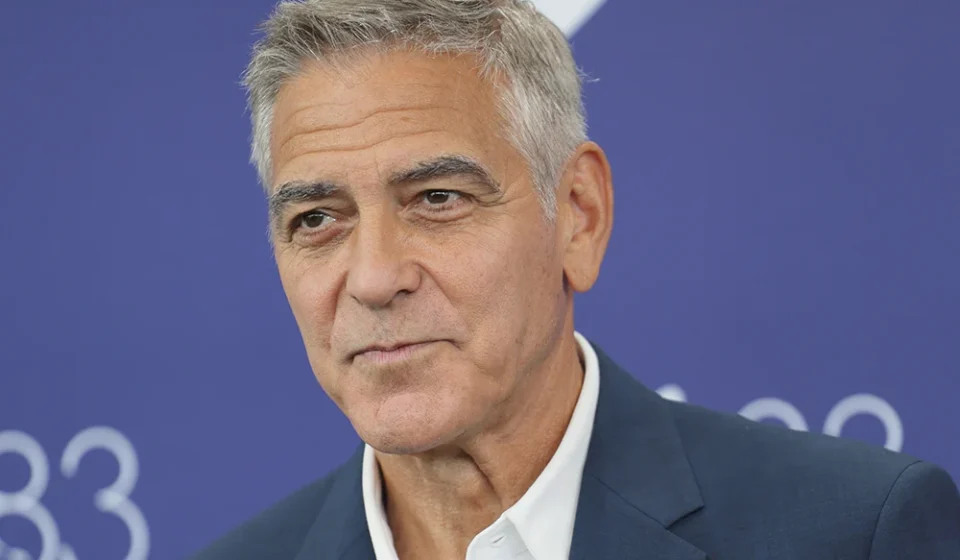
Life often mirrors the silver screen, and for George Clooney, the boundary between the two has never been thinner. Last year, the actor graced the Venice Film Festival to premiere Jay Kelly, a poignant comedic drama in which he portrayed an aging A-list star traveling to Italy to accept a career-defining honor. In a case of life imitating art with uncanny precision, Clooney returned to the Lido this week, not as a fictional character, but as the genuine recipient of the prestigious Golden Lion for Lifetime Achievement.
The honor, bestowed upon him on the festival’s opening day, serves as a capstone to a career that has defined Hollywood for over three decades. Yet, rather than basking in solitary celebration, Clooney spent his pre-ceremony press conference engaging with the pressing issues of the day—ranging from the consolidation of media giants to the existential threats posed by artificial intelligence and the volatile landscape of American politics.
Chronology: A Career Built on the Lido
George Clooney’s history with the Venice Film Festival is deeply intertwined with his professional evolution. His relationship with the festival spans nearly 30 years, beginning with his 1998 appearance for Steven Soderbergh’s neo-noir classic Out of Sight. Over the subsequent decades, the Lido has served as a launchpad for many of his most significant works.
- 1998: Debut at the festival with Out of Sight.
- 2005: Premiered the critically acclaimed Good Night, and Good Luck, a film that explored the moral responsibility of the press.
- 2007: Brought Michael Clayton to the festival, a career-defining performance that cemented his status as a serious dramatic actor.
- 2013: Unveiled the technical marvel Gravity, which redefined visual storytelling.
- 2017: Directed Suburbicon, highlighting his continued interest in social satire.
- 2024: Appeared with the action-comedy Wolfs.
- 2025: Debuted Jay Kelly, the film that ironically foreshadowed his current Lifetime Achievement honor.
Clooney noted with a self-deprecating laugh that while he missed last year’s press conference due to a stubborn sinus infection, his return this year feels particularly weighted. "I’m 65 years old—everything is melancholy," he joked. "You brush your teeth and you’re like, ‘My teeth used to be so much better.’ Everything about getting older is a reminder of time passing."
Supporting Data: The Shifting Sands of the Industry
Beyond his personal reflections, Clooney addressed the structural instability currently rocking Hollywood. Specifically, he weighed in on the ongoing, complex efforts by Paramount to merge with Warner Bros.
Clooney’s skepticism regarding the merger is rooted in both economic logic and human cost. "I don’t see how the merger financially ends up making sense for the people who are trying to do it," he remarked. "I worry when a big company swallows up another company. I always worry whenever big companies are consolidating because it means a lot of people are going to lose their jobs."
His concerns extend to the technological frontier as well. Addressing the rise of artificial intelligence, Clooney predicted that the technology will become a dominant force in the industry—for better or worse. "It’s going to be a very big part of this industry, and I worry that it’s going to hurt us in a lot of ways," he said. With his trademark wit, he highlighted the ethical and contractual nightmares looming for performers: "I would like to avoid being in a tampon commercial 20 years after I’m dead."
Official Responses: The Mark Ruffalo Controversy
One of the more contentious moments of the press conference occurred when Clooney was asked about the recent firestorm surrounding Marvel star Mark Ruffalo. Paramount recently accused Ruffalo of utilizing "antisemitic tropes" after the actor publicly criticized the studio’s merger deal, arguing that it would have negative consequences for the industry while accusing the Ellison family—specifically CEO David Ellison—of being complicit in the ongoing conflict in Gaza.
Clooney, a staunch advocate for creative freedom, did not hesitate to defend his peer. "I support Mark Ruffalo’s ability to speak freely," he stated, responding to a query from Variety’s Elsa Keslassy. "It’s ridiculous. We’re not going to ban speech. I believe in free speech even when I completely disagree with it. That’s important. In fact, it’s part of how democracy works."
This defense underscores Clooney’s long-standing commitment to the First Amendment, a value he has championed both through his advocacy work and his cinematic projects, most notably in his portrayal of Edward R. Murrow in Good Night, and Good Luck.
Implications: Journalism and the "Kakistocracy"
Clooney’s interest in the state of the media is not merely academic. Having directed and starred in works centered on journalistic integrity, he remains deeply concerned about the ownership of the fourth estate. When asked about the current landscape of journalism, he noted, "The state of journalism is in question. The richest people in the world are owning the Washington Post and Twitter, and that is a concern."
However, he retains a sliver of cautious optimism. "There’s a lot of room for great journalists," he maintained. "I do believe that information will find its way out."
When the conversation turned to the political climate in the United States, Clooney did not mince words. A long-time critic of Donald Trump and the direction of the Republican Party, he introduced the term "kakistocracy" to describe his view of the current landscape.
"There’s a great word, kakistocracy, which is a country run by the least qualified people," Clooney explained. "I think maybe we have a kakistocracy right now, but we’ll get through it. We will have an election in November that should be a check and balance. And then in 2028, we will have a restoration of some normalcy."
The Road Ahead: A Shift in Focus
Despite his global influence, Clooney’s priorities are undergoing a fundamental shift. Having spent decades oscillating between acting, directing, and producing, he is now prioritizing his role as a father.
"I have two 9-year-old kids," he said, explaining why he is stepping back from the director’s chair. "If I act in a movie, it’s three months away. When I direct a movie, it’s a year. And I can’t do that anymore. I can’t pull the kids out of school anymore. I’m happy to be doing this, being an actor, again. It’s fun. I’m a character actor now."
This transition does not mean the end of his professional ambition. He expressed genuine excitement for a long-rumored reunion with his Ocean’s co-stars, Brad Pitt and Matt Damon. "I would do anything with them," he said. "As soon as we get our schedules to work, we’re going to film."
Conclusion: A Legacy of Balance
As he accepts his Golden Lion, George Clooney stands as a testament to the idea that an actor’s influence can extend far beyond the screen. Whether he is defending the right to dissent, warning against the unchecked power of media conglomerates, or simply trying to balance the demands of global stardom with the quiet joys of fatherhood, Clooney remains a central figure in the cultural dialogue.
"I also feel very lucky," he reflected as the conference drew to a close. "I have an incredible wife whom I love very much and she loves me. I have great kids. I think life is pretty good." In a town often defined by its transience and artifice, Clooney’s ability to remain grounded—and to use his platform to speak truth to power—is perhaps his most enduring achievement of all.