The Architecture of Intimacy: Paul Thomas Anderson’s Cameron Winter at Carnegie Hall

Editor’s Note: This review was originally published on October 2, 2026, during the 64th New York Film Festival. Janus Films will release the film in select theaters on Friday, November 20.
Paul Thomas Anderson has spent the better part of three decades acting as an architect of the American subconscious, building shrines to the fringe, the obsessed, and the musically transcendent. From the Technicolor fever dreams of Boogie Nights to the sprawling, sonic tapestry of Magnolia—a film that essentially functioned as a cinematic altar to Aimee Mann—Anderson’s relationship with music has always been foundational to his visual language.
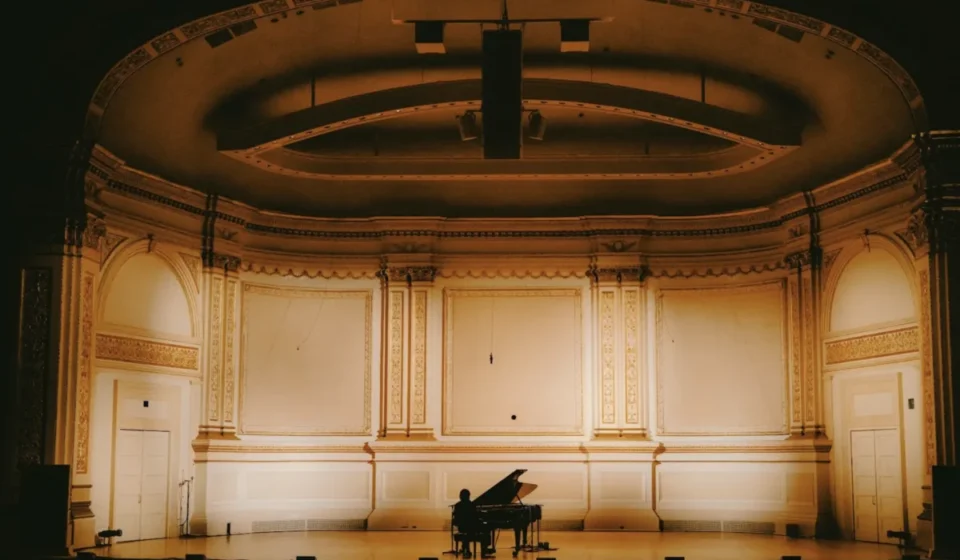
His latest endeavor, Cameron Winter at Carnegie Hall, is the culmination of this lifelong fascination. By turning his lens on Geese frontman Cameron Winter, Anderson has crafted a 72-minute concert film that is as much a study in light and shadow as it is a musical performance. It is a work of startling, fragile sincerity—a film that feels less like a recorded event and more like an incantation performed in the dark.
The Anatomy of an Unlikely Collaboration
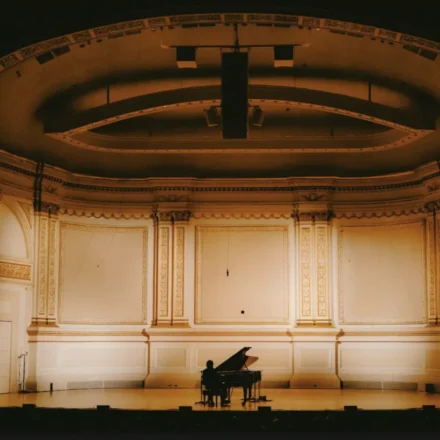
The partnership between Anderson and Winter—a rising force in contemporary art rock—began in the quietude of last December. Operating his own Panavision camera, Anderson captured the 23-year-old singer-songwriter in a rare, solo stage performance at the world’s most prestigious concert venue.
Stripped of the manic, wily energy that defines his work with Geese, Winter appears at the piano in a state of exposed vulnerability. The film is produced in part by Benny Safdie, whose influence is subtly felt in the "scratchy," tactile aesthetic of the New York setting. The resulting film is a portrait of a young artist standing at the precipice of cultural saturation, much like Bob Dylan was when he famously headlined the same venue at 22.
A Chronology of a Musical Vigil
The film follows a rigorous, almost liturgical structure. There is no interstitial banter, no backstage documentary fluff, and no concessions to the traditional concert film tropes of audience reaction shots. Instead, the camera remains tethered to Winter, fixed on a mobile rig that occasionally glides with a ghostly, rhythmic elegance across the stage.

The performance serves as a showcase for tracks from Winter’s solo album, Heavy Metal, reimagined through sparse, piano-driven arrangements. The chronology of the setlist creates a psychological arc:
- The Prologue: A tender, wordless opening that establishes the cavernous, hallowed silence of Carnegie Hall.
- The Mid-Set Transformation: Winter moves through his catalog with a "tenorous vocal glissando," shifting from the chaotic energy of his band-led work into something closer to the folk balladry of Harry Nilsson or the impressionistic storytelling of Van Morrison.
- The Coda: A moving, final sequence that leaves the viewer in the quiet aftermath of the performance, cementing the film’s status as a "lonely vigil."
Supporting Data: The Craft of the Lens
The brilliance of the film lies in its technical restraint. Anderson, known for his obsession with period-accurate lenses and natural lighting, utilizes the chiaroscuro of the stage lights to map the topography of Winter’s face. When the light hits him, it is revelatory; when it fades, he vanishes into the shadow of the piano.
The audio mix is equally intentional. The piano work is crisp, highlighting the "nimble fingerwork" that has become a hallmark of Winter’s musicianship. Songs that previously thrived on indie-rock production, such as "$0," are here transformed into wrenching, somber confessions. The line, "You’re making me feel like a dollar in your hand / You’re making me feel like I’m a zero dollar man," lands with a devastating weight that is only possible in such a quiet, amplified environment.
Similarly, "Love Takes Miles"—a track that has already cemented itself as an indie anthem—is stripped down to its marrow. Without the distortion of his band, the song reveals a desperate, aching core that feels entirely new.
The Cultural Implications: Why This Matters
Why does a legendary filmmaker like Anderson, who could command the budgets of any major studio, choose to spend his time filming a solo piano set? The answer lies in the evolving definition of "art rock."
In an era where music is often consumed in fragmented, algorithm-driven bursts, Cameron Winter at Carnegie Hall demands total surrender. It is a "concert film for introverts," a rejection of the high-octane visual assault typical of modern live music documentaries. By placing Winter in the center of a 2,700-seat cultural temple, Anderson is making a statement about the endurance of the singular performer.

The film suggests that the "antic rock chaos" of Geese—a band currently enjoying a meteoric rise—is only one side of the coin. Winter is presented here as a songwriter first, a performer second, and an enigma third. If the film serves as a "rhapsodic shrine," it is a shrine to the internal world of an artist who is clearly uncomfortable in the public eye, yet finds absolute, laser-focused peace at the keys.
Official Perspectives and Industry Reception
While the film has been met with critical acclaim, particularly for its cinematography and emotional resonance, it also presents a unique challenge for distributors. Janus Films has opted for a "roadshow-style" release, leaning into the event-cinema nature of the project. This strategy is designed to create a sense of scarcity, positioning the film as a cultural artifact that is best experienced in the collective silence of a theater.
Benny Safdie’s involvement as a co-producer adds an interesting layer to the film’s reception. Safdie, known for his own frantic, anxiety-inducing directorial style, brings a grounded, gritty texture to the production. The result is a film that feels authentic to the New York City experience—a city that loves to watch its young prodigies succeed, even as it threatens to consume them.
The Legacy of the Anderson-Greenwood Aesthetic
It is impossible to discuss this film without acknowledging the influence of Jonny Greenwood. While Greenwood is not credited with the score here—the music being the songs of Cameron Winter—the spirit of the Anderson-Greenwood collaboration looms large. The "mischievously lilty" quality of the piano arrangements echoes the tension of Phantom Thread, suggesting that Anderson has internalized the "poison promise of new love and obsessive creation" that defined his previous work.
This is a film about the obsessive nature of music. It captures the way a performer can lose themselves in a chord, a melody, or a lyric. It is a work that feels "tender to the point of frailty," a necessary counterpoint to the noise of contemporary cinema.
Conclusion: A Grade of A-
Cameron Winter at Carnegie Hall is a masterclass in focus. It is not for those seeking the spectacle of a stadium tour; it is for those who want to watch a young artist discover the depths of his own voice in real-time. Paul Thomas Anderson has not just filmed a concert; he has filmed the sound of a human soul being laid bare.

The film is an immersive experience, one whose truth you can feel in your body, even if you cannot quite articulate it. It is a testament to the fact that, even in the 21st century, the most profound cinematic experiences are often the quietest.
Grade: A-
Cameron Winter at Carnegie Hall premiered at the New York Film Festival. Janus Films will release it in theaters starting November 20.