A Gory Resurrection of Oz-ploitation: Why ‘Penny Lane Is Dead’ is Shudder’s Most Provocative Summer Offering

The Fantasia International Film Festival has long served as a crucible for extreme cinema, a place where boundary-pushing genre films find their initial, often rowdy, audience. Yet, even by the standards of a festival known for pushing the envelope, few films in recent memory have elicited the visceral, physical reaction prompted by the premiere of Penny Lane Is Dead. The directorial debut of accomplished hair and makeup artist Mia-Kate Russell, the film is a masterclass in tension, retro aesthetics, and unflinching brutality that has already cemented its status as a must-watch for horror aficionados.
As the film prepares for its wide release on Shudder this August 28, it arrives not just as another entry in the slasher subgenre, but as a bold, terrifying statement on the resurgence of "Oz-ploitation"—the gritty, high-octane horror tradition hailing from Australia.
The Anatomy of the Nightmare: A High-School Horror Story
Set in the sweltering, neon-soaked summer of 1986, Penny Lane Is Dead anchors itself in a classic trope: the isolated getaway. The narrative follows three inseparable high school friends—Amy (Alexandra Jensen), Toni (Tahlee Fereday), and the titular Penny Lane (Bailey Spalding)—as they retreat to Penny’s family beach house to celebrate their high school graduation. It is a premise ripe with nostalgia, evoking the hazy, carefree innocence of the mid-80s, before that innocence is systematically and violently dismantled.
The catalyst for the descent into madness is Kat (Sophia Wright-Mendelsohn), a jealous cousin whose inclusion in the festivities provides the film’s emotional friction. Wright-Mendelsohn delivers a chilling performance, channeling the volatile, unpredictable energy of a young Fairuza Balk. Her resentment toward Penny serves as the ignition point for a night of calculated psychological and physical warfare.
The plot thickens when Kat introduces a batch of sedative-laced cupcakes, rendering the protagonists incapacitated. But Kat’s vendetta is not merely social; it is criminal. She invites her boyfriend, Angus (Ben O’Toole)—a recently paroled ex-convict—and his band of predatory cohorts to the house. What follows is not a simple game of cat and mouse, but a grueling, relentless siege that tests the limits of the audience’s endurance.
Chronology of a Festival Incident
The intensity of Penny Lane Is Dead was brought into sharp focus during its Fantasia debut. While rumors of "brutal" films are common currency in the festival circuit, often serving as little more than hyperbolic marketing, Russell’s feature proved the exception.
Following a particularly gruesome sequence involving an everyday kitchen appliance—a scene that has already become the film’s signature moment of carnage—the atmosphere in the theater shifted from suspense to genuine alarm. An audience member seated near the front of the auditorium was observed losing consciousness as he attempted to navigate the theater stairs.
The incident forced a temporary pause in the screening as fellow attendees and onsite medical professionals rushed to provide aid. While the individual fortunately recovered, the scene served as a grim testament to the film’s efficacy. In an era where modern horror often leans toward the supernatural or the psychological, Penny Lane Is Dead reminds us of the raw, tactile power of practical effects and the sheer terror of human malice.
Supporting Data: The Oz-ploitation Revival
To understand the impact of Penny Lane Is Dead, one must look at the historical context of Australian horror. In the 1970s and 80s, films like Wake in Fright, Long Weekend, and Razorback defined a distinct subgenre characterized by harsh environments, nihilistic tones, and a willingness to engage in transgressive violence.
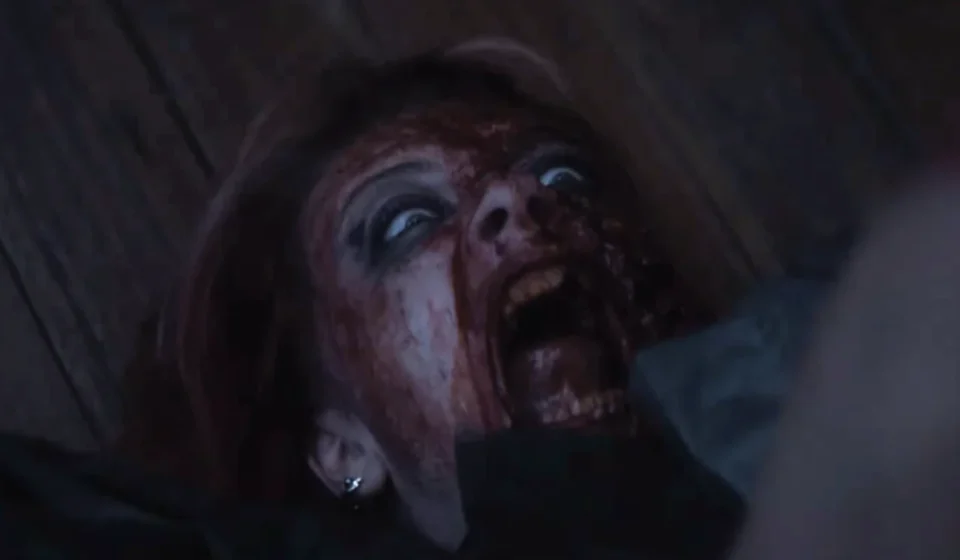
![Gory Ozploitation Thriller ‘Penny Lane Is Dead’ Is Making Audiences Pass Out at Fantasia Film Festival [EXCLUSIVE]](https://www.dreadcentral.com/wp-content/uploads/2026/07/Screenshot-2026-07-20-at-1.09.54-PM-1200x675.png)
Mia-Kate Russell’s transition from a behind-the-scenes artisan—having mastered the art of practical makeup—to a director is reflected in every frame of the film. Her deep understanding of prosthetics and gore design allows the film to bypass the "uncanny valley" of CGI, favoring the visceral impact of tactile effects.
- Genre: Slasher / Thriller
- Release Platform: Shudder
- Release Date: August 28
- Director/Writer: Mia-Kate Russell
- Key Cast: Alexandra Jensen, Tahlee Fereday, Bailey Spalding, Sophia Wright-Mendelsohn, Ben O’Toole
By grounding the horror in the practical, Russell taps into the same sensibilities that made early Oz-ploitation so effective: a sense of isolation where the law is absent, and the terrain (or the household) becomes a cage.
Official Responses and Creative Vision
In early interviews regarding the production, Russell noted that she wanted to create a film that felt like a lost relic from a video rental store shelf. "I didn’t want to make a movie about ghosts or demons," Russell explained. "I wanted to make a movie about the darkness that can exist within a group of friends, and the people we let into our lives who are capable of destroying us."
The film’s distributor, Shudder, has positioned Penny Lane Is Dead as a centerpiece of their late-summer slate. By securing the rights, the streaming service is signaling a commitment to high-intensity, director-driven horror that appeals to a demographic of fans who are increasingly disillusioned with sanitized, studio-backed PG-13 horror. The inclusion of the film in their catalog is a strategic move to satisfy the appetite for "extreme" cinema that the platform has successfully cultivated over the years.
Implications for the Future of Slasher Cinema
The success of Penny Lane Is Dead at Fantasia suggests a significant shift in audience demand. For years, the slasher subgenre was considered "solved," with audiences complaining of formulaic entries and predictable jump scares. Russell’s debut, however, proves that the subgenre is still capable of evolution. By combining the "final girl" tropes of the 80s with a modern, unflinching eye for violence and a nuanced approach to character motivation, the film establishes a new benchmark for what a slasher can achieve.
Furthermore, the film’s success is a victory for the "artisan-to-director" pipeline. Russell’s background in hair and makeup informs her directorial style; she treats the camera as an extension of her makeup kit, focusing on textures, lighting, and the physical degradation of her characters. This creates a sensory experience that lingers long after the credits roll.
As we look toward the August 28 release, the question remains: is the general public ready for a film that has already proven its ability to floor viewers in a controlled environment? The answer, judging by the buzz surrounding its festival run, is a resounding yes.
For horror fans, Penny Lane Is Dead is more than just a movie; it is a test of mettle. It is a reminder that the genre is at its most powerful when it stops apologizing for its violence and starts embracing its role as a mirror to our own collective fears. When you press play on Shudder this August, be prepared—not just for the scares, but for the visceral intensity that has already earned this film a place in the pantheon of modern cult classics.
If you are a fan of practical effects, relentless tension, and the unapologetic grit of Australian horror, Penny Lane Is Dead is not just a recommendation; it is an essential experience. Just make sure you’re sitting down.